

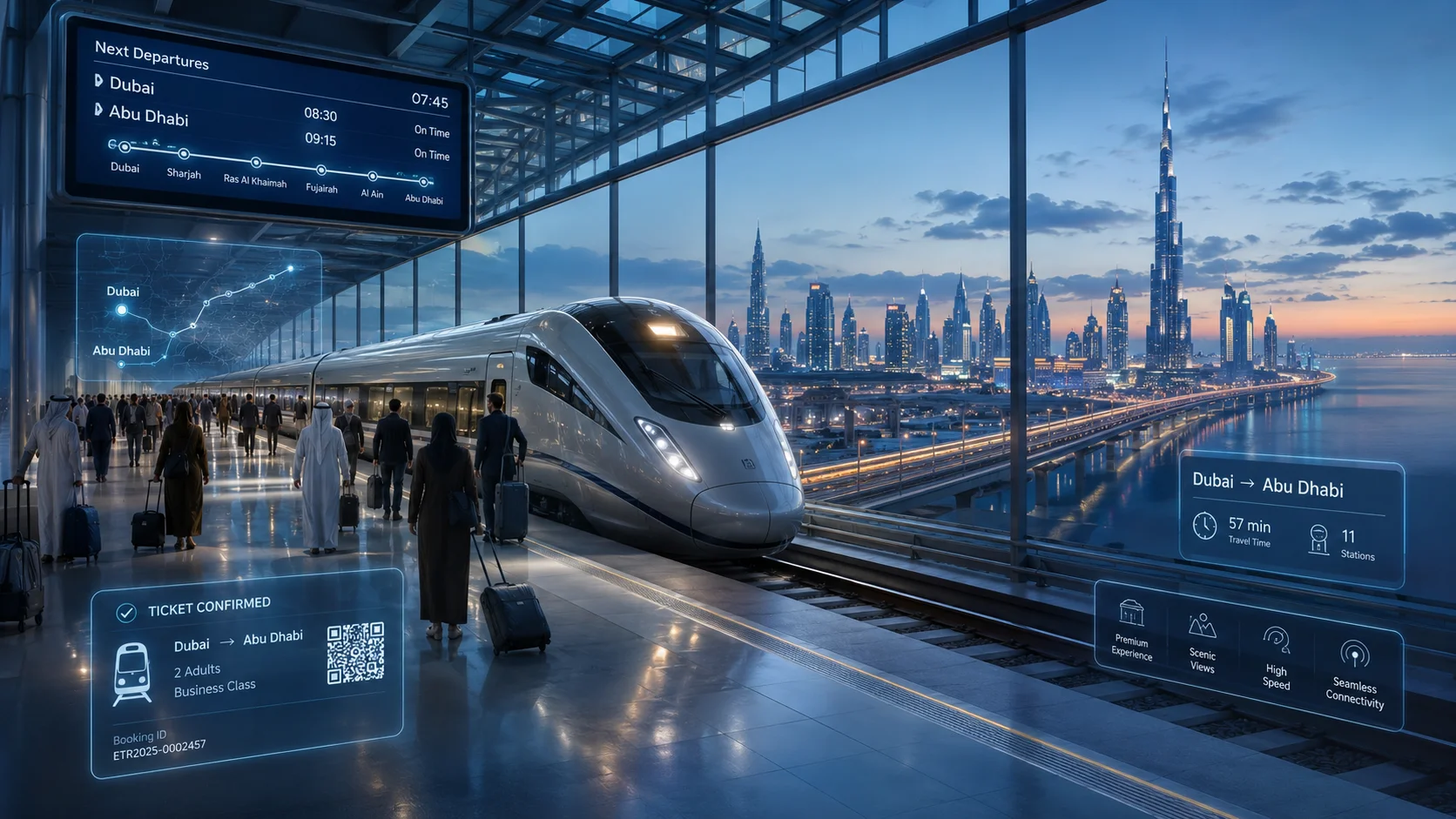
The UAE’s long-awaited passenger railway is finally here, and the response has been immediate. Within hours of bookings opening, more than 10,000 tickets had already been sold — a clear signal that residents have genuinely been waiting for a faster, more comfortable way to move between the country’s major cities.
This isn’t a small project by any measure. The Etihad Rail passenger service is one of the biggest transport undertakings in the UAE’s history, and it has the potential to reshape how people think about inter-emirate travel. Instead of treating long road journeys as simply the cost of getting around, residents and visitors now have a genuine alternative — one that connects the country’s key economic and tourism hubs in a way the roads alone never could.
The scale of early bookings says a lot about where public appetite is heading. People want sustainable, efficient transport, and they’ve been ready for this for a while.
Strong Demand Marks the First Day
The level of interest on launch day caught even some officials by surprise. Thousands of travellers locked in their tickets within the first few hours of reservations opening, and the pace hasn’t slowed much since.
Government officials are calling it a genuine milestone for the UAE’s transport sector — and it’s easy to see why. A network like this serves everyone from daily commuters and business travellers to families, students and tourists looking to explore the country differently. The volume of early bookings is also a vote of confidence in the UAE’s broader investment in public transport infrastructure.
What the Passenger Journey Looks Like
One route in particular has people talking: the journey between Fujairah and Abu Dhabi. Step onto one of the trains and you’ll find spacious seating, generous legroom, dedicated luggage storage, onboard amenities and large panoramic windows that turn the journey itself into part of the experience.
The route passes through mountains, desert landscapes, coastal stretches and urban centres — scenery that’s almost impossible to take in properly from behind the wheel of a car. The interiors are comfortable enough for both short hops and longer journeys, and the overall feel leans closer to an airline-style experience than a typical train ride, while still keeping the practicality and ease that rail travel is known for.
Faster Travel Between Major Cities
The network links Abu Dhabi, Dubai, Sharjah, Fujairah and several other cities along its route, and the time savings could be considerable for anyone who currently relies on driving between emirates.
Instead of factoring in hours of unpredictable road traffic, passengers now get a fixed, reliable schedule they can actually plan around. That’s a meaningful shift for professionals who travel for work regularly, and it opens up new possibilities for tourists who want to explore more than one emirate without renting a car or arranging multiple transfers.
Modern Stations and Passenger Facilities
The stations themselves have clearly been designed with the passenger experience in mind. Digital ticketing, comfortable waiting areas, clear information displays, accessibility features and modern boarding processes all point to a system built around convenience rather than just function.
Booking happens online, travel updates arrive before departure, and boarding has been streamlined to keep waiting times to a minimum. It’s the kind of attention to detail that signals the UAE’s intention to build one of the most advanced rail systems in the region — not just a functional one, but a genuinely good one to use.
A Sustainable Alternative to Road Travel
There’s also a meaningful environmental angle here. Rail travel produces considerably lower carbon emissions per passenger compared to private vehicles, which makes the new service a real contributor to the UAE’s sustainability goals rather than just a convenience upgrade.
As more people choose the train over driving, the knock-on effect could be lighter traffic on major highways — a benefit that extends even to people who never set foot on the train themselves. It all fits into the UAE’s broader push toward an integrated, smart and genuinely sustainable transport network.
Economic and Tourism Benefits
The ripple effects go well beyond transport. Faster, more reliable connections between cities tend to support business expansion, make it easier for companies to move staff between locations, and strengthen trade relationships across the country.
Tourism stands to benefit considerably too. Fujairah’s beaches, Abu Dhabi’s cultural landmarks and Dubai’s entertainment districts all become part of one connected itinerary rather than separate trips requiring their own logistics. For visitors wanting to experience more of the UAE in a single visit, that’s a genuine upgrade.
The railway is also expected to support growth in residential and commercial communities along its route, improving access to areas that have historically been harder to reach.
Also Read: UAE Passport Travel Guide: Full List of Visa-Free and Visa-on-Arrival Countries in 2026
What the Launch Means for the Future
With over 10,000 tickets sold before the service had even properly settled into its routine, Etihad Rail’s passenger launch has started with real momentum behind it. That kind of early enthusiasm tends to be a strong indicator of long-term adoption.
As more routes open and more passengers experience the service firsthand, Etihad Rail looks set to become a genuine part of everyday life across the UAE — not just a transport option, but a core piece of how the country moves, connects and grows. For a project of this scale, that’s exactly the start it needed.