

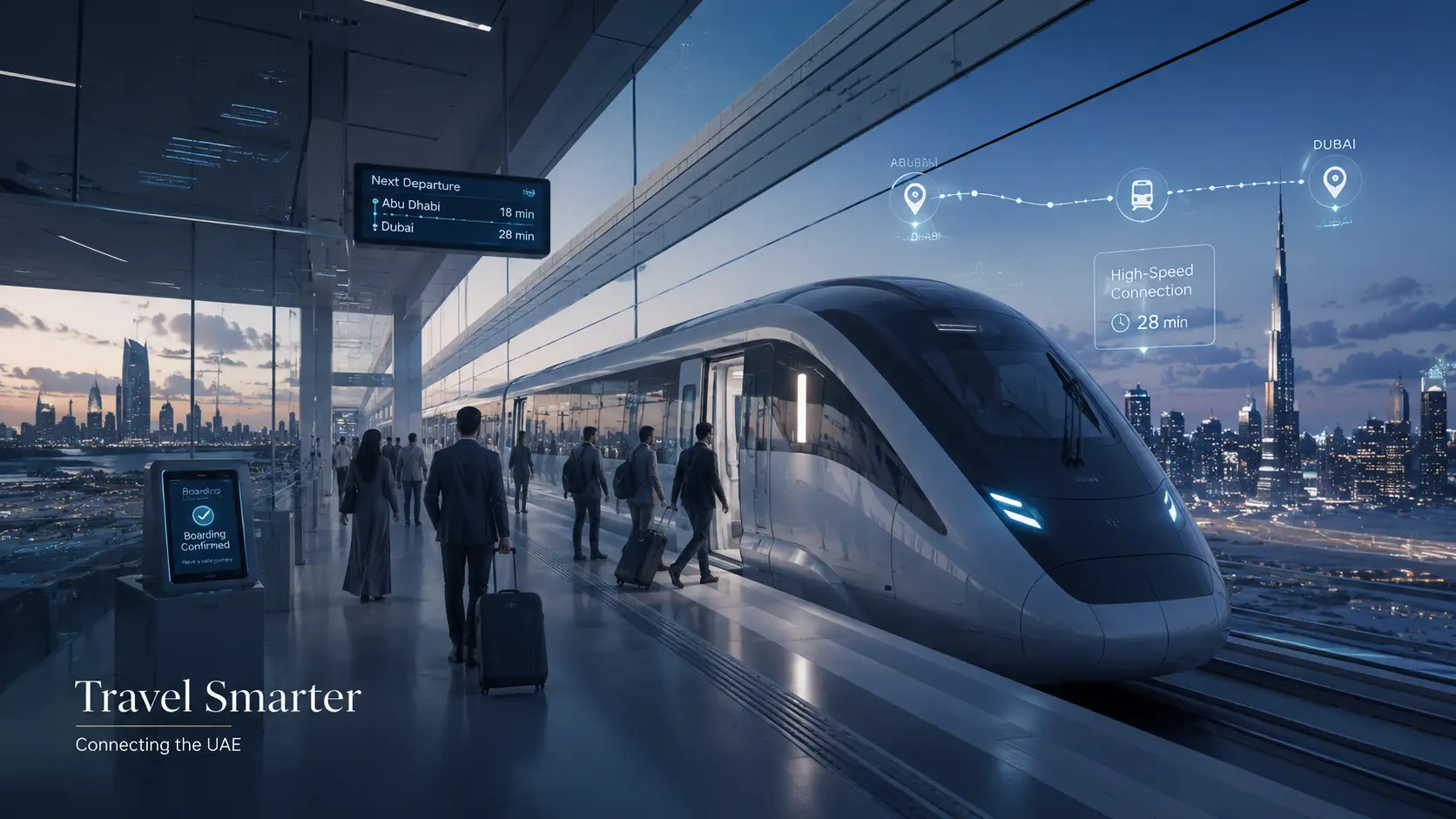
Anyone who has sat through a long drive between Abu Dhabi and Dubai on a busy weekday morning knows exactly what problem Etihad Rail is trying to solve. The upcoming passenger train service is set to give UAE residents and visitors a genuinely faster, more comfortable way to move between the country’s major cities — and the impact on daily commuting could be significant.
Beyond the convenience factor, the project carries wider importance. It is expected to support economic activity, reduce pressure on road networks and offer a cleaner, more sustainable way to travel as the UAE continues building infrastructure that matches its long-term ambitions.
Faster Journeys Between Major Cities
The headline benefit is time. Hours spent on congested highways between emirates could be replaced by predictable, comfortable train journeys that get you where you need to go without the stress of traffic.
The network is planned to connect Abu Dhabi, Dubai, Sharjah and Fujairah alongside several other key regions across the country. That kind of city-to-city connectivity will matter most to daily commuters, but it will also make life considerably easier for business travellers, students and tourists moving between destinations.
When journey times become predictable rather than hostage to road conditions, people can actually plan their days around them — which is a bigger deal than it might sound.
A Comfortable Alternative to Driving
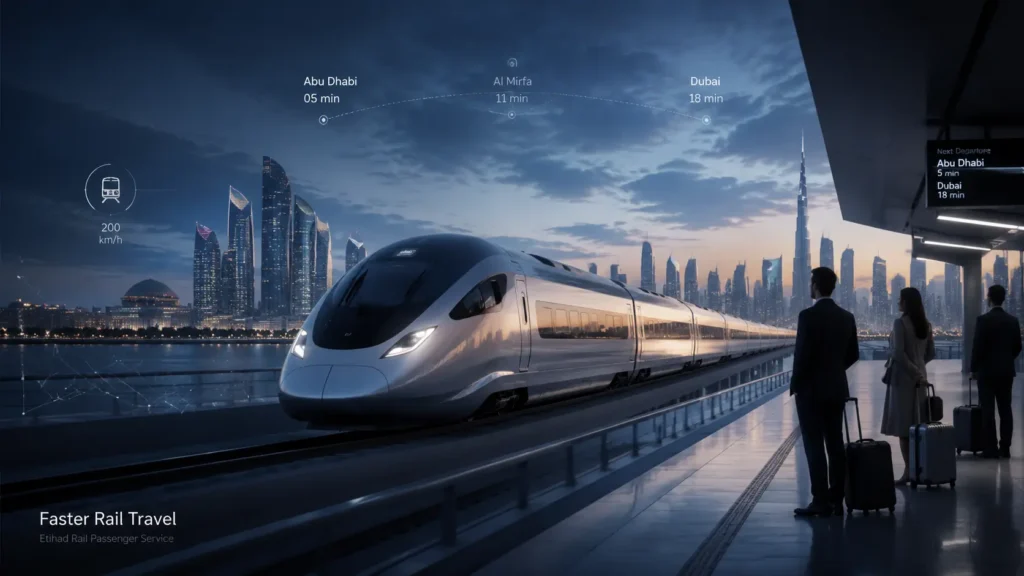
There’s more to train travel than just getting somewhere faster. Once you’re on board, the journey itself changes character. You can work, read, rest or simply look out the window without any of the mental load that comes with driving in heavy traffic.
The trains are expected to feature modern seating, comfortable interiors and passenger facilities suited to both short hops and longer intercity trips. For regular commuters who currently spend significant chunks of their day behind the wheel, that shift in daily experience could make a real difference to how they feel by the time they arrive.
Helping Reduce Road Congestion
Road congestion between the UAE’s largest cities is a persistent headache, particularly on the Abu Dhabi to Dubai corridor during peak hours. A high-capacity passenger rail service has the potential to take a meaningful number of vehicles off those highways — and the benefits extend beyond just the people who switch to trains.
Fewer cars on the road means better conditions for everyone, including those who continue to drive. It also points toward lower fuel consumption and emissions across the road network more broadly, which feeds directly into the UAE’s sustainability targets.
The railway is designed to be part of an integrated transport picture rather than a standalone solution — and that’s the right way to think about it.
Supporting Sustainable Transportation
Rail travel produces significantly fewer carbon emissions per passenger than private vehicle use, and that gap matters when you’re talking about a network that could eventually move large numbers of people every day.
By making train travel a genuinely attractive option — not just a greener one, but a faster and more comfortable one — Etihad Rail can contribute meaningfully to reducing the country’s transport emissions. It sits alongside the UAE’s broader investments in electric mobility, smart infrastructure and public transit as part of a coherent long-term strategy.
Also Read: Dubai Residents Got a Missile Warning on Their Phones — Authorities Say It Was a Technical Error
Economic Benefits Beyond Transportation
The ripple effects of better intercity connectivity go well beyond the daily commute. When cities are easier to move between, business activity picks up. Companies can deploy staff across multiple locations more efficiently. Tourists can cover more ground in less time, which tends to mean they spend more and stay longer.
There’s also an employment dimension — improved access to different emirates opens up job opportunities for people who might currently be limited by how far they’re willing or able to drive. And as any infrastructure economist will tell you, major rail projects have a consistent track record of attracting new investment to the areas they connect.
Part of the UAE’s Future Mobility Vision
Etihad Rail isn’t just a passenger project — it’s already operating as a freight network, moving goods across the country. Adding passenger services brings the full vision into focus: a national transport network where road, rail, airports and public transit all work together rather than in parallel.
As the passenger network comes online, the UAE takes a meaningful step toward the kind of integrated mobility infrastructure that modern cities and countries increasingly depend on. Faster journeys, less time stuck in traffic, lower emissions, stronger economic connections between emirates — Etihad Rail promises to deliver all of it, and the wait looks like it’s nearly over.