

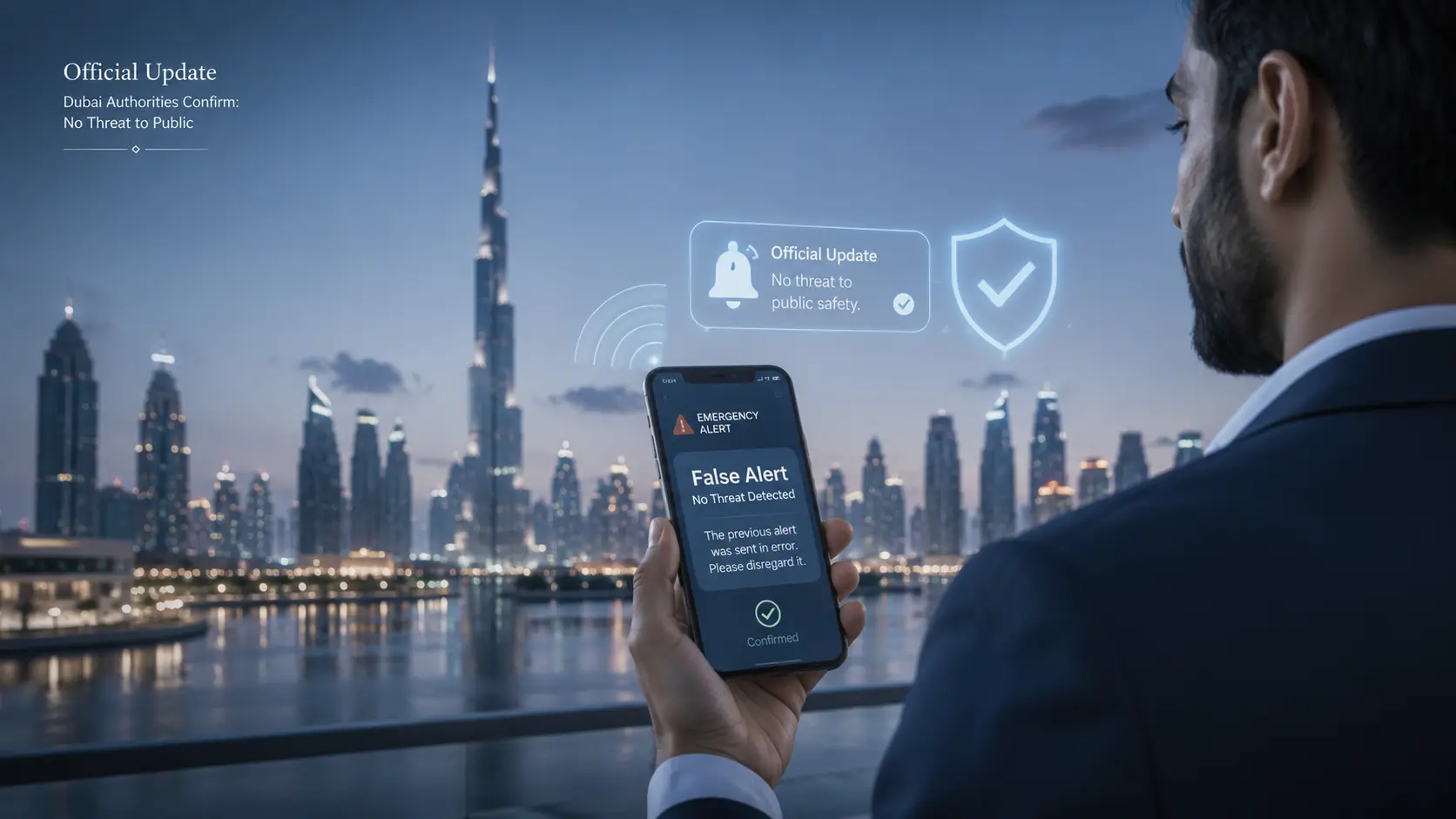
An emergency notification warning of an “incoming missile” landed on mobile phones across Dubai, sending a brief wave of alarm through the city before authorities stepped in to clarify that the message had been sent in error and there was no threat of any kind.
The correction came quickly — within minutes of the first alert — but not before residents had started sharing screenshots across social media and calling family members to find out if they’d received the same message. Officials were clear in their follow-up: no danger, no threat, just a technical mistake.
Emergency Alert Appeared on Mobile Phones
The warning came through the UAE’s official emergency alert system, which pushes urgent public safety notifications directly to compatible mobile devices connected to local networks. It’s the same channel used for severe weather warnings and other genuine emergencies, which is precisely why people took it seriously.
The alert told recipients that an incoming missile had been detected and instructed them to seek shelter immediately. Moments later, a second notification arrived telling people to disregard the first one entirely.
The speed of the correction helped keep things from escalating, though the initial message had already done enough to leave a lot of people rattled.
Authorities Clarify There Was No Threat
Officials wasted no time getting the message out. The follow-up notification was direct — the missile warning was false, it should be ignored, and there was absolutely no threat to Dubai or anywhere else in the UAE.
Residents were reminded to treat official government communication channels as the only reliable source of emergency information, particularly during moments of uncertainty when rumours tend to spread quickly.
The swift response from authorities drew some credit online, with many residents noting that the clarification arrived before most people had even had time to act on the first alert.
Residents React with Surprise
For most people, the initial reaction was disbelief followed by a scramble to verify. Emergency alerts on phones in the UAE aren’t something people receive casually — they’re reserved for situations that genuinely require public attention, so the natural assumption when one arrives is that it’s real.
Phones started lighting up across the city. Messages went out to family members. Screenshots of both the warning and the correction flooded social media within minutes. The overall mood shifted fairly quickly from concern to a mixture of relief and bewilderment once the false alarm was confirmed.
The episode also prompted a broader conversation about how emergency alert systems work and what happens when they go wrong.
Importance of the UAE Emergency Alert System
Despite what happened, the system itself serves a critical function. Emergency alerts are sent directly to mobile phones across the country and are designed to reach large numbers of people almost instantly — whether the situation involves extreme weather, a public safety incident, or any other event requiring immediate public awareness.
Because the alerts carry genuine authority, people respond to them. That’s the point. And it’s also what makes an accidental alert of this nature particularly disruptive — the very credibility that makes the system effective is what caused so many people to take the missile warning seriously before the correction arrived.
Officials were careful to note that despite this incident, the emergency alert system remains a vital tool for public safety across the UAE.
Technical Error Under Review
Authorities confirmed the false alert stemmed from a technical issue in the emergency alert process, though full details about exactly what went wrong weren’t immediately released.
The relevant agencies are expected to investigate how the incorrect notification was triggered and identify what safeguards need to be strengthened to ensure something similar doesn’t happen again. Emergency communication systems anywhere in the world require regular review and testing, and incidents like this — uncomfortable as they are — tend to accelerate those conversations.
The expectation is that the review will result in additional checks being put in place before any future alerts are pushed out.
Also Read: Dubai Announces 3-Day Weekend and Reduced Working Hours for Better Work-Life Balance
Residents Urged to Follow Official Updates
In the aftermath, authorities issued a reminder that official government sources are always the right place to turn when an emergency notification lands on your phone — particularly before reacting, sharing the message, or making decisions based on it.
False information moves fast during unexpected events, and social media has a way of amplifying confusion in the gap between an alert and an official response. The advice to verify before sharing is sound under any circumstances, and this incident illustrated why.
The fact that the correction came through the same official channel as the original alert and came through quickly is a reasonable demonstration of what transparent emergency communication is supposed to look like — even when the emergency itself turned out to be a mistake.