

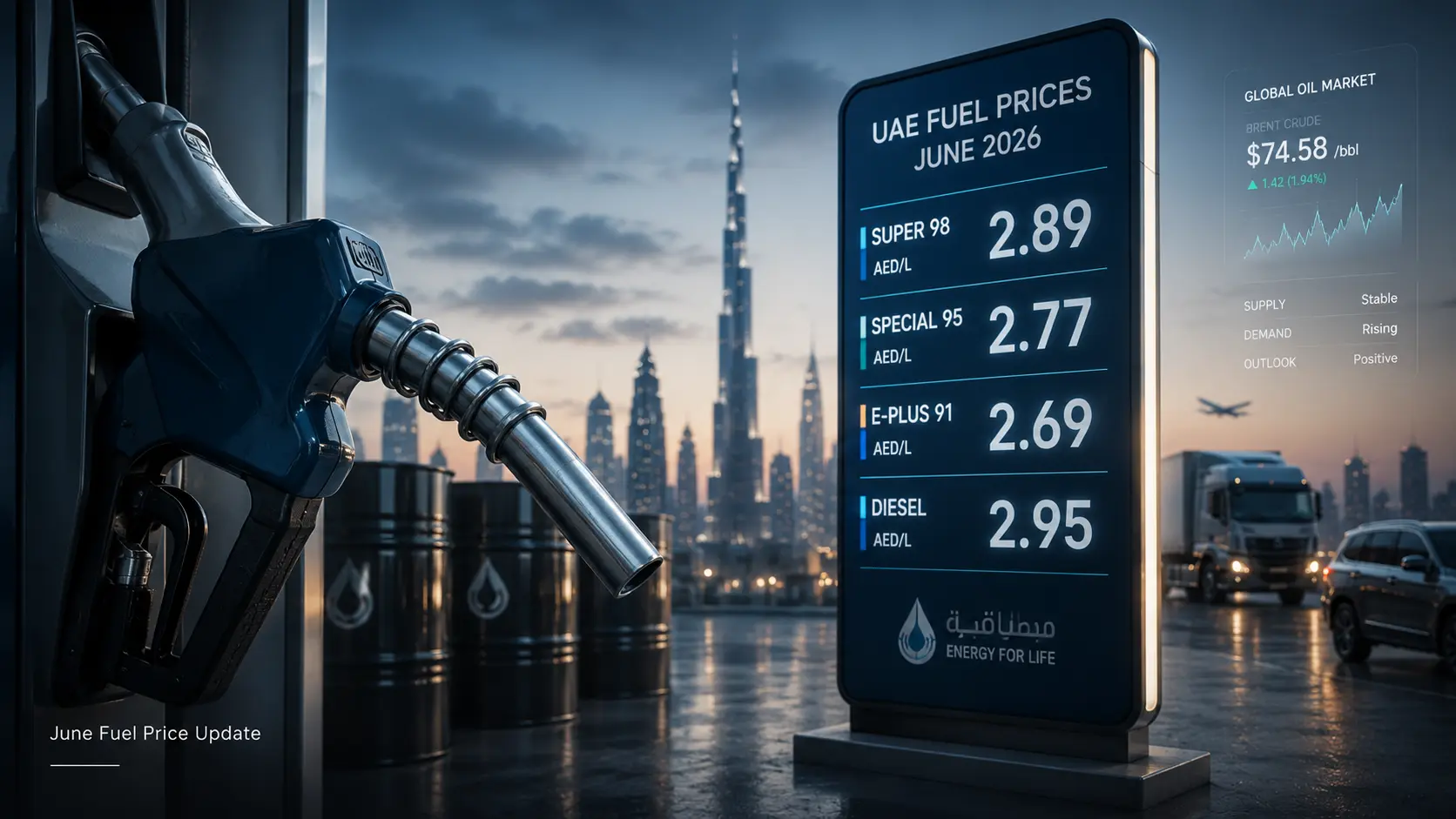
The UAE has announced the fuel prices for June 2026, and those paying at petrol stations will have to brace for another blow to their pockets. Fuel prices are rising once again, making it the third consecutive month to do so. The boosts follow a sharp drop in oil prices in recent months amid ongoing uncertainty in important energy-producing areas and supply concerns elsewhere.
From June 1, the price of filling up at the pump will be significantly higher than it was during May. The good news? In fact, diesel has had a decline this month, which is welcome for commercial drivers and companies that rely on diesel vehicles. During June 2026, you’ll receive a monthly bill for $549.77. The average monthly bill for June 2026 will be $549.77.
What You’ll Pay for Fuel in June 2026
The UAE Fuel Price Committee has released its June fuel prices. Here’s the update:
- Super 98 Petrol: Dh3.95 per litre (up from Dh3.66 in May)
- Special 95 Petrol: Dh3.83 per litre (up from Dh3.55 in May)
- E-Plus 91 Petrol: Dh3.76 per litre (up from Dh3.48 in May)
- Diesel: Dh4.33 per litre (down from Dh4.69 in May)
These are the rates from the first day of June in all seven Emirates.
Special 95 and E-Plus have followed a similar trend, with Super 98 up by almost 8 percent since last month. Despite the decrease in price, diesel is still the most costly fuel available at UAE pumps at the moment.

Petrol Prices Approaching 2022 Highs
These numbers are probably familiar because there’s a reason. It’s almost time for the record-high gasoline prices that the UAE experienced in 2022 when Russia was at war with Ukraine. In July, Super 98 reached an all-time peak price of Dh4.63 per litre back then.
While we’re not quite there yet, June 2026 prices are the highest we’ve seen in almost four years. If you have been driving in the UAE for some time, you feel like it’s déjà vu.
According to energy analysts, the price of petrol has gone up by about 8 percent month-on-month for all fuels. This is a big increase, and many homes will notice when they refuel.
Why Are Prices Going Up Again?
The main culprit? Global oil market uncertainty. Crude oil prices have been rising due to several factors:
- Geopolitical tensions in oil-producing regions
- Shipping disruptions affecting major routes like the Strait of Hormuz
- Tighter supply conditions in physical oil markets
- Higher transportation and insurance costs for oil shipments
Fuel prices have been market-determined since 2015, when the UAE liberalized their prices, meaning that the monthly price follows the trend of international energy markets. As global oil prices rise, so do the UAE fuel prices. As they decline, so do pump prices.
This system can cause fuel prices to fluctuate significantly from month to month depending on the events in the world and market prices.
A Historic Moment: First Pricing After OPEC Exit
There’s another reason why June 2026 is important. The UAE has set prices for fuels for the first time since it officially exited OPEC and OPEC+ membership in May 2026.
The UAE was a member of the organisation for almost 60 years before making its decision to walk away. The transfer will allow the country greater flexibility in determining how much oil it produces without having to adhere to quotas set by OPEC.
Some experts believe that this may result in higher UAE oil output in the future, potentially affecting oil supply and prices in the world. But as of yet, the price of fuel is primarily dictated by global demand and supply problems, as well as geopolitical events.
Also Read: R. Madhavan’s Lavish Lifestyle: Dubai Home, Luxury Cars, Boat and Multi-Crore Properties
What This Means for Your Budget
For those who commute to work, school, and errands daily, these hikes are significant. An extra Dh15 to Dh20 per tank for an average sedan and much higher for larger SUVs and trucks, depending on the number of additional 30 fils per litre.
In addition to that, if you fill up once a week, it’s an extra Dh60/Dh80 a month for fuel. The effect is amplified for those families who have several cars.
It’s also hurting business. Businesses that heavily depend on business transport will have to deal with increased operating expenses. That would lead to increased operating expenses for delivery companies and logistics firms, as well as for any business that uses a delivery service for transportation. Sometimes these higher costs are reflected in customers’ bills, in the form of higher delivery charges or service charges.
The good news is that this has been tempered by the recent decline in the price of diesel. The silver lining is the drop in the price of diesel – this is beneficial for taxi drivers, delivery services and commercial transport companies operating on diesel. For companies operating big fleets that can make a difference to businesses with large fleets is that drop in Dh0.36 per litre.
What’s Next?
Fuel Price Committee (FPC) of the UAE will set the rates for the month of July at the end of June. It’s difficult to foresee how the world oil market will react in the near future, whether prices will rise, fall, or remain unchanged.
For now, drivers in the Emirates will have to adjust to these increased expenses and watch for monthly announcements. There are already lots of people thinking about how they can save on fuel – either carpooling, using public transport more, or being more efficient with their travel plans.
There is one thing for sure, and that is that as long as world oil markets are volatile, so will be the fuel prices in the UAE from month to month.