

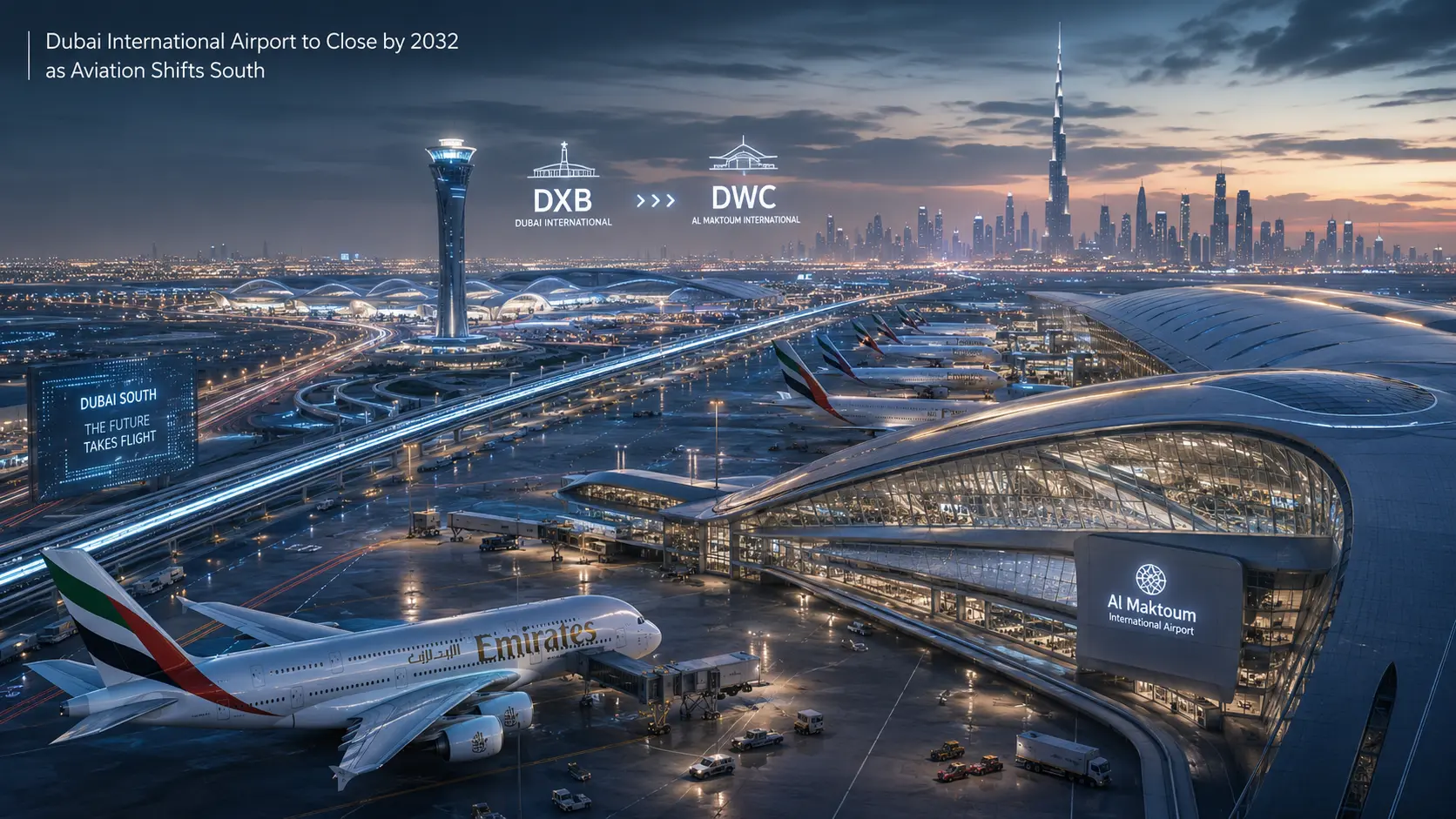
Few airports have shaped a city’s identity quite the way Dubai International Airport has. For decades, it has been the front door to one of the world’s most ambitious urban projects, handling millions of passengers every year and functioning as one of the most recognized transit hubs on the planet. By 2032, that chapter is expected to close.
Dubai is preparing to shift aviation operations to Al Maktoum International Airport, located in the Dubai South district. It’s one of the most significant infrastructure transitions the aviation world has seen, and the scale of what’s being planned to replace the current facility makes the ambition behind it clear.
Why Dubai Is Moving Operations to Al Maktoum Airport
The honest answer is space. Dubai International Airport has served the city extraordinarily well, but it has limited room to grow in ways that match where Dubai’s aviation ambitions are heading. Al Maktoum International Airport offers something different — a far larger footprint, modern infrastructure from the ground up, and the capacity to handle a passenger volume that the current airport simply cannot accommodate at scale.
Once fully developed, the new airport is expected to rank among the largest in the world. Advanced terminals, expanded runway capacity, smart transport connections, and integrated logistics infrastructure are all part of the long-term plan. For a city that continues attracting tourists, investors, and business travellers in growing numbers, having the infrastructure to match that demand is essential.
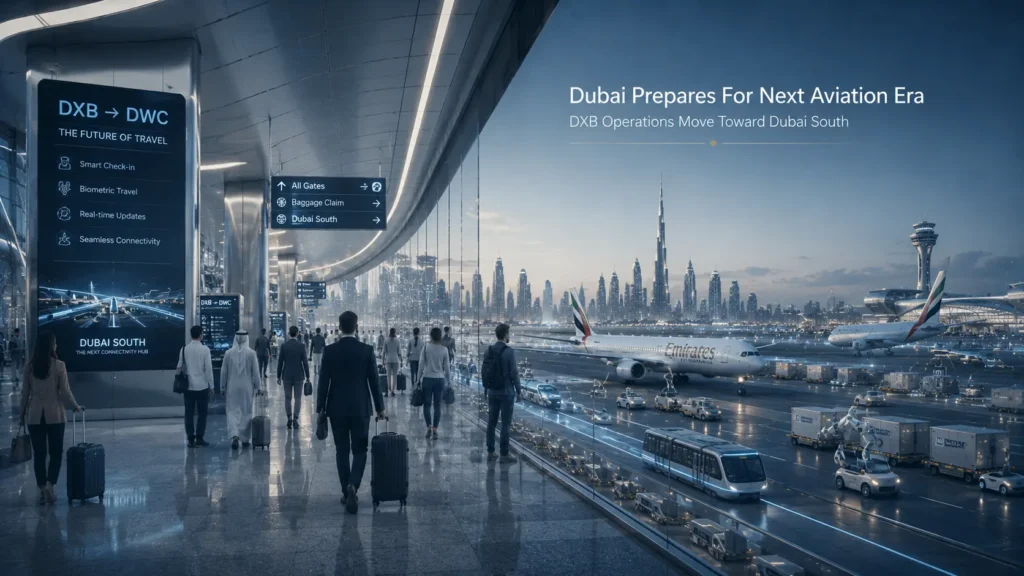
Dubai South Emerging as a Major Aviation Hub
Dubai South has been quietly transforming for years. The district already hosts significant aviation, cargo, logistics, and residential development built around the airport. Engineering facilities, transport networks, and mixed-use communities are all taking shape in an area the government envisions as a future-facing city built around aviation and global connectivity.
The airport transition is expected to create substantial economic activity in the area — employment, business expansion, real estate growth, and new opportunities for companies looking to position themselves near one of the world’s major aviation hubs. Analysts see Dubai South as one of the UAE’s most significant emerging economic zones over the next decade.
Impact on Emirates and Global Aviation
The move carries significant implications for Emirates and the other international carriers that operate through Dubai. Al Maktoum Airport is designed with the kind of operational flexibility and room for fleet growth that a larger, more future-focused facility can offer. For an airline like Emirates, which operates one of the world’s largest fleets of long-haul aircraft, having infrastructure built to accommodate future expansion matters considerably.
More broadly, a larger airport means better capacity for cargo operators, tourism businesses, hospitality companies, and the international trade networks that flow through Dubai. Smart airport technologies, AI-driven logistics, and advanced passenger processing systems are all expected to play a prominent role in how the new facility operates.
Dubai International Airport’s Global Legacy
It would be difficult to overstate what Dubai International Airport has meant to the city’s development. It turned Dubai into a genuinely global transit point, connected the emirate to hundreds of destinations worldwide, and supported the growth of an entire ecosystem of hospitality, retail, and aviation businesses around it.
Aviation experts have consistently pointed to it as one of the most successful international hubs ever built. Its eventual closure won’t diminish that record — it will simply mark the end of one era and the beginning of something considerably larger.
Also Read: 6 Dubai Parks Are Giving Out Free Ice Cream on Eid Al Adha 2026: Here’s Where to Go and When
Al Maktoum Airport Represents Dubai’s Long-Term Vision
The development of Al Maktoum International Airport is Dubai thinking several decades ahead. The infrastructure being planned is designed not just for today’s travel demand but for where global aviation is heading over the long term — more passengers, more cargo, more complex international connectivity, and more advanced technology embedded throughout the experience.
Aviation remains one of the core pillars of Dubai’s economy alongside tourism, logistics, and international trade. Building a world-class facility capable of serving that role for the next generation of growth is exactly the kind of long-term investment that has defined how Dubai approaches its future.