

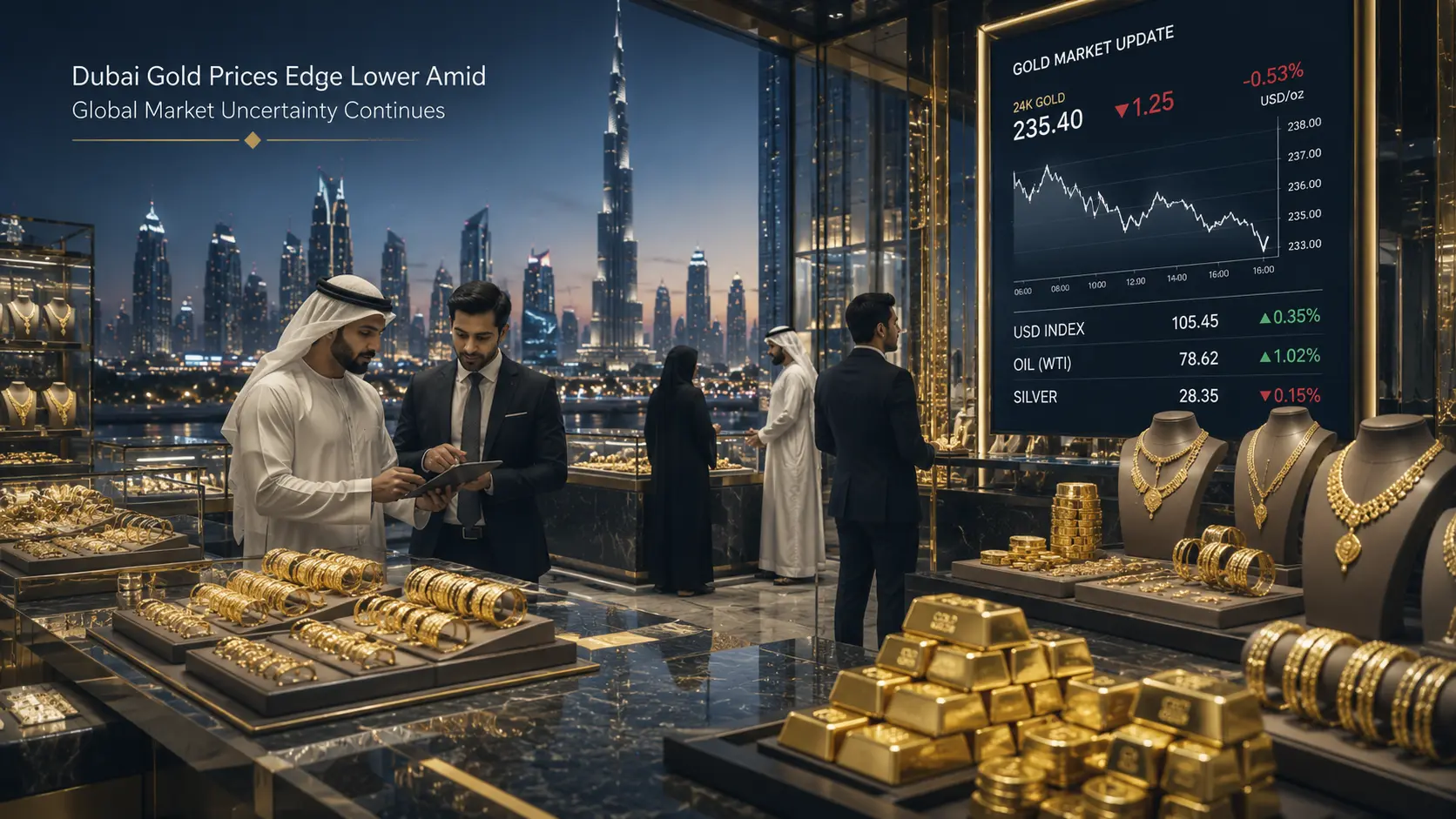
Dubai gold prices have dipped slightly as international bullion markets continue responding to a mix of economic signals that have kept investors cautious. The movement follows recent price swings tied to the US dollar and shifting expectations around interest rates — two factors that tend to push and pull gold prices in opposite directions depending on how they move.
Since Dubai’s retail gold rates track closely with international spot prices, any movement in global markets tends to show up fairly quickly at the counter. Buyers across the Gold Souk and mall-based jewellers are noticing the change, with many adopting a wait-and-see approach before committing to larger purchases.
International Factors Continue Influencing Gold Markets
Gold’s role as a safe-haven asset means it typically attracts more buying interest when the global picture looks uncertain. But that relationship isn’t always straightforward — when the US dollar strengthens or treasury yields rise, the appeal of holding gold can diminish since it doesn’t generate interest income on its own.
Right now, investors are weighing several things simultaneously: inflation trends, central bank policy directions, ongoing trade tensions, and geopolitical developments. That combination is creating the kind of short-term volatility that makes it hard to read the market with confidence in either direction, which tends to produce cautious rather than decisive buyer behavior.

Dubai Remains One of the Region’s Leading Gold Markets
None of this has dented Dubai’s standing as one of the world’s most important gold trading centers. The Gold Souk continues drawing residents and tourists alike, and the city’s reputation for competitive pricing, high purity standards, and an impressive selection of jewellery remains firmly intact.
Gold demand in Dubai tends to follow predictable seasonal patterns — wedding seasons, festive periods, and peak tourism windows all drive buying activity upward. Even during periods of international price volatility, the city’s retail infrastructure and global connectivity keep trade relatively steady.
Investors Continue Viewing Gold as Long-Term Asset
Short-term price movements rarely change the fundamental reason why many people buy gold in the first place. For UAE residents and investors, gold is less about timing the market and more about holding something that retains value over time, provides a hedge against inflation, and adds stability to a broader investment portfolio.
Gold bars, coins, and digital gold products have all grown in popularity, particularly among younger buyers who are thinking about wealth preservation in a more structured way. That underlying demand tends to provide a floor even when spot prices are moving around.
UAE Consumers Watching Price Movements Closely
The buyers showing up at gold retailers right now tend to fall into two camps. Some are holding back, hoping prices soften a little further before they commit. Others are treating the current dip as a reasonable entry point for purchases they were already planning — particularly for bridal jewellery and investment pieces.
Retailers note that tourist demand continues playing a meaningful role in keeping the market active. Visitors from Asia, Europe, and the broader Middle East region consistently contribute to gold sales volumes, which helps smooth out fluctuations in local demand.
Economic Uncertainty Keeps Markets Volatile
The broader global backdrop — inflation pressures, energy market dynamics, trade relations, and questions about economic growth — isn’t going to resolve itself quickly. That means gold markets are likely to remain sensitive to data releases and central bank announcements in the near term.
Even relatively minor shifts in expectations around monetary policy can move prices noticeably, and Dubai’s market will continue reflecting those international movements in its daily retail rates. For buyers with flexibility on timing, staying informed about the global picture is worth the effort in this kind of environment.