

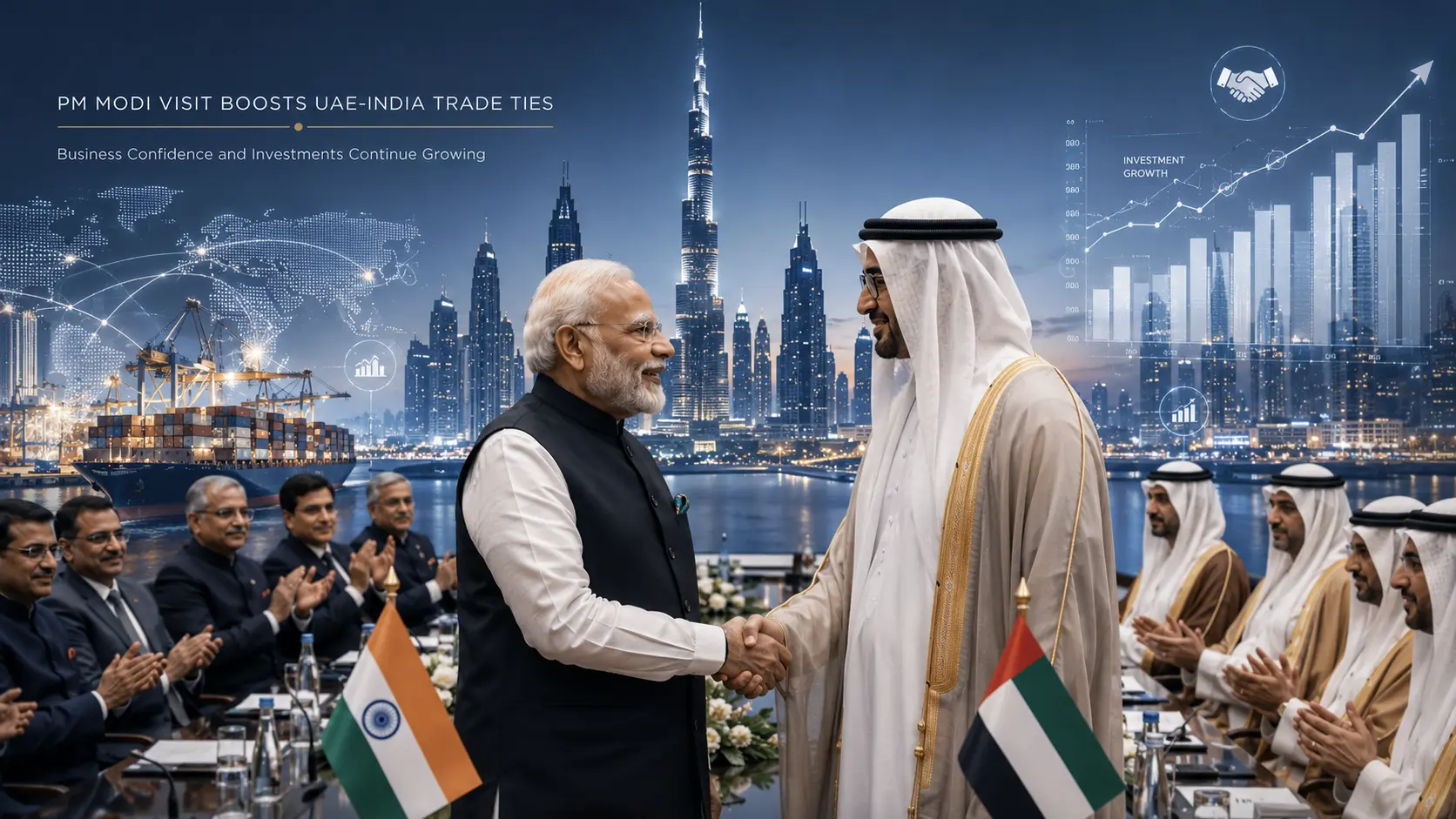
India and the UAE have been building something genuinely significant over the past few years, and Prime Minister Narendra Modi’s latest visit to the UAE has added another chapter to that story. Business leaders and analysts watching the bilateral relationship closely describe the visit as a strong signal — to investors, to businesses on both sides, and to the broader region — that this partnership is in good health and growing.
The foundation for much of this momentum was laid in 2022 with the Comprehensive Economic Partnership Agreement. That deal concretely opened doors, accelerating trade and creating structures for collaboration across industries that hadn’t previously had much formal framework. The results since then have been measurable.
Bilateral Trade Crosses Major Milestone
The headline number from the latest figures is hard to ignore. Bilateral merchandise trade between India and the UAE crossed $100 billion for the first time during FY 2025-26. That’s a historic milestone for any bilateral trading relationship, and it reflects how much ground the two countries have covered in a relatively short period.
The ambition from here is equally striking — both nations are working toward a $200 billion trade target by 2032. Getting from $100 billion to $200 billion requires sustained effort and continued policy alignment, but the trajectory of the past few years suggests the target isn’t unrealistic. Better logistics, easier market access, and growing business confidence on both sides have all contributed to where things are now.
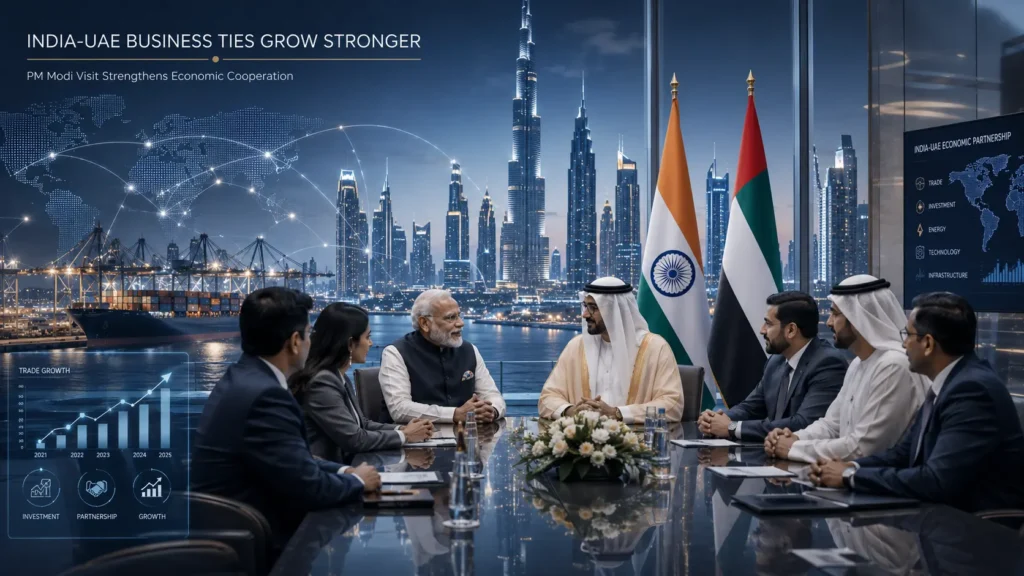
UAE Investments in India Continue Expanding
One of the more concrete outcomes discussed during the visit was fresh investment commitments from UAE entities into India. Reports indicate approximately $5 billion in new investments were discussed, covering banking, infrastructure, and financial services.
Emirates NBD’s announced investment in India’s banking sector was among the headline items. Abu Dhabi-based investment entities also explored additional partnerships linked to infrastructure and development projects. These aren’t the first such commitments, and they won’t be the last — UAE investment in India now spans real estate, renewable energy, ports, logistics, digital technology, and financial services, and the flow in both directions has been accelerating.
Energy Cooperation Remains a Key Focus
Energy has always been near the center of the India-UAE relationship, and the latest visit was no exception. Agreements related to oil supply, strategic petroleum reserves, and liquefied petroleum gas were discussed and signed during the trip.
The logic is straightforward — India has significant and growing energy needs, and the UAE is an important supplier. Both sides benefit from stability and predictability in that relationship. But the conversation is also evolving beyond fossil fuels. Renewable energy, hydrogen technology, and clean energy infrastructure are increasingly featuring in discussions, reflecting a shared interest in where the energy landscape is heading over the next two or three decades.
Dubai Business Community Welcomes Visit
In Dubai, the reaction from the business community has been broadly positive. The city is home to thousands of Indian-owned businesses operating across retail, construction, healthcare, hospitality, and technology — and stronger India-UAE ties create a more predictable and supportive environment for all of them.
Dubai has also become a genuine commercial gateway for Indian companies looking to expand into the Middle East and beyond. For entrepreneurs and established businesses alike, the stability and depth of the bilateral relationship matters. The Indian diaspora in the UAE — one of the largest overseas Indian communities in the world — is woven into the economic fabric of the city in ways that go well beyond just numbers.
Also Read: Dubai’s New Road Project to Cut Travel Time From 104 Minutes to Just 16
Technology and Innovation Partnerships Gain Momentum
Perhaps the area showing the most interesting growth in the India-UAE relationship right now is technology. Artificial intelligence, digital infrastructure, fintech, and innovation partnerships are receiving increasing attention from both governments and private investors.
Discussions during the visit included AI infrastructure, advanced computing, and digital collaboration initiatives. Given Dubai’s growing position as a global technology hub and India’s rapidly expanding digital economy, the overlap between the two countries in this space is considerable and likely to deepen.
Strategic Ties Extend Beyond Trade
The relationship between India and the UAE has genuinely evolved past a purely commercial one. Defense agreements, logistics partnerships, and strategic infrastructure cooperation all featured in discussions during the visit.
High-level diplomatic contact between the two countries has become frequent and routine rather than occasional and ceremonial, which is itself a sign of how normalized and mature the relationship has become. The UAE’s position as a global logistics and financial center sits naturally alongside India’s role as a major Asian economy — and the complementarity between the two continues creating opportunities that both sides are actively working to realize.