

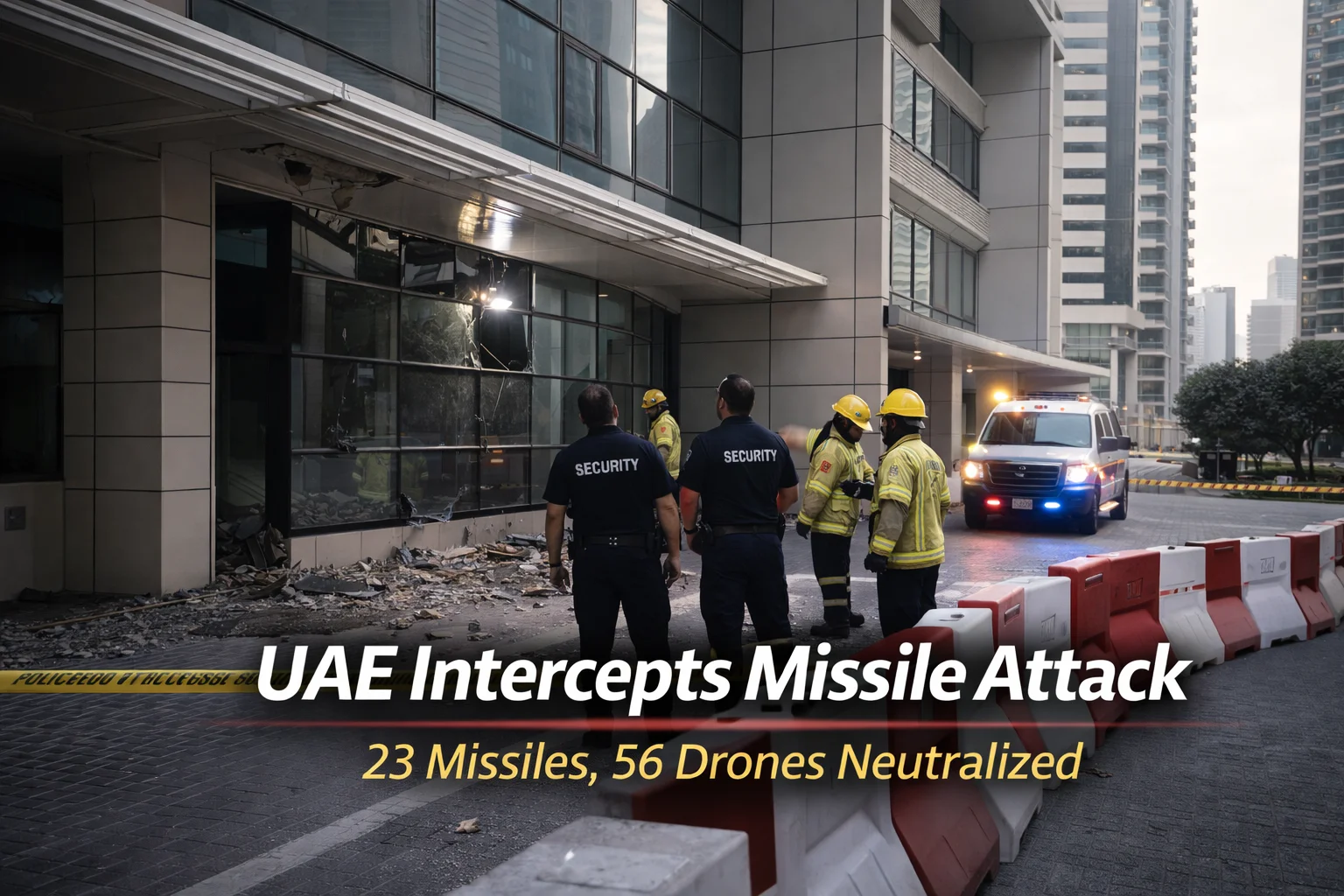
The intensity of the current conflict is noted by the fact that the United Arab Emirates was able to intercept 23 ballistic missiles and 56 drones launched by Iran within one day. The Ministry of Defence assured that all the threats coming in were intercepted and countered using sophisticated air defence systems.
This massive interception indicates the increasing rate of attacks on the UAE. Although the attack was as massive, the government managed to contain the situation and avoid significant destruction at the ground level.
Table of Contents
Dubai Buildings Hit by Falling Debris
The missiles and drones were shot down, but some parts of the destroyed projectiles landed in Dubai. Two different incidents were reported, one in Dubai Marina and another in Dubai Internet City.
Facades of buildings were involved in both incidents, and there were no casualties. Quick response by the emergency personnel teams isolated the areas and safeguarded the people.
No Casualties in Dubai, But Risks Remain
The authorities have assured that no one was killed in Dubai after the debris incidents. This has been regarded as a good result considering the magnitude of the aerial attack.
Nevertheless, the authorities still caution that falling debris is a major danger. Successful interception may cause unplanned destruction in cities.

UAE Defence Systems Show Strong Response
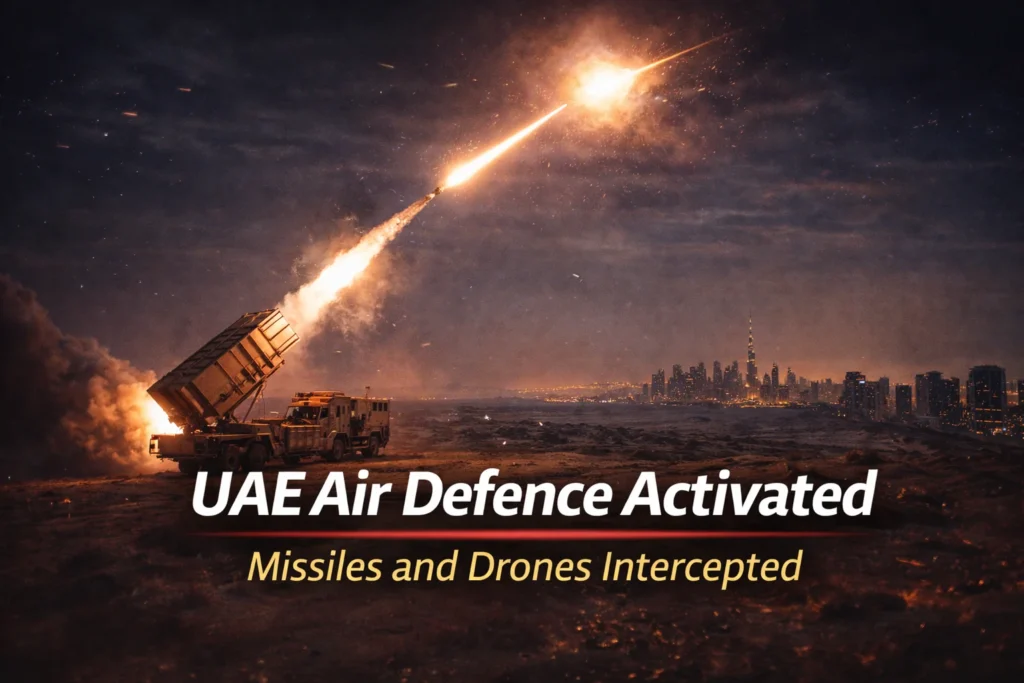
The air defence system in the UAE has been very instrumental in defending the nation. Advanced missile interceptors and radar networks are systems that help in detecting threats and destroying them before they hit.
Such systems have been in operation since the beginning of the war. Their usefulness has contributed to their ability to curb the effects of recurrent missile and drone attacks.
Hundreds of Missiles and Drones Intercepted So Far
The most recent interception is part of an increasing number of neutralized threats since the war started. UAE officials announced that almost 500 ballistic missiles and over 2,100 drones have already been shot down.
This underscores the endurance or persistence of the attacks and the strain on the defence infrastructure. The UAE is on high alert because the situation is still developing.
Ongoing Regional Conflict Driving Attacks
The launching of the missiles and drones is a subset of a larger regional conflict between Iran and several countries in the Middle East. The rise started earlier this year, and it has been followed by successive waves of attacks.
Iran has been attacking strategic points and infrastructures in the region. In turn, other nations, such as the UAE, have reinforced their defensive capabilities and communication with partners.
Impact Beyond Military Targets
Most missiles and drones are being shot down, but the indirect impact is being experienced by civilians. The collapsing debris has led to the destruction of structures and infrastructure in such cities as Dubai and Abu Dhabi.
In other instances, the debris has caused injuries and even deaths in other regions of the UAE. This highlights the wider influence of the war on the non-military targets.
Critical Infrastructure Under Watch
The government has increased security in areas of major infrastructure. Energy plants, transport hubs, and communication networks are under strict scrutiny.
This is in a broader effort of having important services not be interrupted. The governments of the region are taking proactive measures to secure the assets and the individuals.
Public Safety Measures and Awareness
Citizens have been urged to stay patient and stay updated with the government. Governments are advising the population to resist sharing unconfirmed news and use only reliable media.
Some of the safety measures involve staying at home during an alert and avoiding the infected regions. These are aimed at minimizing risk and securing the cooperation of the people in case of an emergency.
Also Read: UAE Iran War News Updates: Trump Deadline on Strait of Hormuz Raises Global Concerns
Dubai Maintains Stability Amid Escalation
Dubai is operating normally despite the tensions that are still there. The city is resilient as businesses, offices, and public services are still active.
Fast emergency response and well-developed infrastructure have contributed to stability. Officials are still encouraging the community and tourists that they are safe.
Air Defence Operations Continue Around the Clock
The defence forces of the UAE are constantly ready since new threats are constantly emerging. The interception operations are round-the-clock to provide national security.
As the conflict does not show any visible signs of reducing, preparedness is one of the priorities. Defence forces are on a constant track of airspace and reacting to threats as they appear.