

The Dubai real estate market entered 2026 with strong momentum, but rising geopolitical tensions in the Gulf have started to shift market dynamics. The ongoing conflict involving Iran, the US, and Israel has created uncertainty across the region, directly impacting investor sentiment and property transactions.
For years, Dubai positioned itself as a safe haven for global investors, offering stability, tax advantages, and high returns. However, recent developments have tested this perception, forcing both buyers and developers to rethink short-term strategies.
Investor Sentiment Turns Cautious
One of the most immediate effects of Gulf tensions has been a noticeable slowdown in decision-making among property investors. While there is no panic selling, many buyers are adopting a “wait-and-watch” approach before committing to large investments.
Real estate agents have reported fewer transactions and longer negotiation cycles, especially in the luxury property segment. This shift highlights how geopolitical risks can quickly influence even the most resilient property markets.
Transaction Volumes and Pricing Trends
Data from early 2026 suggests that transaction volumes have declined compared to previous highs. Some sellers have started offering discounts to attract buyers, particularly in high-end residential projects.
At the same time, the market has not completely stalled. Activity continues in certain segments, with opportunistic investors entering the market to secure deals at more favorable prices. This indicates that while sentiment is weaker, the market remains functional.
Luxury Segment Feels the Heat
The luxury real estate sector in Dubai has been one of the biggest beneficiaries of global wealth inflows in recent years. However, this segment is also the most sensitive to global uncertainty.
Recent reports suggest that high-value property deals, especially villas and waterfront homes, are facing slower closures. Buyers in this category tend to be international investors who are more responsive to geopolitical risks and market signals.
Oversupply Concerns Add to Pressure
Apart from geopolitical tensions, Dubai’s real estate market is also dealing with a growing supply of new properties. Analysts have warned that increasing inventory could put additional pressure on prices if demand slows further.
The combination of rising supply and cautious demand creates a challenging environment for developers. It may lead to pricing adjustments, delayed launches, or more flexible payment plans to attract buyers.
Safe-Haven Status Under Question
Dubai’s long-standing appeal as a safe investment destination is now being tested by regional instability. Missile and drone-related incidents have raised concerns among investors and residents alike.
Although the UAE continues to maintain strong security and stability, even limited disruptions can affect perception. For global investors, perception often plays a key role in decision-making, sometimes more than actual risk.
Financial Markets Reflect Real Estate Trends
The impact of tensions is not limited to real estate alone. UAE stock markets have shown volatility, with property-related companies witnessing fluctuations during periods of heightened conflict.
This financial market reaction often mirrors real estate sentiment, as both sectors are closely linked through investor confidence and economic outlook.
Resilience Still Holds the Market Together
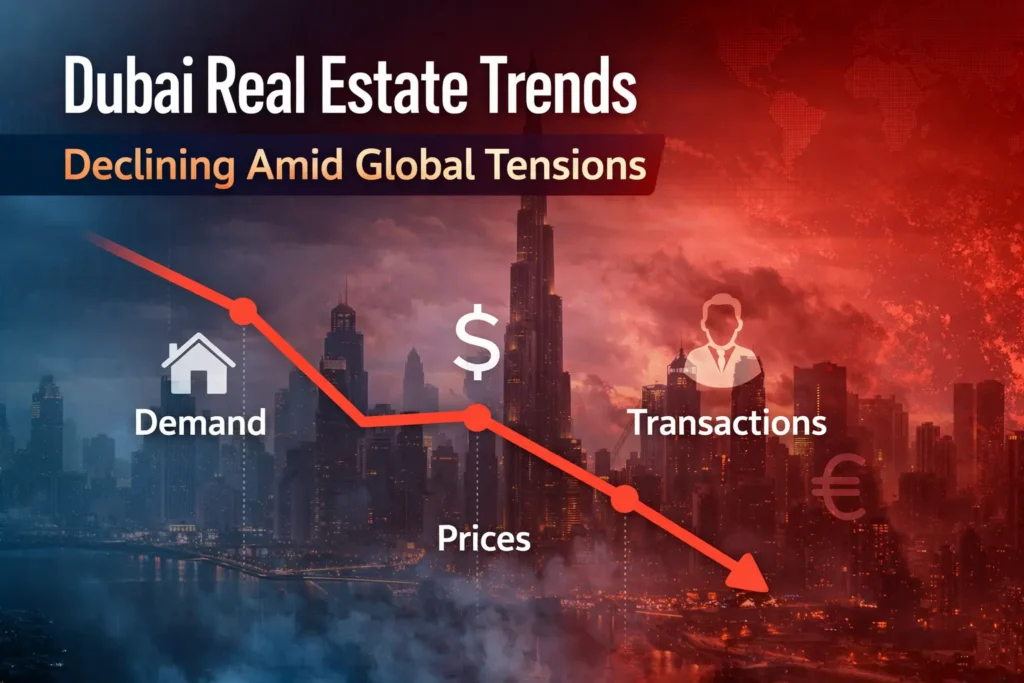
Despite the challenges, Dubai’s property market continues to show resilience. Strong fundamentals such as high rental yields, a diverse investor base, and long-term infrastructure growth remain intact.
Some developers and investors remain optimistic, believing that the current slowdown is temporary and linked mainly to external factors rather than internal weaknesses.
Shift Towards a Balanced Market
The current situation is gradually transforming Dubai’s real estate market from a high-growth phase to a more balanced and cautious environment. Instead of rapid price surges, the market is entering a phase where stability and sustainability take priority.
Buyers are becoming more selective, focusing on long-term value rather than quick gains. This shift could ultimately lead to a healthier and more mature real estate market in the long run.
Also Read: IPL 2026 Phase 2 Schedule Announced: Dates, Venues, Matches and Key Fixtures
Impact on Rental Market and End Users
While sales activity has slowed in some segments, the rental market continues to remain relatively strong. Many residents prefer renting during uncertain times, which supports demand in the leasing segment.
This trend helps offset some of the pressure on developers and property owners, ensuring steady cash flow even when sales slow down.
What Lies Ahead for Dubai Real Estate
The future of Dubai’s real estate sector will largely depend on how geopolitical tensions evolve in the coming months. A quick resolution could restore confidence and bring back strong investment flows.
On the other hand, prolonged uncertainty may lead to further price corrections and slower growth, especially in premium property segments. However, Dubai’s ability to adapt and recover from past crises suggests that the market will continue to evolve rather than collapse.