

Rising Tensions Trigger Security Concerns in Gulf Financial Hubs. The escalating conflict involving Iran, Israel, and the United States of America is sending shockwaves across the Middle East, with financial hubs such as Dubai and Doha experiencing growing uncertainty. As military tensions intensify in the region, international companies and global banks are taking precautionary measures to protect employees and maintain business continuity.
Several multinational financial institutions have begun evacuating offices or shifting operations to remote work as security risks increase. The developments highlight how geopolitical conflict can quickly impact global financial centres that depend heavily on stability and investor confidence. Dubai, widely known as the Middle East’s leading financial and business hub, is now facing a period of heightened caution as companies reassess security risks across the region.
Major Banks Move Staff Out of Dubai Offices
Some of the world’s largest banking institutions have started implementing emergency measures in response to the rising regional threats. Global banks, including Citigroup and Standard Chartered, have reportedly instructed employees to leave their Dubai offices and work remotely as a precaution.
The decisions came after Iran warned that economic and banking interests connected to the United States and Israel could become potential targets in the ongoing conflict.
Employees working in several financial institutions across Dubai were told to stay away from offices while the situation continues to evolve. Many organizations activated remote working policies to ensure operations continue without exposing staff to potential risks.
These steps reflect a broader shift among global companies toward precautionary security planning during periods of geopolitical uncertainty.
HSBC Closes Qatar Branches Amid Regional Threats
The ripple effects of the conflict have also reached neighboring Qatar. HSBC temporarily closed its branches in the country as tensions escalated across the Gulf.
The closure came as Iran issued warnings about targeting economic infrastructure connected to Western allies. Financial institutions across the region have since reassessed their security protocols and operational strategies.
Banks emphasized that the safety of employees and customers remains their top priority. Even while offices close or staff relocate, many institutions continue serving clients through digital platforms and remote working arrangements.
These actions demonstrate how international financial networks respond quickly when regional security risks increase.
Consulting Firms and Businesses Activate Safety Plans
The wave of precautionary measures has not been limited to banks alone. Global consulting firms and professional service companies have also taken steps to safeguard their employees.
Companies such as Deloitte and PwC reportedly evacuated or temporarily closed offices in parts of Dubai’s financial district as security concerns grew.
Many firms have activated crisis management protocols designed to protect staff during emergencies. These protocols often include remote working policies, evacuation plans, and enhanced monitoring of regional security developments.
For multinational companies operating in global financial centers, such measures are a standard response when geopolitical tensions threaten business environments.
Dubai’s Role as a Global Financial Hub
Dubai has built its reputation over the past two decades as one of the most important financial centers in the Middle East. The city hosts hundreds of international banks, financial institutions, and multinational companies within the Dubai International Financial Centre.
This strategic position makes Dubai an attractive base for global operations connecting Europe, Asia, and Africa. However, the same global connectivity also means that regional conflicts can influence business operations.
Financial institutions must constantly evaluate risk and ensure that their staff and infrastructure remain secure during periods of instability.
Despite the current tensions, many financial leaders continue to express confidence in the long-term stability of Dubai’s financial sector.
Iran’s Threats Target Economic Infrastructure
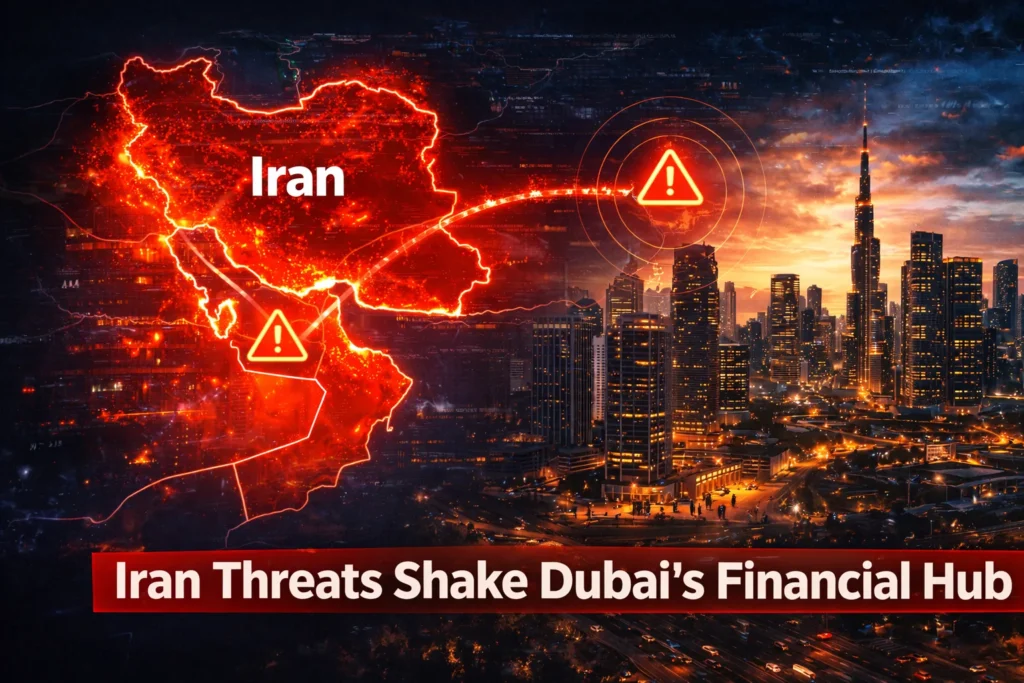
The evacuation decisions followed warnings from Iranian officials that economic and financial institutions linked to the United States and Israel could become potential targets.
These warnings were issued after strikes carried out by the United States and Israel against Iranian military and infrastructure targets. In response, Iran launched retaliatory actions across the region and threatened broader economic targets.
Such threats have increased concerns among international companies operating in the Gulf. Financial institutions, technology firms, and multinational corporations are now reviewing contingency plans in case the conflict expands further.
The situation demonstrates how modern geopolitical conflicts often extend beyond military targets and into economic infrastructure.
Drone Attacks and Regional Security Alerts
Security concerns intensified after reports of drone attacks and missile activity across parts of the Gulf region. A drone strike near Dubai Creek Harbour earlier triggered a fire in a residential building, although authorities confirmed there were no injuries.
These incidents have reinforced the perception that the conflict is no longer limited to traditional battlefields. Gulf nations have strengthened air defense systems and emergency response measures to protect critical infrastructure.
The United Arab Emirates has already intercepted hundreds of drones and missiles launched toward the country during the ongoing conflict.
Even when attacks are intercepted, debris and falling projectiles can still cause damage to buildings and public spaces, prompting authorities to maintain strict security monitoring.
Also Read: Iranian Drone Hits Building Near Dubai Creek Harbour Amid Escalating Middle East Conflict
Impact on Global Trade and Financial Markets
Beyond immediate security concerns, the conflict has also begun affecting global markets and trade routes. Shipping traffic through the Strait of Hormuz has faced disruptions after attacks on vessels and warnings to international shipping companies.
The Strait of Hormuz is one of the most important maritime corridors in the world, carrying a large share of global oil shipments. Any instability in this region quickly influences global energy markets and trade flows.
Financial markets also react rapidly to geopolitical risks. Investors closely monitor developments in the Gulf because the region plays a central role in global energy supply and financial activity.
Companies operating in the region must therefore balance risk management with maintaining economic activity.
Businesses Monitor Developments as Situation Evolves
As tensions remain high, businesses across the Gulf continue to monitor developments closely. Many companies have activated risk management teams and security advisors to assess possible scenarios.
These teams analyze political developments, military actions, and potential threats to infrastructure. Based on these assessments, organizations may adjust staffing levels, travel policies, and office operations.
While many companies have shifted temporarily to remote work, business operations in Dubai and other Gulf cities continue through digital infrastructure and international networks.
Global corporations remain cautious but are also focused on maintaining stability in one of the world’s most strategically important economic regions.