

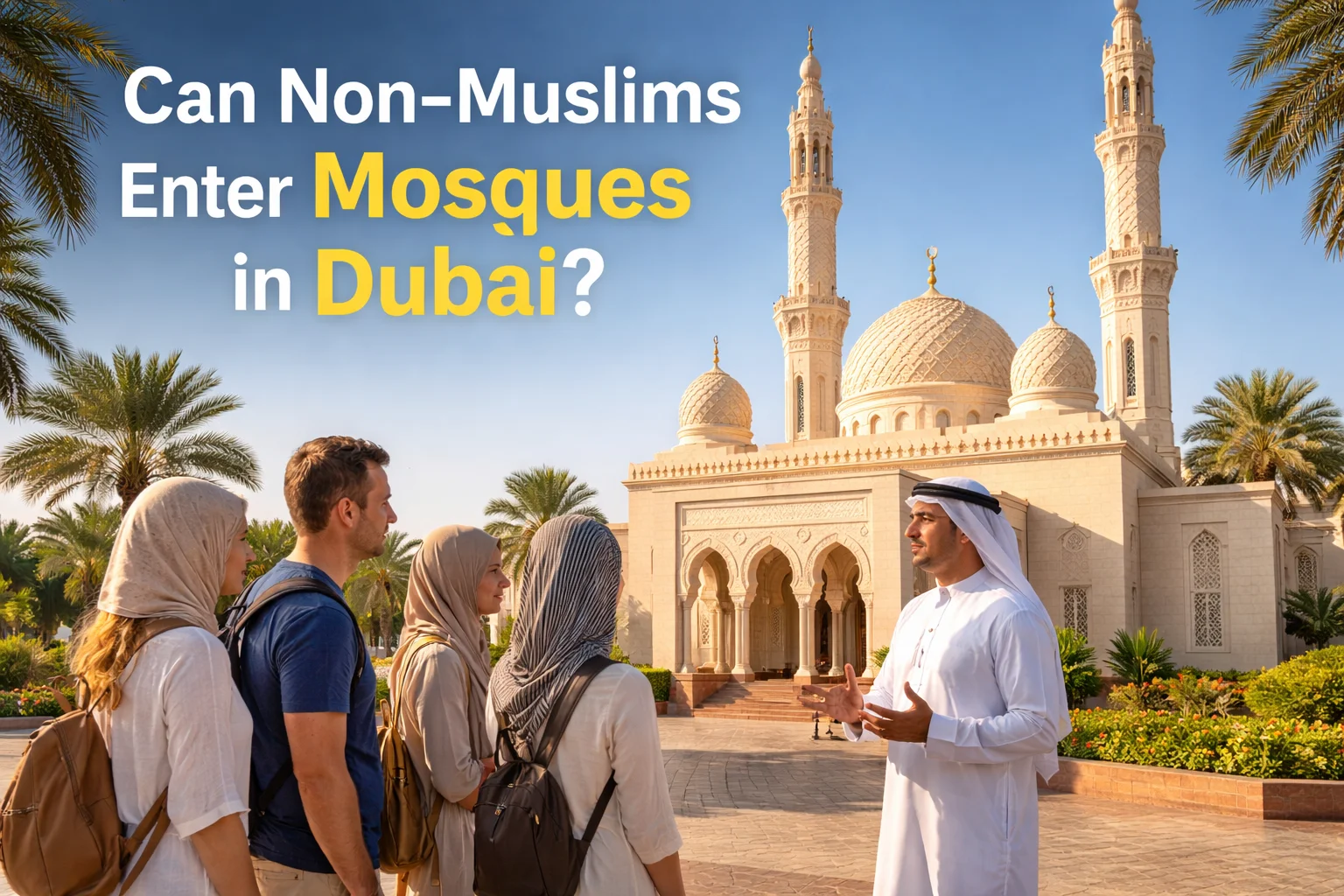
Can Non-Muslims Enter Mosques in Dubai? Yes, non-Muslims can enter certain mosques in Dubai, but access is limited to specific locations and guided cultural tours. While most mosques remain reserved for Muslim worshippers, a few allow travelers to explore Dubai’s religious heritage.
Dubai is home to many beautiful mosques known for their architecture and cultural significance. Many visitors are curious about whether non-Muslims are allowed to enter these religious sites. The answer is yes, but only in certain mosques and under specific conditions.
Non-Muslims can enter select mosques in Dubai through guided cultural tours. These tours are designed to help visitors understand Islamic traditions, architecture, and daily worship practices. However, most mosques in the city remain reserved for Muslims, especially during prayer times.
Dubai’s approach balances tourism and respect for religious traditions. The city welcomes visitors to learn about Islam while maintaining the sacred nature of mosques as places of worship. Understanding the rules helps visitors enjoy a respectful and educational experience.
Why Most Mosques Restrict Entry
Mosques are primarily places of prayer for Muslims. Islamic guidelines emphasize cleanliness, spiritual focus, and proper preparation before entering. Because of these traditions, many mosques limit entry to practicing Muslims only.
During daily prayers, mosques are often crowded with worshippers. Allowing large numbers of tourists during these times could disturb the religious atmosphere. This is one of the reasons most mosques remain closed to non-Muslim visitors.
The restrictions are not meant to exclude people but to preserve the sanctity of worship. Dubai has therefore created special programs that allow visitors to explore selected mosques through organized tours.
Jumeirah Mosque – The Most Popular Mosque for Visitors
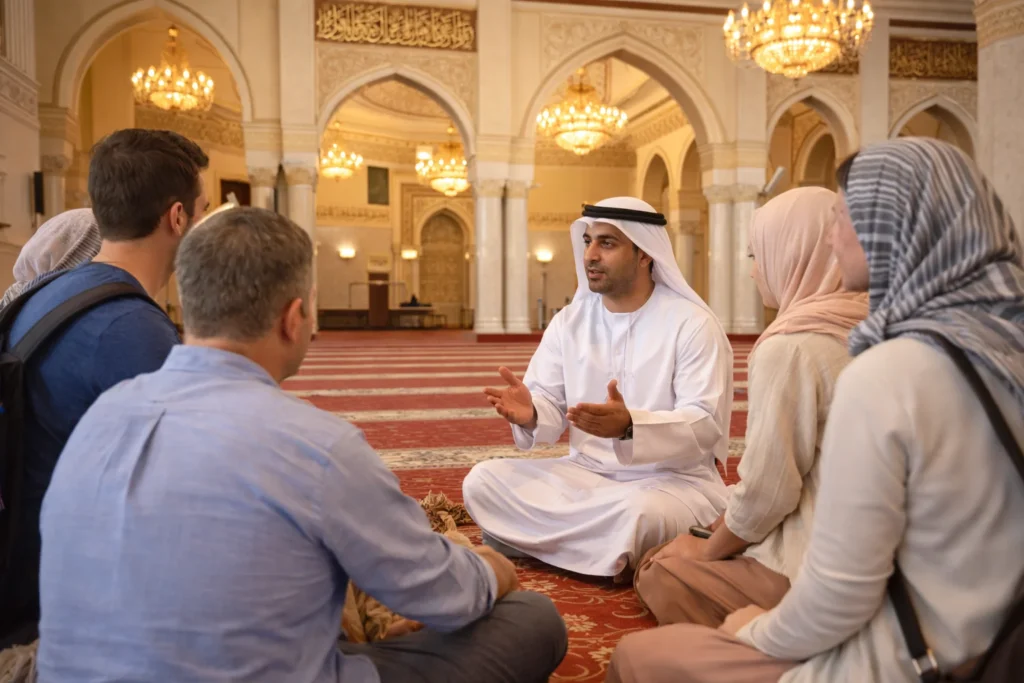
Jumeirah Mosque is the most well-known mosque in Dubai that welcomes non-Muslim visitors. It is famous for its stunning white stone architecture and traditional Fatimid design. The mosque is considered one of the best cultural attractions in the city.
Guided tours are organized by the Sheikh Mohammed Centre for Cultural Understanding. These tours are part of the “Open Doors, Open Minds” initiative. The goal is to promote cultural exchange and understanding.
Tours usually run daily except on Fridays. Common timings include 10:00 AM and 2:00 PM sessions. Each tour lasts around 75 minutes and often includes refreshments such as Arabic coffee and dates.
What to Expect During a Jumeirah Mosque Tour
During the guided tour, visitors learn about Islamic culture and traditions. Guides explain prayer rituals, the meaning of the mosque’s architecture, and the role of Islam in daily life. Visitors are encouraged to ask questions openly.
The tour also covers basic Islamic beliefs and practices. Many travelers appreciate the opportunity to learn directly from knowledgeable guides. It creates a welcoming environment for cultural understanding.
Photography is generally allowed in many areas of the mosque. However, visitors should always confirm with guides before taking pictures. Respectful behavior is expected at all times.
Also Read: Can You Bargain in Dubai Gold Souk? Expert Tips for Better Deals
Al Farooq Omar Bin Al Khattab Mosque Tours
Another mosque that welcomes non-Muslims is the Al Farooq Omar Bin Al Khattab Mosque. This mosque is inspired by the famous Blue Mosque in Istanbul. Its impressive architecture and large prayer hall attract many visitors.
Guided tours are usually available from Sunday to Thursday. Common times include 10:00 AM and around 4:15 PM. Reservations are required in advance before visiting.
These tours focus on architecture, Islamic history, and religious traditions. Visitors can learn about mosque design elements such as domes, calligraphy, and geometric patterns.
Other Mosques with Limited Visitor Access
Some mosques in Dubai may occasionally allow non-Muslim visitors outside prayer times. However, these visits usually require special arrangements or private tours. Availability can vary depending on the mosque.
For example, the Iranian Mosque sometimes allows guided visits through organized cultural groups. However, schedules are not always fixed. Contacting a guide or tour operator is often necessary.
Grand Bur Dubai Masjid offers a different type of experience. Visitors can climb its tall minaret for views of the city. However, entry into the main prayer hall is typically restricted.
Dress Code and Mosque Etiquette
Visitors must follow a modest dress code when entering a mosque. Women should cover their arms, legs, and hair with a headscarf. Many mosques provide abayas and scarves for visitors who need them.
Men should wear long trousers and shirts with sleeves. Shorts and sleeveless tops are generally not allowed inside mosques. Proper clothing shows respect for the religious setting.
Shoes must always be removed before entering the prayer area. Visitors should remain quiet, especially during prayer times. Eating or drinking inside the mosque is not permitted.
Photography and Visitor Conduct
Photography is often allowed in visitor-friendly mosques, but permission should always be confirmed first. Some areas may be restricted for privacy reasons. Taking photos of worshippers without permission is discouraged.
Visitors should speak softly and follow the instructions of the guides. Respectful behavior helps maintain the peaceful environment of the mosque. Cultural sensitivity is highly valued.
Phones should be kept on silent mode. This prevents disturbances during prayer sessions. Following these small rules ensures a positive experience for everyone.
Visiting During Ramadan
Mosque tours may operate on adjusted schedules during Ramadan. Prayer times become more frequent, and visitor hours may be limited. It is important to check tour availability in advance.
During Ramadan, visitors should also dress and behave with extra respect. Eating or drinking in public near mosques during fasting hours should be avoided. Awareness of local customs is essential.
Despite these adjustments, mosque visits during Ramadan can be meaningful. Visitors may witness special prayer gatherings and unique spiritual traditions.
Cultural Importance of Mosque Tours in Dubai
Dubai promotes mosque tours as part of its cultural tourism efforts. Programs organized by cultural centers encourage dialogue between visitors and local communities. These experiences help travelers understand Islamic culture beyond stereotypes.
The “Open Doors, Open Minds” program plays a key role in these initiatives. It allows visitors to learn about faith, history, and architecture in a welcoming environment. Many tourists describe these tours as one of the most memorable experiences in Dubai.
As of 2026, there have been no major policy changes regarding mosque access for non-Muslims. The current system of guided cultural tours continues to operate successfully. Visitors are encouraged to respect religious traditions while enjoying the opportunity to learn about Dubai’s cultural heritage.