

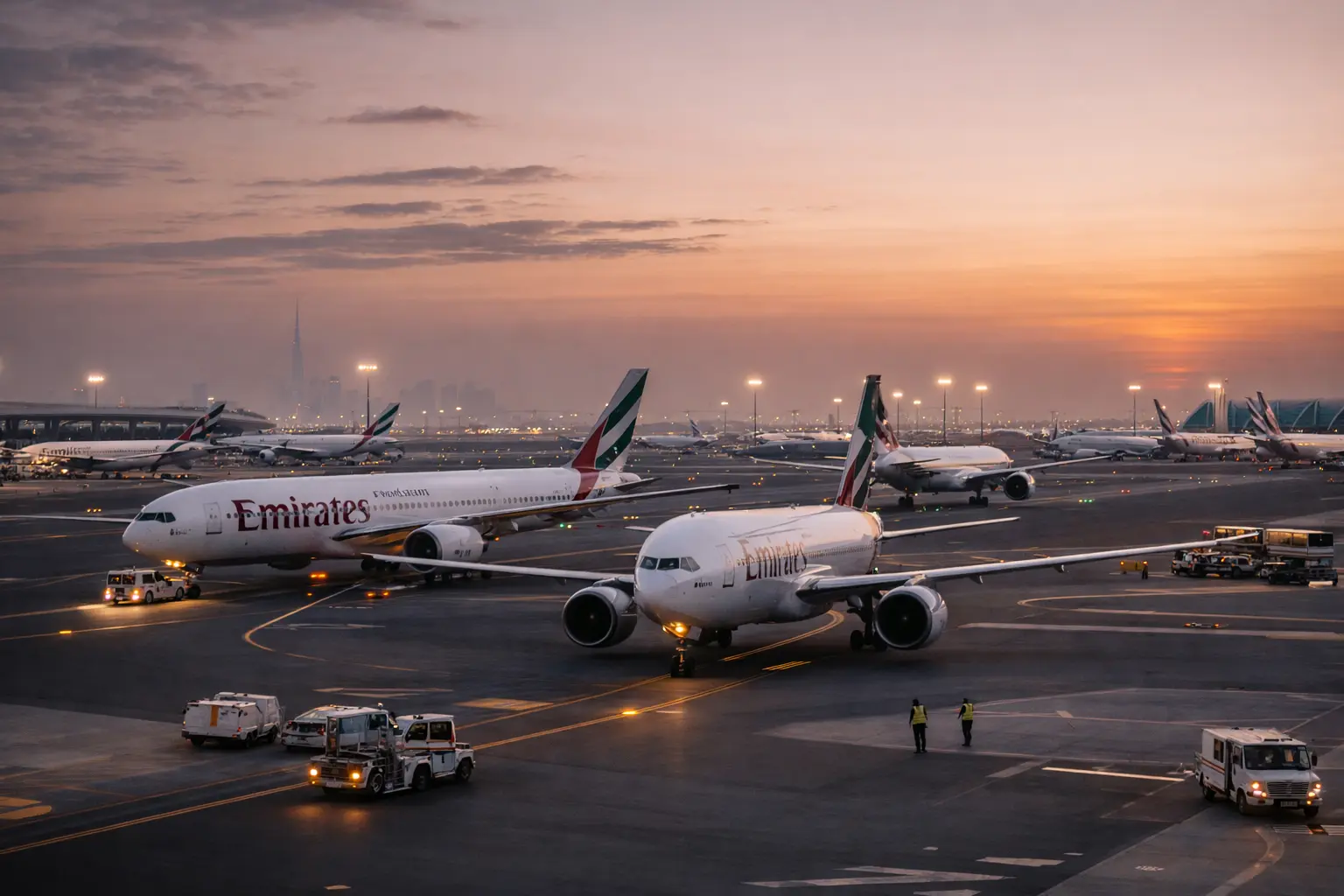
After an unprecedented two-day halt in aviation activity, major carriers in Dubai and Abu Dhabi have started to resume regular flight operations. The suspension followed regional security tensions that forced the closure of airspace to ensure passenger and aircraft safety. As airports reopen and flights restart, travellers are slowly returning to travel plans that were abruptly disrupted.
The temporary standstill grounded a large number of flights in one of the world’s busiest aviation hubs. Airlines had paused services as a precautionary measure while authorities monitored safety in Gulf airspace. This disruption affected thousands of passengers and international connections, but the resumption marks a key step toward restoring normal travel.
Why Flights Were Suspended
The suspension of flights across the UAE followed rising regional tensions after military activity involving Iran, the United States, and Israel. Concerns over potential threats to civilian aircraft prompted aviation authorities to close the skies temporarily. The decision prioritized the safety of passengers and crew alike.
Both Dubai and Abu Dhabi airspace were affected, causing a ripple effect across global air travel. With the Gulf region serving as a key transit point between continents, the closure had broad implications for airlines and passengers worldwide. International carriers rerouted aircraft and delayed departures until authorities gave clearance to resume normal operations.
Initial Impact on Travellers
When the closure was announced, airports quickly filled with passengers facing uncertainty. Many travellers were left waiting in terminals, unsure of when flights would depart. Major hubs such as Dubai International Airport, known for connecting flights across continents, saw an unusual reduction in activity as departure boards switched to delay and cancellation messages.
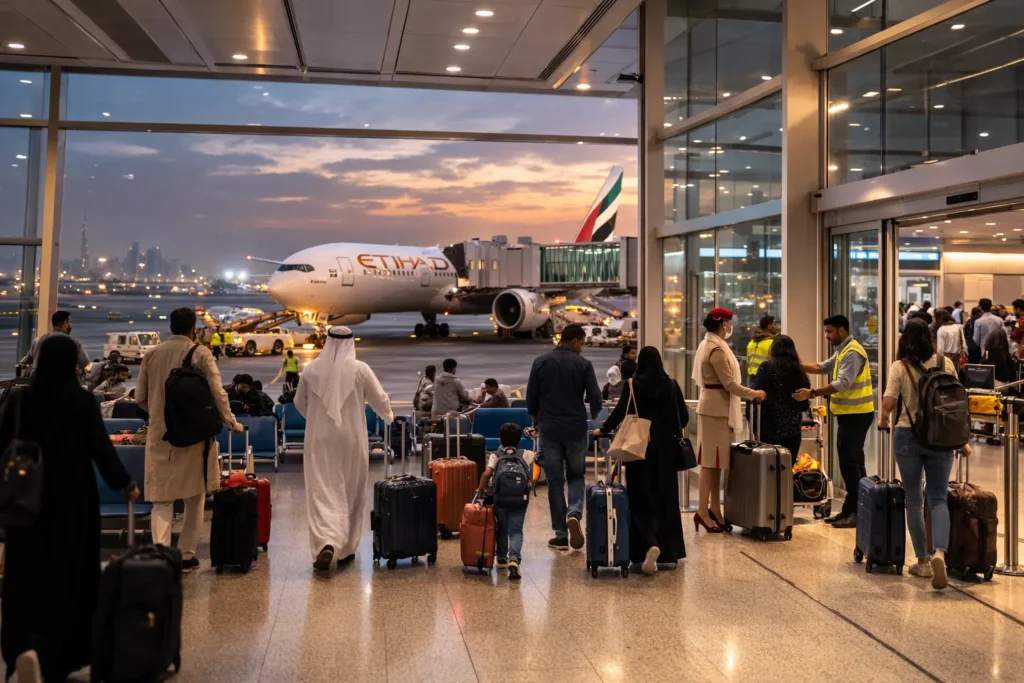
Passengers reported long queues, crowded lounges, and a scramble to seek updated travel information. Some flights bound for destinations across Europe, Asia, and North America were delayed or diverted to alternate airports during the airspace closure. Airports provided guidance and support as they navigated the unprecedented situation.
Airline Responses and Passenger Support
Airlines responded by offering rebooking options, refunds, and customer service assistance to affected passengers. Emirates and Etihad Airways, two of the UAE’s largest carriers, updated passengers through official channels and encouraged travellers to check flight statuses before arriving at the airport. Communication played a vital role in reducing confusion and reassuring passengers.
Air Arabia and Flydubai also extended customer support to help travellers manage sudden changes. Many airlines allowed passengers to reroute journeys or postpone travel dates without penalty, easing some of the immediate stress caused by the disruption.
The Road to Resumption
Once authorities deemed it safe for the airspace to reopen, flight operations began a phased resumption. Air traffic control teams coordinated carefully with airline pilots and ground staff to manage departures and arrivals in a safe and orderly manner. The return to normal schedules did not happen instantly, but airports reported growing flight activity as the day progressed.
Baggage handling, boarding procedures, and staff deployment returned to standard routines after being temporarily scaled back during the closure. International flights slowly took off again, reconnecting Dubai and Abu Dhabi with major global destinations.
Passenger Experiences After Resumption
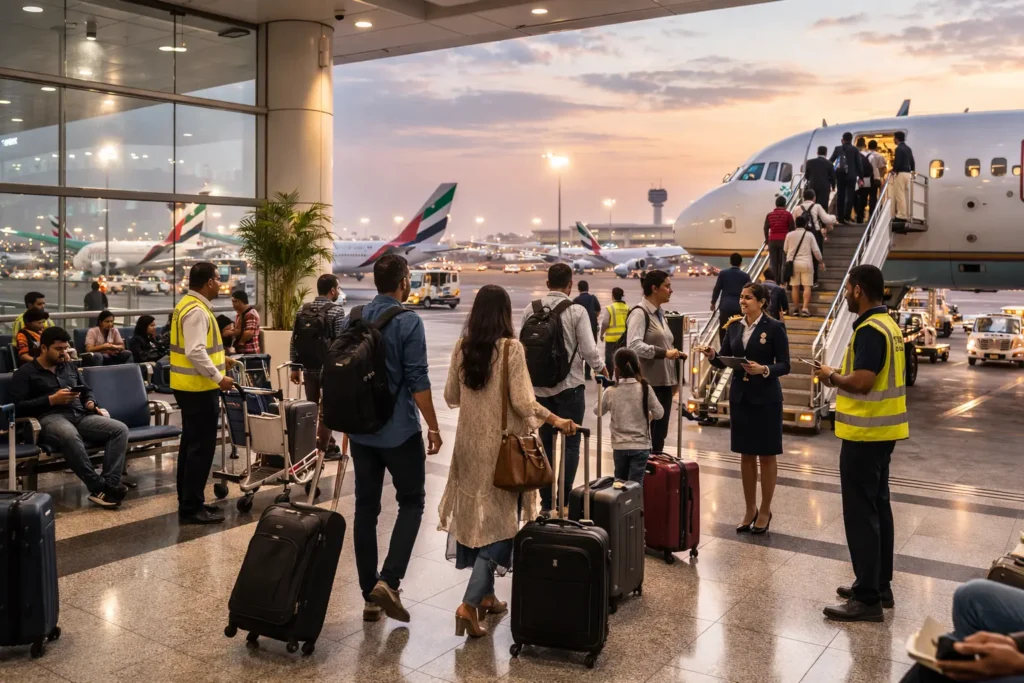
For many travellers, the restart of flights brought relief. Passengers who had been stranded or delayed were finally able to continue their journeys. Airports reported busy departure halls as flights prepared to leave for destinations in Europe, Africa and Asia.
Some passengers shared stories of long waits but also expressed gratitude as flights resumed. Many used the waiting time to connect with fellow travellers and make contingency plans. Airports and airline lounges buzzed with activity as operations gradually stabilized.
Regional Aviation and Airspace Safety
The resumption of flights does not mean the end of caution. Aviation authorities in the UAE and the wider Gulf region remain vigilant, monitoring airspace closely for any signs of disruption. Safety procedures are still in place to ensure flights can operate securely as geopolitical tensions evolve.
Airlines also continue to adjust flight plans and communicate with international aviation agencies to ensure that all routing decisions prioritize safety. The collaborative effort between aviation stakeholders reflects a commitment to prevent similar disruptions in the future.
Effects on International Travel Networks
The temporary closure of Gulf airspace had effects far beyond the UAE. Airlines worldwide adjusted their routes to bypass restricted areas, leading to longer journey times and increased fuel costs. Long-haul carriers flying between Europe and Asia had to divert or pause flights, affecting connections and schedules.
Some airlines used alternative flight paths over Africa or other regions to avoid impacted airspace. These adjustments helped maintain essential services but also underscored how interconnected global aviation has become. With travel resuming, many carriers are reviewing contingency plans to better handle future uncertainties.
Government and Industry Statements
UAE aviation authorities reiterated that safety remains their top priority. Statements highlighted that the phased restart of flights followed intensive safety assessments and coordination with international partners. Officials assured travellers that airspace assessment protocols are continually reviewed to address any evolving threats.
Industry bodies have also stressed the importance of clear communication during crises. Airlines and airports maintained updates through official websites, social media channels, and airport signage to keep passengers informed. This transparent approach helped ease tensions during a difficult period for air travellers.
Looking Ahead for Travel Plans
As flight operations continue to normalise, travellers are advised to monitor airline notifications closely. Many airlines are still adjusting schedules to accommodate delays caused by the earlier halt. Passengers with upcoming travel plans are encouraged to verify departure times and check with airline support for any required itinerary changes.
Travel demand appears to be rebounding as confidence returns. Airports across the UAE are welcoming back international flights and reconnecting passengers with seamless transit options once again. Airlines have noted growing booking activity as travellers seek to resume postponed trips and new journeys alike.
Also Read: Are There Gay Bars in Dubai? What LGBTQ+ Travelers Need to Know
Final Update on UAE Flight Resumption
Airport terminals in Dubai and Abu Dhabi are once more abuzz with passengers preparing for takeoff. Flight information boards show departures across continents as normal flight operations re-establish themselves. The phased return of airline services marks a step toward restoring trust in global air travel during uncertain times.