

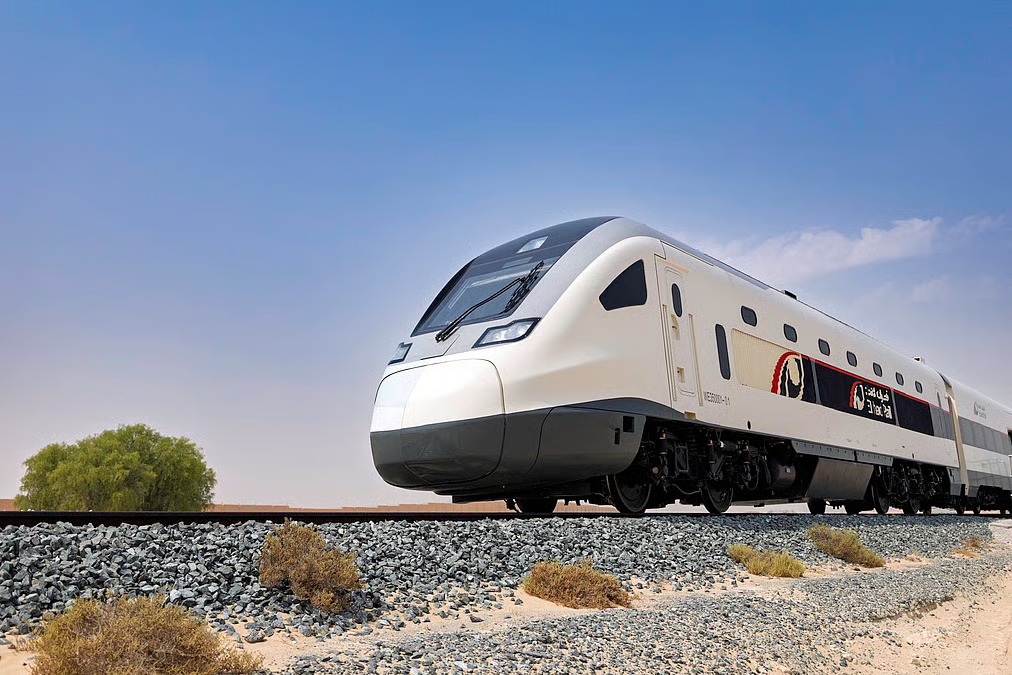
The UAE is about to experience a significant transport revolution as Etihad Rail is ready to introduce the first nationwide passenger rail network in the country in 2026. The long-awaited service will link the Emirates capital of Abu Dhabi with Dubai, Sharjah, and Fujairah, providing the Emirates with a viable alternative to road transport by offering a fast, reliable, and sustainable transportation solution.
The passenger network will be extensive, covering Al Sila, which is close to the Saudi border in the west, to the eastern coast of Fujairah after many years of massive development of infrastructure and testing. The project is a major milestone in the UAE’s quest to develop the best transport networks that will facilitate economic development, social development, and environmental sustainability.
Table of Contents
What the Etihad Rail passenger network includes
The national rail system will involve 11 strategically positioned passenger stations, which have been planned to serve major cities, residential communities that are growing, industrial hubs, educational centres, and cultural destinations. Such stations will connect the life at the city with the towns of the desert and the coast, forming a real nationwide network.
Stations like Al Dhannah (previously Ruwais), Madinat Zayed, and Meerairaa will enhance connectivity in the area of Al Dhafra, whereas Mohammed bin Zayed City will serve as a major hub in the capital. The Jumeirah Golf Estates station in Dubai will be connected to the Dubai Metro Red Line, such that there is a smooth connection within the city. Sharjah, University City, and Al Dhaid will serve students, professionals, and central communities, and the station based in Fujairah, Sakamkam (Al Hilal), will be responsible for anchoring the eastern terminus.
| Near the Saudi border, a key for cross-border travel. | Emirate/Region | Key Significance & Connections |
| Al Sila | Abu Dhabi (West) | Formerly Ruwais, a major industrial and growing urban hub. |
| Al Dhannah | Abu Dhabi (West) | Formerly Ruwais; a major industrial and growing urban hub. |
| Al Mirfa | Abu Dhabi (West) | A coastal town known for its beaches and local culture. |
| Madinat Zayed | Abu Dhabi (West) | The primary hub for the capital connects to the city transport. |
| Mezairaa | Abu Dhabi (West) | Gateway to the Liwa Oasis and rich Emirati heritage sites. |
| Mohammed bin Zayed City | Abu Dhabi (Capital) | The primary hub for the capital connects to city transport. |
| Al Faya | Abu Dhabi/Dubai Border | The primary hub for the capital connects to the city’s transport. |
| Jumeirah Golf Estates | Dubai | Linked directly to the Dubai Metro Red Line. |
| University City | Sharjah | An educational and commuter hub for students and staff. |
| Al Dhaid | Sharjah (Central) | An oasis town known for its fresh produce and markets. |
| Sakamkam (Al Hilal) | Fujairah | The eastern terminus connects the coast to the network. |
High-speed travel across the Emirates
Speed is one of the most transformative features of Etihad Rail’s passenger service. The trains will travel at a cruising speed of up to 200 km/h, and the travelling time will be greatly shortened since there will be no congestion on the highway.
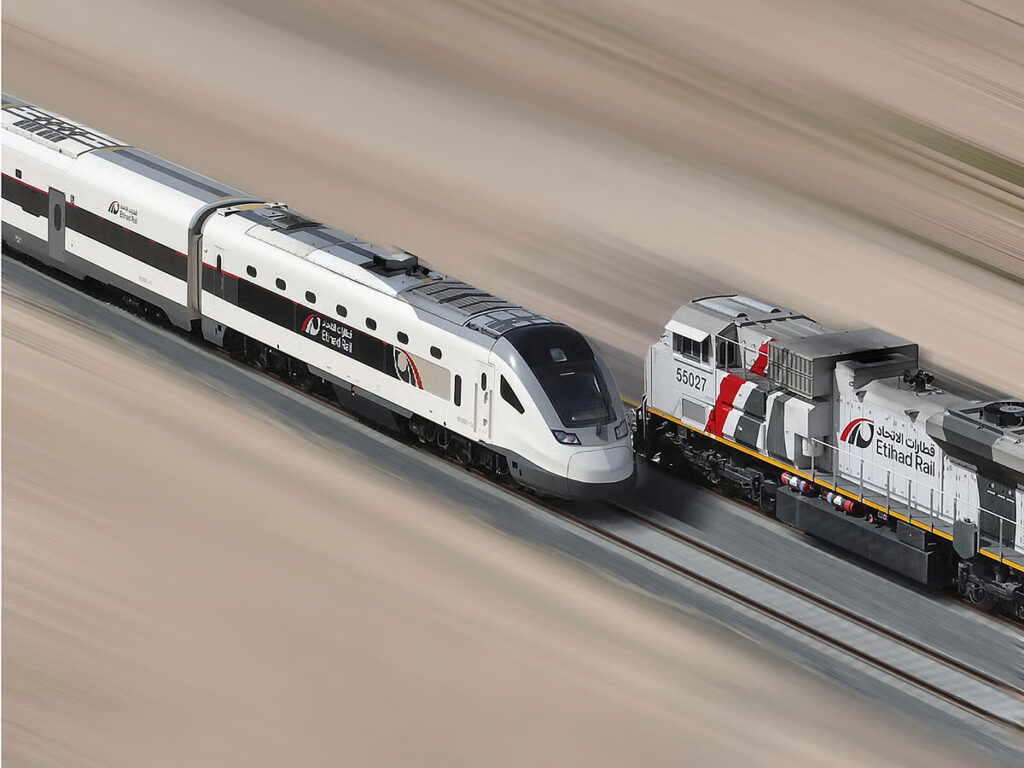
Travel times between Abu Dhabi and Dubai will be approximately 57 minutes, and high-speed services may be reduced in the future to a maximum of 30 minutes. The Abu Dhabi to Fujairah journey will take around 105 minutes, and journeys to Al Ruwais will take around 70 minutes. These savings on time are an enormous lifestyle change for daily commuters and intercity travellers.
| Route | Estimated Travel Time |
| Abu Dhabi ↔ Dubai | 57 minutes (High-speed: 30 mins) |
| Abu Dhabi ↔ Al Ruwais | 70 minutes |
| Abu Dhabi ↔ Fujairah | 105 minutes |
| Al Ain ↔ Sohar (Oman) | 47 minutes |
A modern, airline-style onboard experience
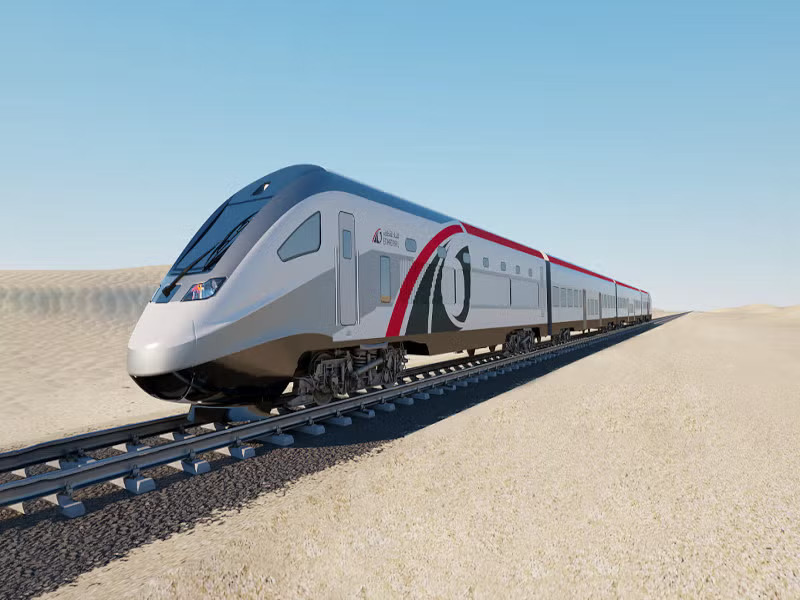
The passenger trains of the Etihad Rail, which have been made by CAF in Spain, are crafted to carry up to 400 passengers per way and are a fusion of comfort, functionality, and modernity. Onboard experience is supposed to be more like that of an airline cabin compared to a train of higher quality.
The passengers will have the option of First Class, Business Class, and plush Economy Class with a 2 + 2 seating arrangement. Every seat will have a charging point and high-speed Internet connection so that travellers who need to work or watch content can do it during the flight.
The state-of-the-art air-conditioning units, designed to suit the demands of the UAE climate, will help keep the ride silent and comfortable even in the harshest summer conditions. Onboard airlines are also going to offer a variety of food and drinks.
Seamless door-to-door connectivity
The strategy of Etihad Rail not only recognizes the fact that travel does not finish at the station but also pays significant attention to first- and last-mile connectivity. Metro lines will be connected to major stations, as well as local buses and special zones with taxis, which will help to make door-to-door travel more convenient and time-saving.
Having a digital-first approach in terms of ticketing, the passengers can plan, book, and access their journeys via a mobile application and utilize smart gates to enter with haste and contactlessly. This unified solution implies that a resident would take less than 90 minutes to get to Abu Dhabi by bus and rail, without getting exhausted as a result of long road journeys.
Also Read | Top 3 Cafes in Dubai That Double Up As Art Galleries You Must Visit
Supporting national goals and sustainability
The passenger rail project is one of the pillars of the UAE Project of the 50, which focuses on enhancing economic integration and quality of life. By moving travellers off the roads and onto the rails, Etihad Rail is projected to reduce carbon emissions by up to 7080 percent over car travel, helping the country to achieve long-term sustainability.
To achieve this, Shadi Malak, who is the CEO of Etihad Rail, said that they intend to establish a network that is safe, efficient, and sustainable. This has little to do with transportation, but it will improve the quality of life of all citizens and residents of the UAE.
As the majority of the primary passenger trains are already present in the country and are in the process of completing final safety certification, the start of Etihad Rail passenger service marks the emergence of a new age in the transport sector in the UAE, one characterized by speed, connectivity, and a smarter way to travel across the Emirates.