

The UAE has officially announced petrol and diesel prices for April 2026, reflecting the latest changes in global oil markets. As expected, fuel prices have increased, impacting motorists and businesses across Dubai and other Emirates.
This monthly revision is part of the UAE’s fuel pricing system, which adjusts local rates based on international crude oil trends. The latest update highlights how global events directly influence everyday expenses in the country.
Table of Contents
Why Fuel Prices Are Rising in April 2026
The primary reason behind the increase in fuel prices is the surge in global crude oil prices. Ongoing geopolitical tensions, especially in the Middle East, have disrupted supply chains and increased market volatility.
As oil prices move upward globally, the UAE adjusts its domestic fuel prices accordingly. This ensures alignment with international markets and maintains a transparent pricing structure.

Comparison with March 2026 Fuel Prices
In March 2026, UAE petrol and diesel prices had already shown an upward trend. Super 98 petrol was priced at around AED 2.59 per litre, while diesel stood at approximately AED 2.72 per litre.
The April revision builds on this trend, with further increases reflecting the continued pressure from global oil markets. This steady rise indicates a pattern of fuel price volatility in early 2026.
How the UAE’s Fuel Pricing System Works
The UAE follows a deregulated fuel pricing system introduced in 2015. Under this system, fuel prices are reviewed and updated every month based on international oil benchmarks.
The Fuel Price Committee evaluates global trends, production costs, and distribution factors before announcing new rates. This approach ensures that local prices remain aligned with global conditions.
Impact on Residents and Daily Expenses
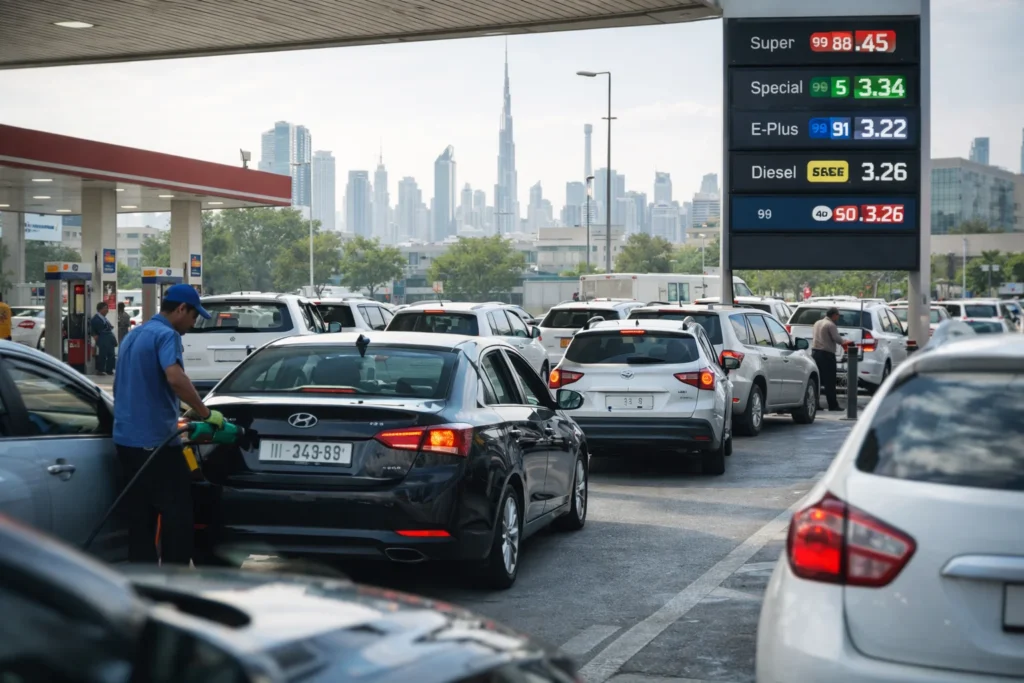
Higher fuel prices directly affect the cost of living in the UAE. Transportation costs increase, which can also lead to higher prices for goods and services.
Residents who rely on daily commuting or private vehicles may feel the impact more strongly. Businesses, especially logistics and delivery services, also face increased operational costs.
Effect on Businesses and Economy
Fuel price hikes can influence multiple sectors of the economy. Industries such as transportation, aviation, and retail often experience cost pressures when fuel becomes more expensive.
Companies may adjust pricing strategies or operational plans to manage rising expenses. This can have a ripple effect across the broader economy.
Global Oil Market Influence on UAE Prices
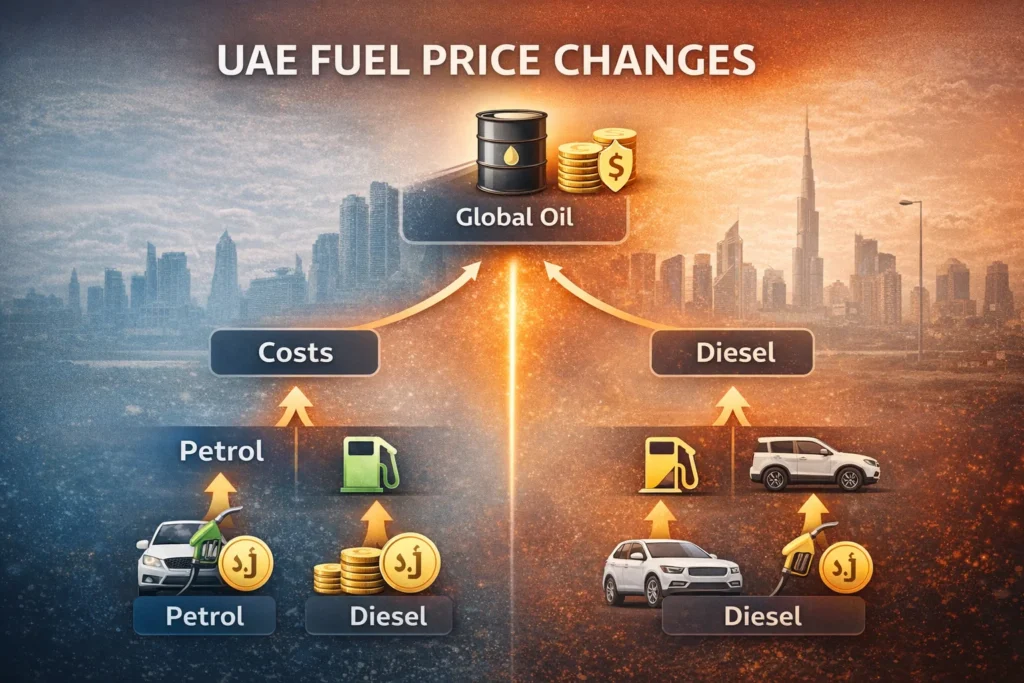
The UAE, despite being a major oil producer, aligns its fuel prices with global markets. This means that even domestic consumers are affected by international oil fluctuations.
Events such as supply disruptions, geopolitical tensions, and changes in production levels can quickly impact fuel prices at the pump.
What Motorists Should Expect Next
Fuel prices in the UAE are likely to remain volatile in the coming months. Much depends on how global oil markets behave and whether geopolitical tensions ease.
If crude oil prices continue to rise, motorists may see further increases in the upcoming months. On the other hand, any stabilization in global markets could bring some relief.
Also Read: Dubai Introduces New Rules for Trading Crypto Derivatives
Rising Energy Costs and Consumer Behavior
As fuel prices increase, consumers often look for ways to manage expenses. This may include carpooling, using public transport, or reducing unnecessary travel.
Such changes in behavior can help offset rising costs while also contributing to more efficient energy use.