

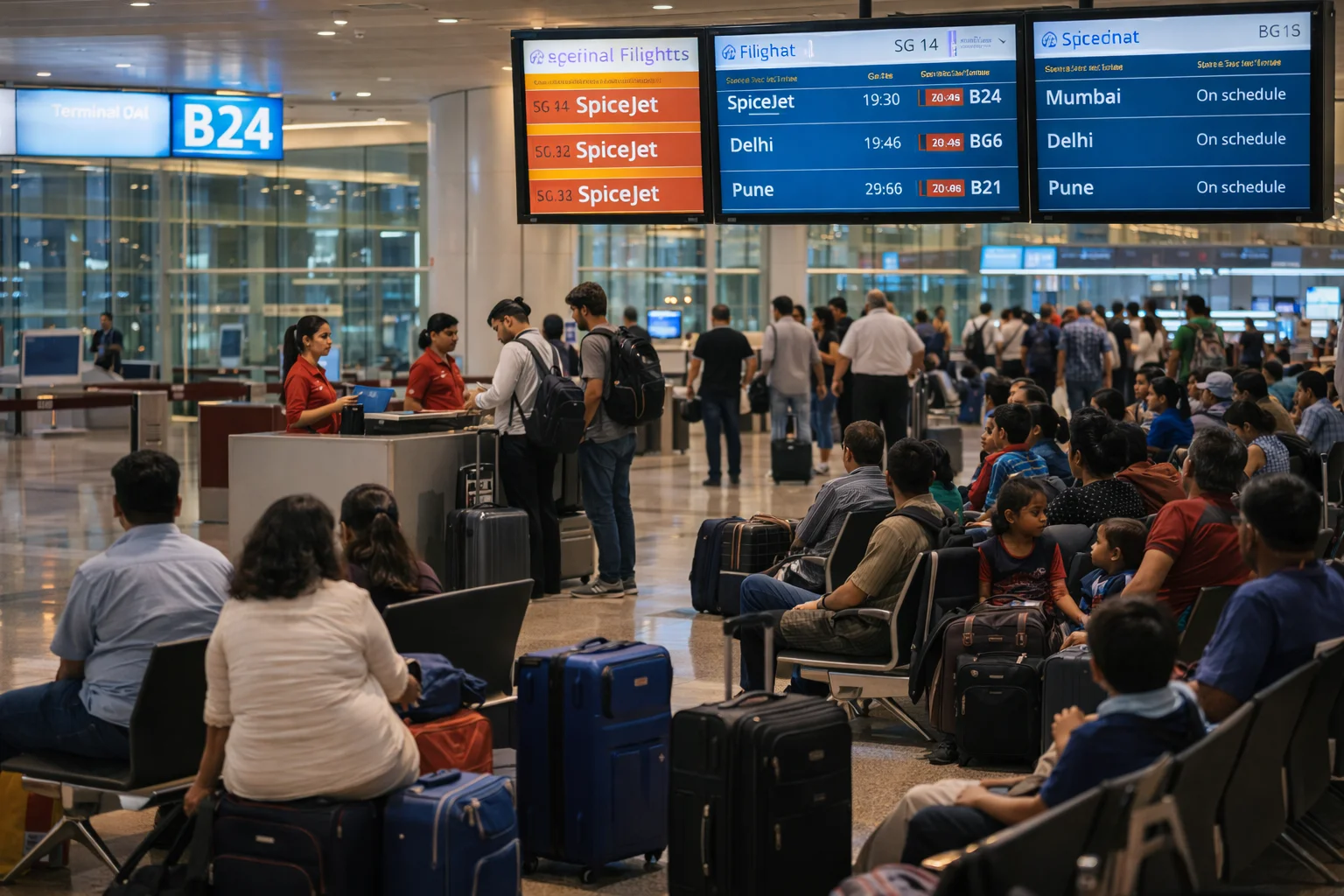
The escalating conflict involving Iran, Israel, and the United States has severely disrupted air travel across the Middle East. Several countries in the region temporarily closed their airspace due to security concerns, leading to widespread flight cancellations and operational delays.
Thousands of international travellers, including many Indian citizens living or travelling in the United Arab Emirates, suddenly found themselves stranded as airlines suspended or rerouted flights.
Air travel hubs such as Dubai and Abu Dhabi were among the major locations affected by the crisis. Airlines were forced to adjust schedules quickly, leaving passengers uncertain about their travel plans and creating a backlog of travellers waiting to return home.
The large-scale disruption also affected global aviation networks, as airlines avoided flying through the conflict-affected airspace for safety reasons. As a result, airports across the Gulf region experienced delays, cancellations, and temporary closures.
SpiceJet Steps In With Special Rescue Flights
In response to the travel crisis, Indian airline SpiceJet announced a series of special flights from the United Arab Emirates to India. The airline’s move aims to help Indian nationals who were stranded after the sudden suspension of regular flight operations.
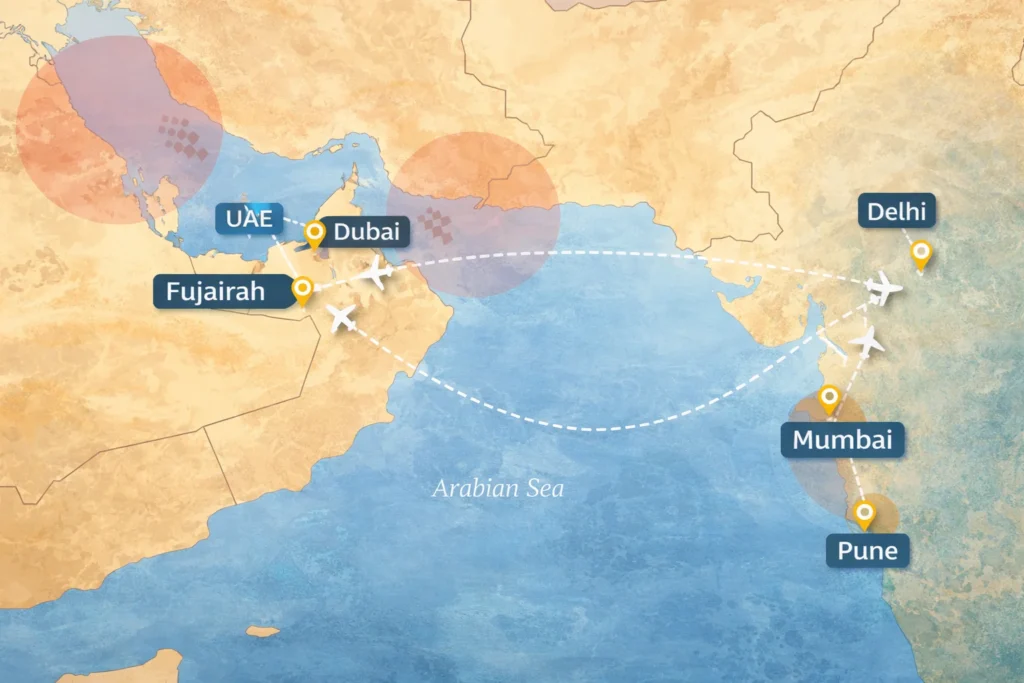
SpiceJet confirmed that it would operate multiple special flights connecting key UAE cities with major Indian destinations, including Mumbai, Delhi, and Pune.
These additional services are intended to clear the backlog of passengers waiting to return home. The airline also stated that it has already conducted several flights in recent days to help affected travellers reach India safely.
The initiative reflects a broader effort by Indian carriers to support stranded passengers during the crisis.
Key Routes Covered by the Special Flights
Most of the special services announced by SpiceJet are scheduled to operate from Fujairah and Dubai, two locations that remained accessible for limited aviation operations despite the regional disruption.
These flights connect the UAE with some of India’s busiest travel routes. The airline expects the services to carry a large number of passengers who had been waiting for available flights following the sudden airspace shutdown.
Special Flights Operated by SpiceJet
| Departure City | Destination City | Purpose |
|---|---|---|
| Fujairah | Mumbai | Repatriation of stranded passengers |
| Fujairah | Delhi | Emergency travel support |
| Dubai | Pune | Additional evacuation route |
| Fujairah | Delhi/Mumbai/Kochi | Restoring connectivity |
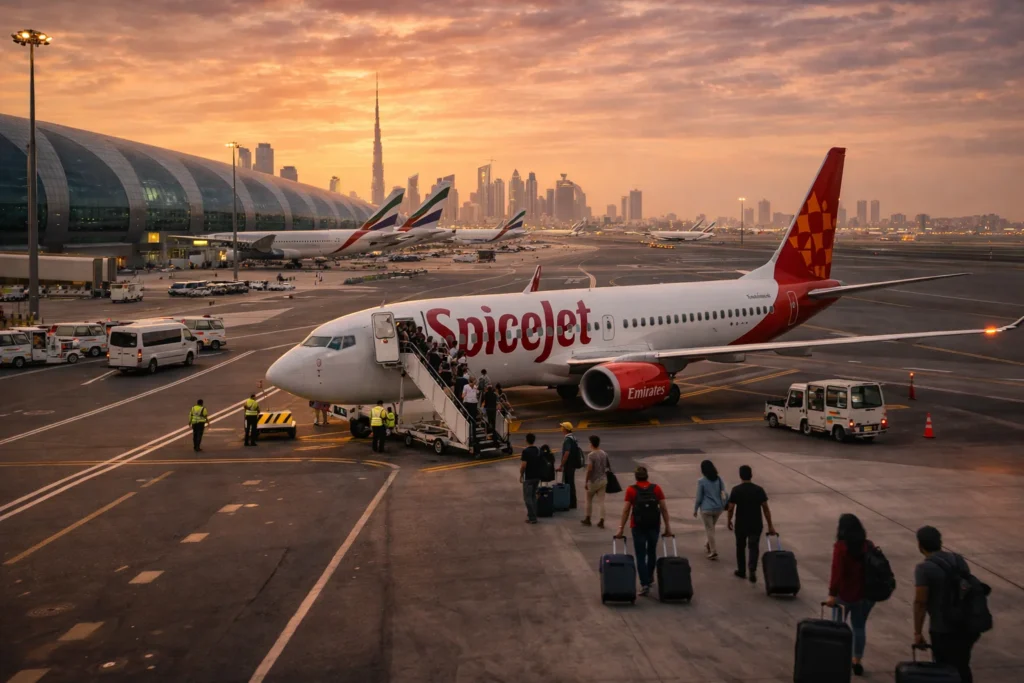
According to airline statements, several flights will depart from Fujairah to Mumbai and Delhi, while one service will operate from Dubai to Pune to accommodate additional travellers.
The airline has also indicated that it may add more flights depending on passenger demand and government approvals.
Airspace Closures Left Thousands Stranded
The decision to arrange special flights came after severe disruptions across Middle Eastern airspace. Countries across the region temporarily closed their skies following military escalation, forcing airlines to cancel or divert thousands of flights.
This disruption left passengers stranded at airports or unable to travel from cities like Dubai, Abu Dhabi, and other Gulf destinations.
Industry reports suggest that thousands of daily flights were affected during the crisis. The aviation sector faced major operational challenges as airlines had to quickly reroute aircraft, cancel services, and manage stranded passengers.
In many cases, passengers had already checked in or reached airports when the flight suspensions were announced. Families, tourists, and business travellers were forced to wait for updates while airlines worked on alternative arrangements.
Indian Passengers Among the Most Affected
The UAE hosts one of the largest Indian expatriate populations in the world. Many Indian citizens travel frequently between the two countries for work, tourism, and family visits.
When the crisis unfolded, a significant number of Indian travellers were present in the UAE for short-term trips, business meetings, or transit travel. With flights suddenly suspended, they faced uncertainty regarding when they would be able to return home.
Travel agents in both countries reported a surge in calls from worried passengers seeking assistance and updates. Many travellers also faced accommodation and visa concerns as their travel plans were unexpectedly extended.
In response, airlines and government authorities began coordinating efforts to arrange additional flights and ensure that stranded passengers could travel safely.
Gradual Restoration of Aviation Services
As the regional situation stabilized slightly, some limited aviation operations resumed in controlled corridors. Authorities allowed select flights to operate under strict safety guidelines while monitoring the security environment.
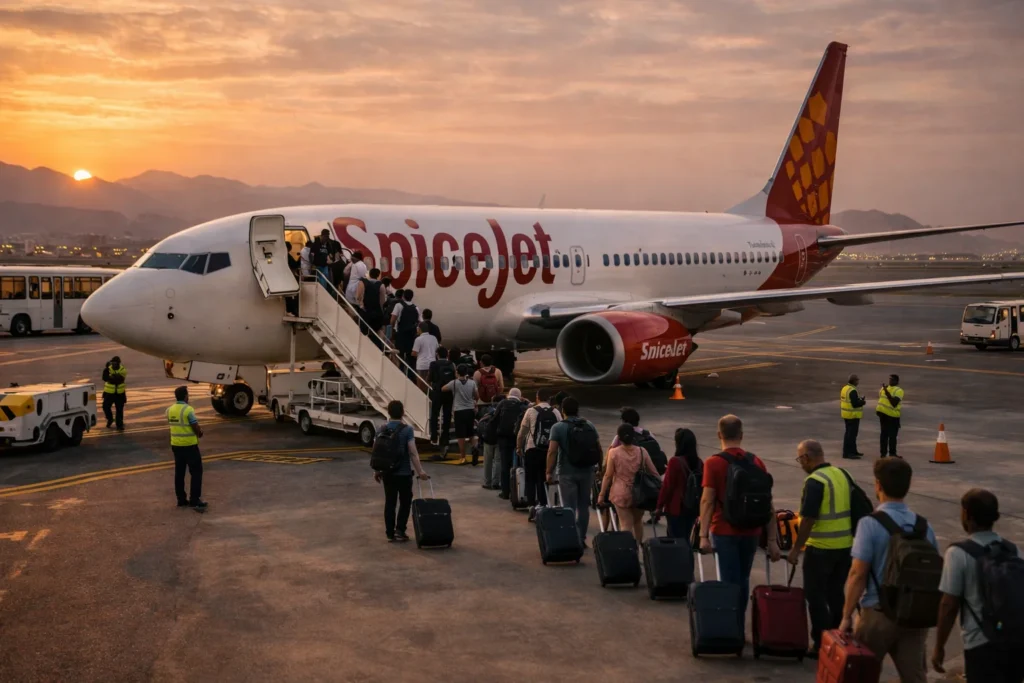
Airlines such as SpiceJet began restoring limited connectivity between the UAE and India using special flights designed to handle stranded travellers. These flights operate under carefully planned schedules and safety protocols.
The airline confirmed that it has already run several special services from the UAE over the past few days. Additional flights are expected to help ease the backlog of passengers waiting to return to India.
At the same time, aviation authorities continue to monitor airspace safety and coordinate with airlines regarding future operations.
Also Read: Do You Pay Income Tax in Dubai? Complete UAE Tax System Explained
Airlines Continue Monitoring the Situation
Airlines operating in the region remain cautious as geopolitical tensions continue to evolve. Safety remains the top priority for aviation authorities and carriers alike.
SpiceJet and other airlines have stated that they are closely monitoring developments in the region. Any further flight operations will depend on security assessments and regulatory approvals.
Passengers have been advised to check flight status updates regularly and remain in contact with airlines for travel information.
Airlines are also encouraging travellers not to proceed to airports unless they have confirmed bookings or updated flight schedules, as the situation can change quickly depending on security conditions.
Efforts to Clear Passenger Backlogs
With special flights now operating, airlines hope to gradually reduce the number of stranded passengers across the region. These services aim to prioritize travelers whose flights were cancelled due to the sudden airspace closure.
The special operations demonstrate how airlines and aviation authorities work together during emergencies to maintain connectivity and support affected passengers.
As more flights become available and regional airspace restrictions ease, airlines expect the travel situation between the UAE and India to slowly return to normal.