


Ramadan in UAE is a special time when spirituality, tradition, and community come together across the country. The pace of daily life slows during the day, while evenings become lively with family gatherings, charity activities, and shared meals. From beautifully decorated mosques to bustling iftar tents and cultural events, the holy month creates a unique atmosphere that residents and visitors alike experience every year.
Ramadan in UAE also brings changes to work schedules, dining habits, and social routines to support those observing the fast. Businesses adjust timings, restaurants offer special Ramadan menus, and communities focus more on generosity and reflection. Understanding these traditions helps everyone respect local customs while enjoying the cultural richness that the holy month brings.
Table of Contents
Ramadan in UAE: Fasting Hours, Working Timings, and Key Events
Ramadan in UAE is one of the most meaningful times of the year, bringing together spirituality, culture, charity, and community celebrations. Streets become calmer during the day, while evenings turn lively with iftars, family gatherings, and cultural events. Whether you are a resident or visitor, understanding how Ramadan works helps you respect traditions and enjoy the experience fully. From fasting hours to special events and reduced working schedules, the holy month influences daily life across the Emirates.

Ramadan in UAE for 2026 is expected to begin around February 19, following the official moon sighting. Eid Al Fitr is likely to fall around March 20, marking the end of fasting. While exact dates depend on lunar observations, preparations typically begin weeks in advance, with restaurants, malls, hotels, and mosques organizing Ramadan-specific activities.
Expected Dates and Fasting Timings
Ramadan in UAE typically lasts 29 or 30 days based on lunar visibility. In 2026, fasting hours are expected to range between 12 and 14 hours daily. Suhoor, the pre-dawn meal, ends shortly before Fajr prayer, while Iftar takes place at sunset during Maghrib prayer. Early Ramadan days may have fasting from approximately 5:30 AM until about 6:15 PM, with slight daily changes as daylight hours shift.

Temperatures during Ramadan in UAE usually remain pleasant, ranging roughly between 16°C and 32°C, making outdoor evening gatherings comfortable. Mosques across the country host Taraweeh prayers every night, drawing large communities together for worship.
Working Hours During Ramadan
Ramadan in UAE also brings adjusted working hours for both public and private sector employees. Authorities typically mandate reduced working hours to support fasting employees while maintaining productivity.
Private sector workers generally receive a two-hour daily reduction regardless of religion. Many companies operate around six-hour workdays, often from morning until mid-afternoon. Flexible arrangements and remote work options are increasingly common during this period.
Public sector employees usually work slightly shorter hours, often finishing early afternoon. Friday schedules may be even shorter. Schools, universities, and training institutions also adjust timings to accommodate students observing the fast.
Ramadan Events and Community Activities
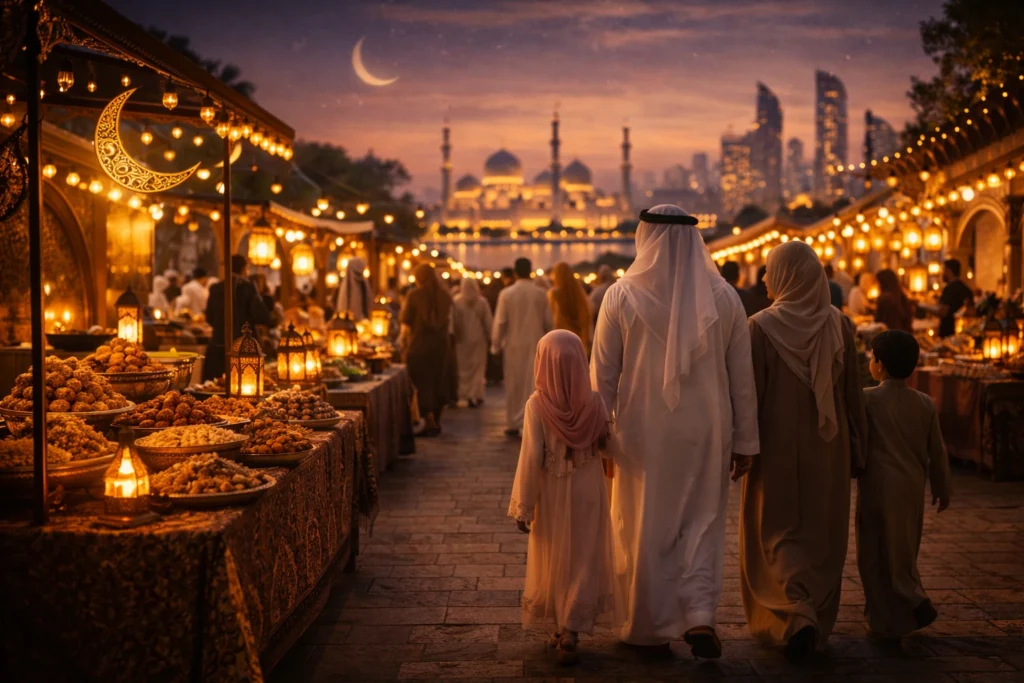
Ramadan in UAE is known for its vibrant cultural and community events. Hotels, restaurants, and cultural venues host large Iftar tents where families and colleagues gather to break the fast together. These tents often feature traditional décor, Arabic cuisine, live oud music, and charity initiatives.
Mosques remain central to Ramadan activities, hosting nightly Taraweeh prayers and special religious lectures. Charity drives increase significantly, with organizations distributing free meals, clothing, and financial aid to those in need.
Shopping malls and public spaces also reflect the festive spirit with themed decorations, extended evening hours, and Ramadan markets. Cultural exhibitions, traditional craft displays, and heritage performances become popular attractions during the holy month.
Also Read: Is Tinder Allowed in Dubai? Dating App Laws and Safety Tips for Users in UAE
Dining Traditions Iftar and Suhoor
Dining plays a central role during Ramadan in UAE. Iftar marks the breaking of the fast at sunset and typically begins with dates, water, and traditional soups before moving to main dishes. Many restaurants offer buffet-style Iftar meals featuring Middle Eastern, Asian, and international cuisine.
Suhoor, eaten before dawn, is usually lighter but equally important. Cafes and restaurants stay open late, sometimes until early morning, providing social spaces where friends gather for relaxed conversations and late-night meals.
Hotels across the UAE create unique Ramadan dining experiences combining traditional flavors with modern presentation. These experiences attract both locals and tourists seeking cultural immersion.
Do Check Out: Can You Drink During Ramadan in Dubai as a Tourist? Rules, Etiquette, and What to Know
Cultural Etiquette and Social Awareness
Understanding etiquette during Ramadan in UAE helps maintain respect for the holy month. Eating, drinking, or smoking publicly during daylight hours is generally discouraged, even for non-Muslims. Modest clothing and respectful behavior are appreciated in public spaces.
Music volumes in public venues may be reduced, and nightlife activities often shift to post-Iftar hours. While restaurants remain open for non-fasting individuals, many operate discreetly during daytime.
Tourists visiting during Ramadan often find it rewarding because of the strong cultural atmosphere, community spirit, and hospitality.
Prayer Facilities and Public Arrangements
During Ramadan in UAE, additional prayer areas appear in malls, parks, and public venues. This helps accommodate large numbers of worshippers, especially during Taraweeh prayers. Traffic patterns may change near mosques around prayer times, so planning travel accordingly is helpful.
Authorities also organize large charity meal distribution programs. Volunteers provide free Iftar boxes across cities, reflecting the strong culture of generosity associated with Ramadan.
Public transport schedules, retail hours, and entertainment timings may adjust to suit Ramadan routines. Most businesses extend operations later into the night rather than early mornings.
School Schedules and Family Life
Educational institutions adapt their schedules during Ramadan in UAE to support students and teachers observing the fast. Shorter school hours and adjusted exam schedules are common. Some schools incorporate cultural awareness programs and Ramadan-themed educational activities.
Family life often centers around shared meals and spiritual reflection. Evening gatherings strengthen social bonds, and many households prioritize charity, prayer, and community engagement during this period.
Preparation Tips for Residents and Visitors
Planning helps make the most of Ramadan in UAE. Checking restaurant timings, booking Iftar experiences early, and understanding workplace adjustments can improve daily routines. Visitors should also stay updated on official announcements regarding moon sightings, public holidays, and Eid celebrations.
Hotels, tourism operators, and cultural organizations typically release special Ramadan packages, making it an ideal time for cultural exploration, dining experiences, and community participation.