

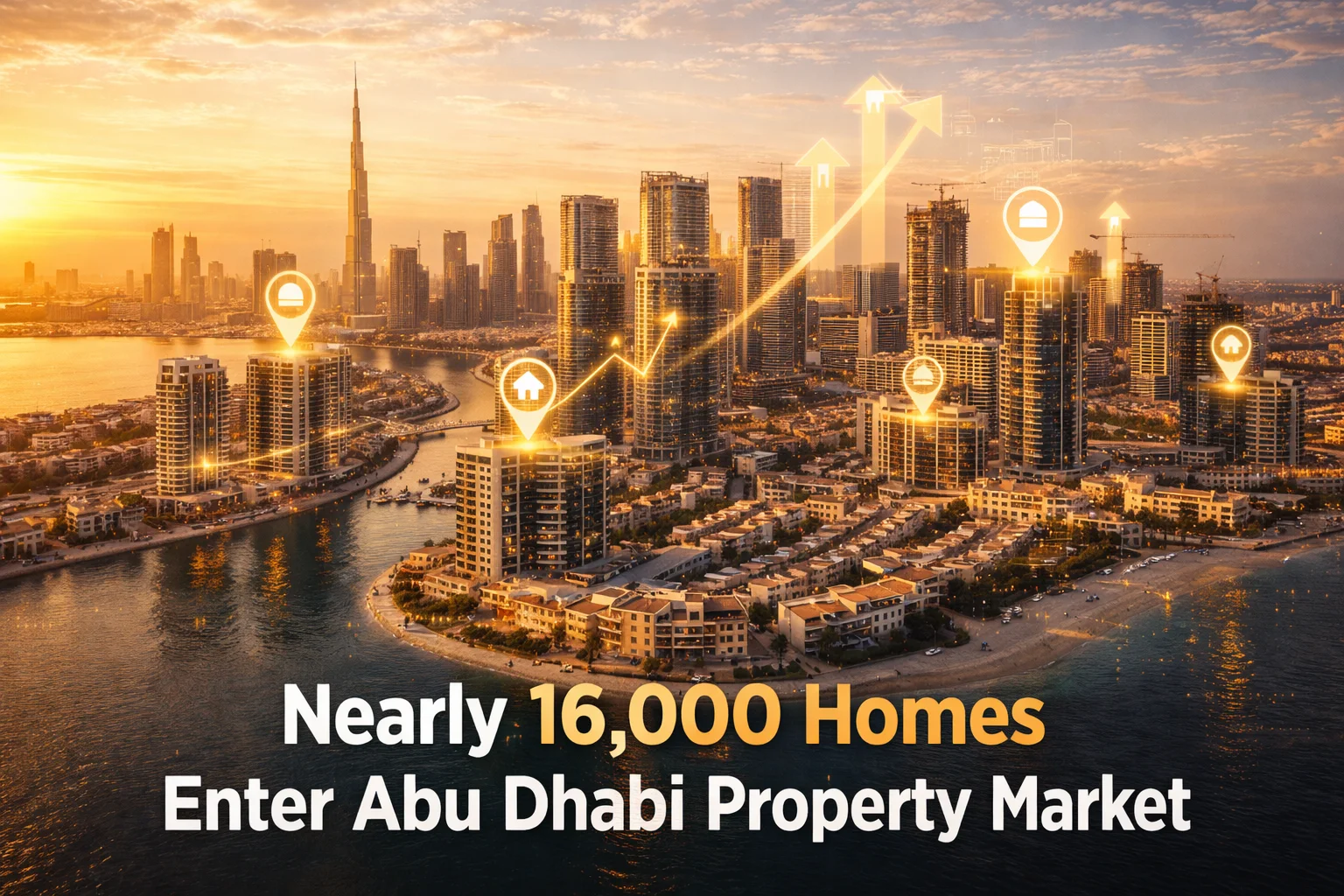
Abu Dhabi’s real estate market is preparing for a significant expansion as thousands of new residential units are expected to enter the market this year. Analysts estimate that nearly 16,000 homes could be delivered across the emirate, adding fresh supply to a sector that has seen strong demand in recent years.
The new supply will include apartments, villas, and townhouses located in several of Abu Dhabi’s fastest-growing communities. Developers continue to launch large residential projects as population growth, foreign investment, and economic diversification increase housing demand.
With the emirate positioning itself as a major global investment destination, the expansion of residential supply is expected to play an important role in maintaining a balanced and sustainable property market.
Strong Demand Driving Abu Dhabi’s Housing Market
Abu Dhabi’s residential sector has been supported by strong economic fundamentals and steady population growth. The city continues to attract professionals, investors, and families seeking long-term opportunities in the UAE.
The property sector has also benefited from government initiatives designed to encourage foreign investment and support economic diversification. As a result, demand for both rental and owned housing has increased steadily.
Market analysts say the upcoming supply of new homes will help meet this growing demand while providing buyers with a wider choice of properties across different price ranges.

Thousands of New Homes Expected in 2026
Industry data suggests that around 16,000 new residential units may be delivered across Abu Dhabi during the year. This includes both newly completed projects and developments currently under construction.
The new homes are expected to be located across several major residential districts, including emerging island communities and urban neighbourhoods. Many of these projects are part of master-planned developments that combine residential units with retail spaces, parks, and lifestyle amenities.
The supply pipeline reflects Abu Dhabi’s long-term urban development strategy, which focuses on creating integrated communities that offer modern living environments.
Key Areas Leading New Residential Development
Several districts in Abu Dhabi are expected to account for a large share of the new housing supply. Areas such as Yas Island, Saadiyat Island, and Al Reem Island continue to attract developers due to their strong demand and lifestyle appeal.
These locations offer access to waterfront views, entertainment venues, cultural attractions, and modern infrastructure. Because of these features, they have become some of the most desirable residential destinations in the emirate.
Other emerging communities are also expected to see new residential projects designed to meet demand from middle-income buyers and young professionals.
The growth of these communities reflects a shift toward lifestyle-focused developments that combine housing with entertainment, retail, and leisure facilities.
Expanding Options for Buyers and Renters
The arrival of thousands of new homes will expand options for people looking to buy or rent property in Abu Dhabi. In recent years, rising demand has placed pressure on housing supply in some popular areas.
Additional residential units can help stabilize prices by giving buyers more choices and reducing competition for limited inventory. For renters, increased supply may gradually ease pressure on rental costs.
The new projects are expected to include a range of housing types, from luxury waterfront apartments to family-friendly villas and more affordable residential units.
This variety will help meet the needs of different types of residents, including expatriates, investors, and long-term residents planning to settle in the capital.
Investor Interest Remains Strong
Investor interest in Abu Dhabi’s property market has remained strong over the past few years. The emirate’s stable economy, tax-friendly environment, and high quality of life continue to attract international buyers.
Government policies supporting long-term residency visas and foreign ownership have further boosted interest in real estate investments.
Many investors see Abu Dhabi as a relatively secure market with strong long-term growth potential. The expansion of residential supply may encourage additional investment by providing new opportunities across different market segments.
Large development projects and infrastructure investments have also helped strengthen confidence in the city’s property sector.
Residential Market Supported by Economic Growth
Abu Dhabi’s broader economic growth has also played a major role in supporting real estate demand. Non-oil sectors, including tourism, finance, and technology, continue to expand, bringing more professionals and businesses to the emirate.
As employment opportunities grow, demand for housing typically increases as well. This relationship between economic development and residential demand helps explain why developers continue to invest in new housing projects.
Real estate and construction together contribute significantly to the emirate’s non-oil economy, highlighting the sector’s importance in long-term economic diversification.
Also Read: Is Gold Cheaper in Dubai Than India/USA/UK? What Buyers Should Know
Balanced Supply Helps Maintain Market Stability
Although thousands of new homes are expected to enter the market, analysts believe the supply will be delivered gradually. This phased approach allows the market to absorb new units without creating sudden oversupply.
Historically, residential deliveries in Abu Dhabi have often been staggered as construction schedules adjust to market conditions. This strategy helps maintain price stability and prevents major fluctuations in property values.
Even with the new housing supply, demand is expected to remain supported by population growth, infrastructure investments, and the emirate’s strong economic outlook.
Long-Term Outlook for Abu Dhabi Real Estate
Looking ahead, Abu Dhabi’s residential property market is expected to remain resilient. Strong investor interest, government support, and continued urban development are all expected to support long-term growth.
The introduction of nearly 16,000 homes into the market represents another step in the emirate’s broader development strategy. New residential communities, improved infrastructure, and lifestyle-focused developments are shaping the next phase of Abu Dhabi’s urban expansion.
As the housing supply increases and new neighbourhoods continue to emerge, the capital’s real estate market is entering a new phase of growth and opportunity for buyers, investors, and residents alike.