

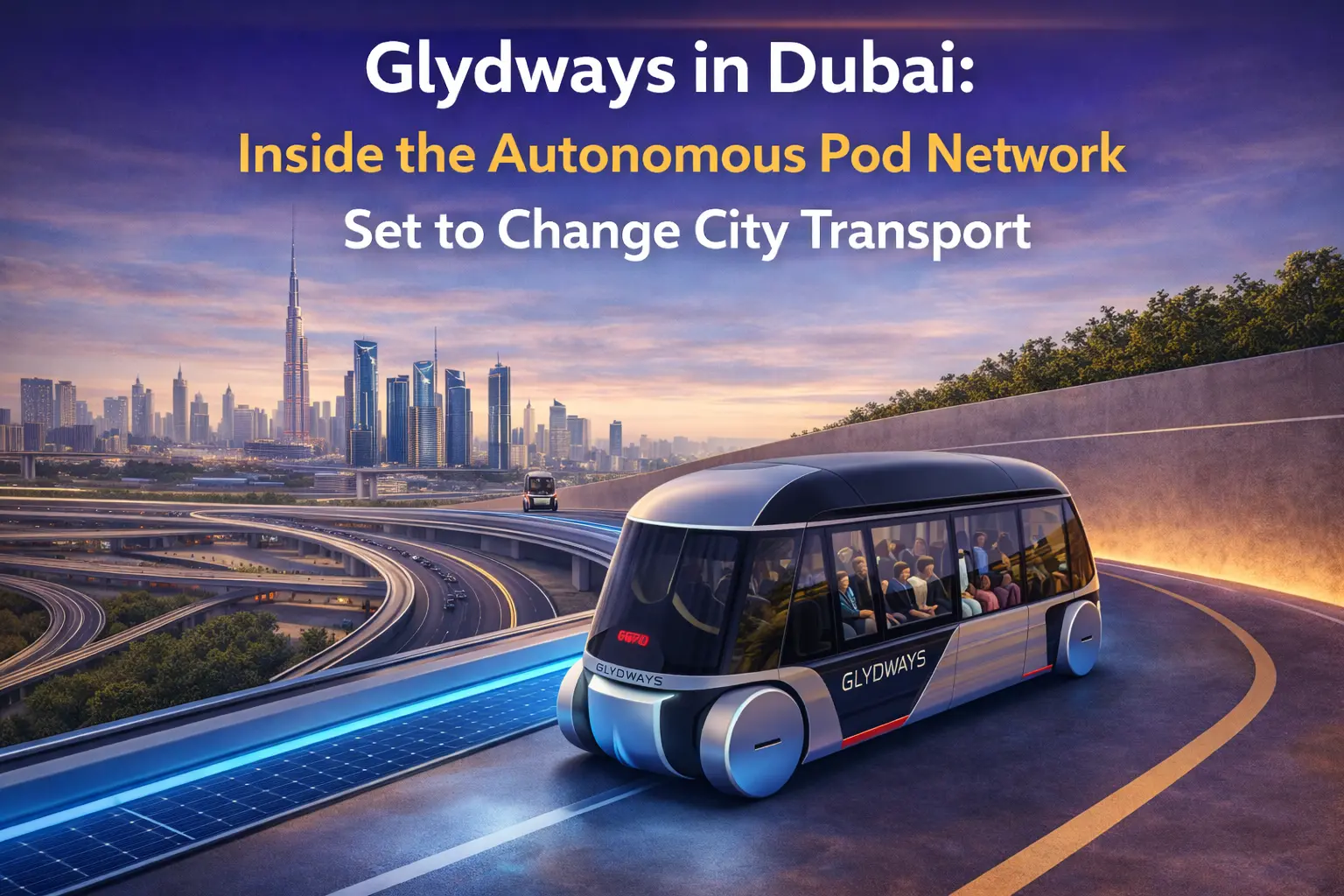
Dubai is preparing to launch an advanced network of driverless autonomous vehicles known as Glydways, marking another major step in the city’s journey toward smart and sustainable transport. The project reflects Dubai’s long-term vision of using technology to improve daily life, reduce congestion, and offer faster, cleaner travel options.
The Glydways network is designed to complement existing public transport systems while offering a new way to move across busy urban areas. By using small electric pods instead of large buses or trains, the system aims to provide efficient point-to-point travel without adding pressure to already busy roads.
Table of Contents
What Is the Glydways Network
Glydways is a driverless personal rapid transit system that uses compact electric pods operating on dedicated guideways. Each pod can carry up to four to six passengers and travels autonomously without a human driver. The vehicles are fully electric, making them quiet, energy-efficient, and environmentally friendly.
Unlike buses or metro trains that follow fixed schedules and routes, Glydways offers on-demand travel. Passengers can request a pod when needed and travel directly to their destination without stops along the way. This design reduces waiting times and makes journeys quicker and more convenient.
How Glydways Works
The Glydways system runs on narrow guideways that are roughly the width of a bicycle lane. These guideways can be built at ground level, elevated, or underground, depending on the area. Because they are separate from regular traffic, the pods can move smoothly without delays caused by congestion.
Advanced sensors, cameras, and artificial intelligence allow the pods to navigate safely and efficiently. The system continuously monitors vehicle movement, spacing, and speed to ensure a safe ride for passengers. Central control software manages the network, balancing demand and directing pods where they are needed most.
Glydways Autonomous Transport Network in Dubai: Overview
| Category | Details |
|---|---|
| Project Name | Glydways |
| Transport Type | Driverless autonomous pod network |
| Operating Authority | Dubai Roads and Transport Authority |
| Vehicle Type | Electric autonomous pods |
| Passenger Capacity | 4 to 6 passengers per pod |
| Operating Model | On-demand, point-to-point travel |
| Guideway Design | Dedicated narrow lanes (bike-lane width) |
| Driver Required | No |
| Emissions | Zero tailpipe emissions |
| Noise Level | Low, electric-powered operation |
| Initial Rollout | Pilot phase across four routes |
| Key Areas Covered | Bluewaters Island, Umm Suqeim, Al Quoz, Dubai Festival City |
| Route Purpose | Improve last-mile connectivity |
| Integration | Faster trips, no waiting for schedules |
| Traffic Impact | Reduces congestion on city roads |
| Travel Speed | Faster than surface traffic |
| Infrastructure Cost | Lower than traditional rail systems |
| Sustainability Goal | Supports clean and green mobility |
| User Benefits | Faster trips, no waiting schedules |
| Tourist Benefit | Easy access to attractions and districts |
| Launch Timeline | Expected to begin later this year |
| Expansion Plan | Links with the metro and public transport |
| Smart City Role | Key part of Dubai’s smart mobility vision |
| Global Significance | Model for future urban transport systems |
Initial Routes Planned Across Dubai
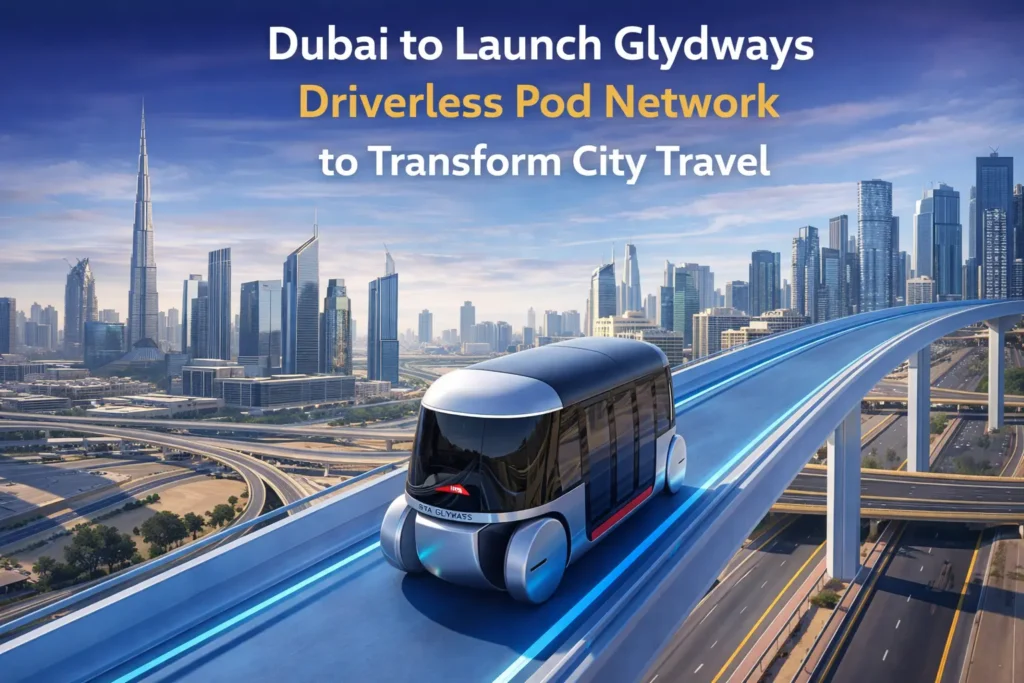
Dubai authorities have identified four key routes for the first phase of the Glydways rollout. These routes are designed to improve last-mile connectivity by linking metro stations with nearby residential, commercial, and tourist destinations.
One planned route will connect a metro station to Bluewaters Island, offering a direct and fast link to one of Dubai’s major attractions. Another route is expected to run between the Mall of the Emirates Metro Station and the Madinat Jumeirah area. A third corridor will serve Al Quoz, connecting a metro station to cultural and lifestyle destinations. The fourth and longest route is planned within Dubai Festival City, with future integration into upcoming metro lines.
These pilot routes will allow authorities to test the system’s performance before expanding it further across the city.
Benefits for Daily Commuters
For residents, Glydways promises faster and more predictable journeys, especially for short and medium distances. Because the pods operate on dedicated guideways, they avoid traffic delays that often affect cars and buses during peak hours.
The on-demand nature of the system also means passengers do not need to plan their travel around fixed timetables. This flexibility can save time and reduce the stress associated with daily commuting. By encouraging people to shift away from private cars, Glydways could help ease traffic congestion on busy roads.
A Boost for Tourists and Visitors
Tourists visiting Dubai may also benefit from the Glydways network. The system could provide quick connections between hotels, metro stations, shopping districts, beaches, and entertainment areas. The driverless pods themselves may become part of the experience, offering visitors a glimpse into Dubai’s vision of future transport.
Easy and efficient travel can enhance the overall visitor experience, making it simpler to explore different parts of the city without relying on taxis or rental cars.
Sustainability and Environmental Impact
Sustainability is a core focus of the Glydways project. The use of electric vehicles means zero emissions at the point of use, helping to reduce air pollution in urban areas. By moving more people efficiently and reducing dependence on private cars, the system supports Dubai’s broader environmental goals.
The smaller size of the guideways also means less construction material and lower energy use compared to traditional rail systems. This makes Glydways a cost-effective and environmentally responsible solution for expanding urban transport.
Also Read: How Dubai Loop Will Transform City Travel
Integration With Existing Transport Systems
Glydways is not intended to replace Dubai’s metro or bus services. Instead, it is designed to work alongside them. By connecting metro stations to nearby destinations, the system helps solve the last-mile problem that often discourages people from using public transport.
This integrated approach allows commuters to combine different modes of transport based on convenience, creating a smoother and more connected travel experience across the city.
When Will Glydways Launch
Dubai officials have indicated that the Glydways network is expected to begin operations later this year, starting with a pilot phase on selected routes. Initial testing will focus on safety, reliability, and passenger experience before wider deployment.
If the pilot phase proves successful, the system could be expanded to additional areas, forming a larger network of autonomous transport corridors across Dubai.
Why Glydways Matters for Dubai’s Future
The launch of Glydways highlights Dubai’s commitment to innovation and smart urban planning. By investing in autonomous and electric transport, the city is preparing for future population growth while improving mobility today.
Glydways represents a shift toward more flexible, efficient, and sustainable transport solutions. If successful, it could serve as a model for cities around the world looking to modernize their transport systems and reduce congestion.
As Dubai continues to push the boundaries of smart city development, Glydways stands out as another bold step toward a cleaner, faster, and more connected urban future.