

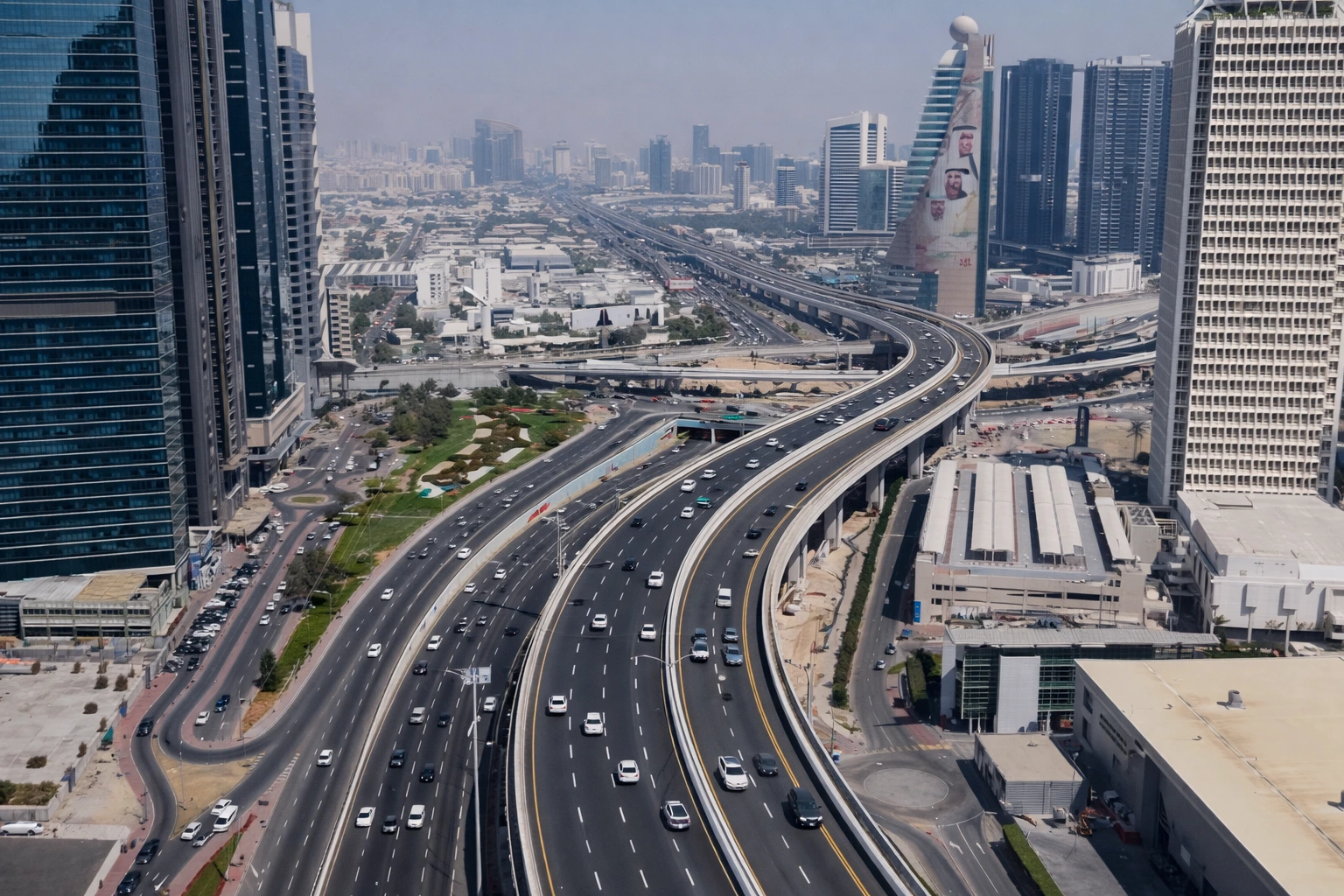
Dubai RTA has unveiled a major new bridge at the World Trade Centre Roundabout, marking a key milestone in the city’s transport upgrades. The bridge connects Sheikh Zayed Road to Sheikh Khalifa bin Zayed Street and cuts journey time from about six minutes to just one minute for commuters heading towards Al Karama and Deira. The project aims to ease congestion at one of Dubai’s busiest intersections.
The new structure spans approximately 1,000 metres and features two lanes capable of carrying roughly 3,000 vehicles per hour. It is part of a broader plan to replace the traditional roundabout with a free-flowing network of bridges and at-grade intersections. Early results show immediate improvements in traffic behaviour as vehicles now bypass previous bottlenecks at peak times.
Table of Contents
What the New Bridge Means for Traffic
The newly opened bridge helps distribute traffic more efficiently by diverting vehicles away from signalized intersections. Commuters travelling from central Dubai towards Sheikh Khalifa Street now have a direct elevated route, significantly reducing delays and stop-start congestion.
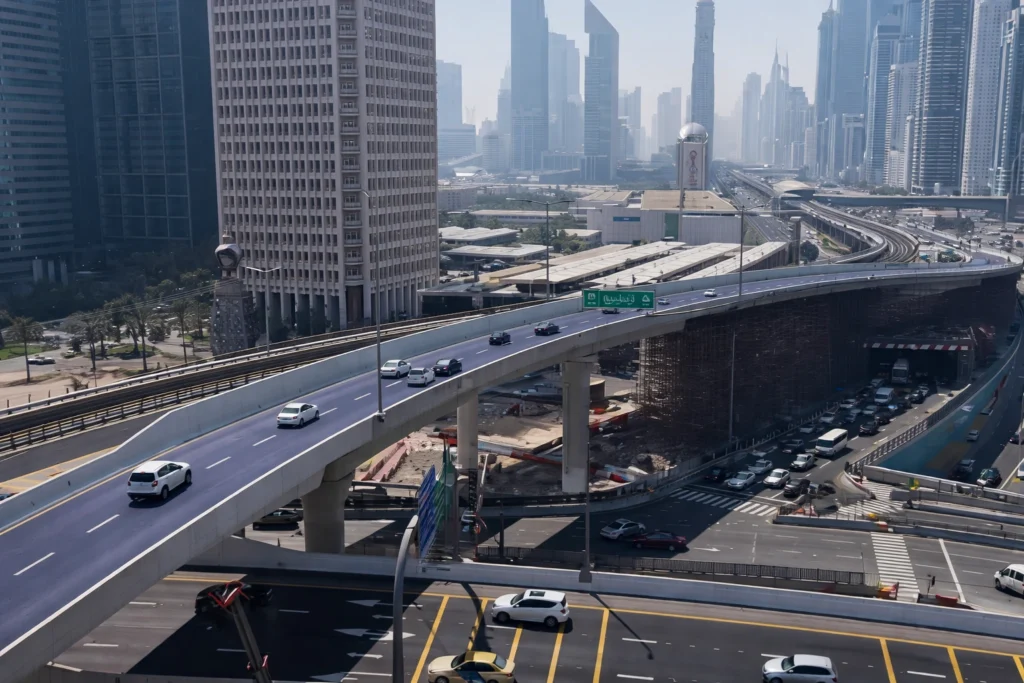
This upgrade benefits not only daily travellers but also visitors heading to major commercial hubs like the Dubai World Trade Centre and the Dubai International Financial Centre. The smoother flows are expected to encourage economic activity and ease travel during large events and exhibitions hosted in the area.
Part of a Larger Roundabout Development Project
The bridge is one component of the World Trade Centre Roundabout Development Project, which includes five bridges in total spanning about 5,000 metres. When fully operational, the network is expected to reduce average delay times at the intersection from 12 minutes to about 90 seconds.
Additional bridges, including those serving traffic from Sheikh Rashid Street and Al Majlis Street towards 2nd December Street, are underway and expected to open in October 2026. These will further enhance traffic flows across multiple directions in the city’s core road network.
How Journey Times Have Changed
Before the new bridge opened, vehicles heading from Sheikh Zayed Road to Sheikh Khalifa Street often faced long waits during peak hours. The elevated route now cuts this travel time dramatically by allowing cars to bypass the roundabout.
Early data suggests that similar infrastructure opened in late 2025 already reduced journey times on related routes — like those between 2nd December Street and Al Majlis Street — from about 10 minutes to roughly two minutes. This shows the impact of the phased bridge openings on overall city mobility.
Benefits for Residents and Businesses
The improved bridge system is expected to serve hundreds of thousands of commuters across Dubai’s central districts. Residents living in Al Karama, Al Satwa, and Jafiliya now enjoy quicker access to the main highway network.
Also Read: World’s Largest Book Sale, Big Bad Wolf 2026, Opens in Dubai With Over 1 Million Books
Businesses near the Trade Centre area, including major exhibition venues, will benefit from easier client and visitor access. This is particularly important for Dubai’s event economy, which relies on streamlined road access for large-scale shows and conventions.
What Comes Next
As construction continues, the RTA aims to complete all five bridges and convert the existing roundabout into a signalized at-grade intersection. This transformation will further smooth vehicle movement from multiple feeder roads.
The phased rollout of infrastructure upgrades reflects Dubai’s broader vision for smarter transport solutions, with a focus on reducing congestion, enhancing safety, and supporting rapid urban growth.