

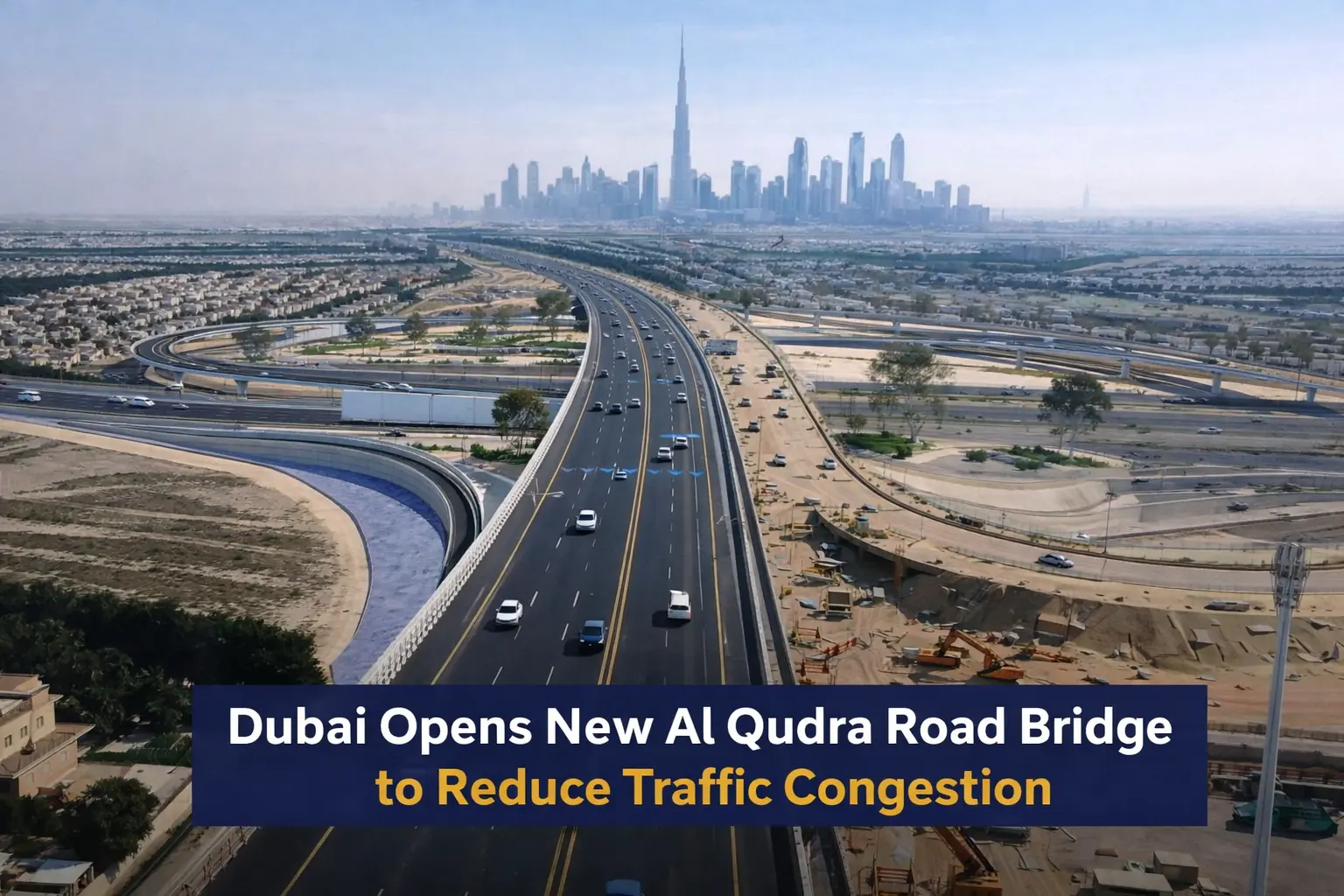
Dubai continues to enhance its road infrastructure to support growing traffic demand, and the new Al Qudra Road Bridge is a key step in that direction. Designed to improve connectivity and reduce congestion, the bridge helps ease traffic flow between major residential and commercial areas. This project reflects Dubai’s commitment to modern transport solutions and urban planning that prioritize efficiency and safety.
The new bridge is part of a larger road improvement initiative that focuses on smoother mobility, faster travel times, and better access to developing communities. With rapid expansion in areas like Arabian Ranches, Dubai Motor City, and DAMAC Hills, infrastructure upgrades like this are essential for maintaining the quality of life and economic growth for residents and visitors.
Table of Contents
Overview of the New Al Qudra Road Bridge
Dubai’s Roads and Transport Authority recently opened a new four-lane bridge at the intersection of Al Qudra Road and the link road connecting Arabian Ranches with Dubai Studio City. The bridge stretches approximately 600 metres and forms part of a major intersection development project aimed at improving traffic efficiency across the corridor.
This strategic corridor runs from Sheikh Mohammed bin Zayed Road through Sheikh Zayed bin Hamdan Al Nahyan Street and Emirates Road before continuing along Al Qudra Road. The upgrade supports smoother east-west traffic movement across Dubai’s rapidly developing suburbs.
The bridge plays an important role in strengthening connectivity between residential communities, business hubs, and leisure destinations. It is expected to significantly ease daily commuting for thousands of residents.
Improved Traffic Capacity and Reduced Delays
One of the most notable benefits of the new bridge is its impact on traffic capacity. The project has increased the road’s capacity by around 191 percent, allowing approximately 19,200 vehicles per hour compared to the previous 6,600 vehicles.
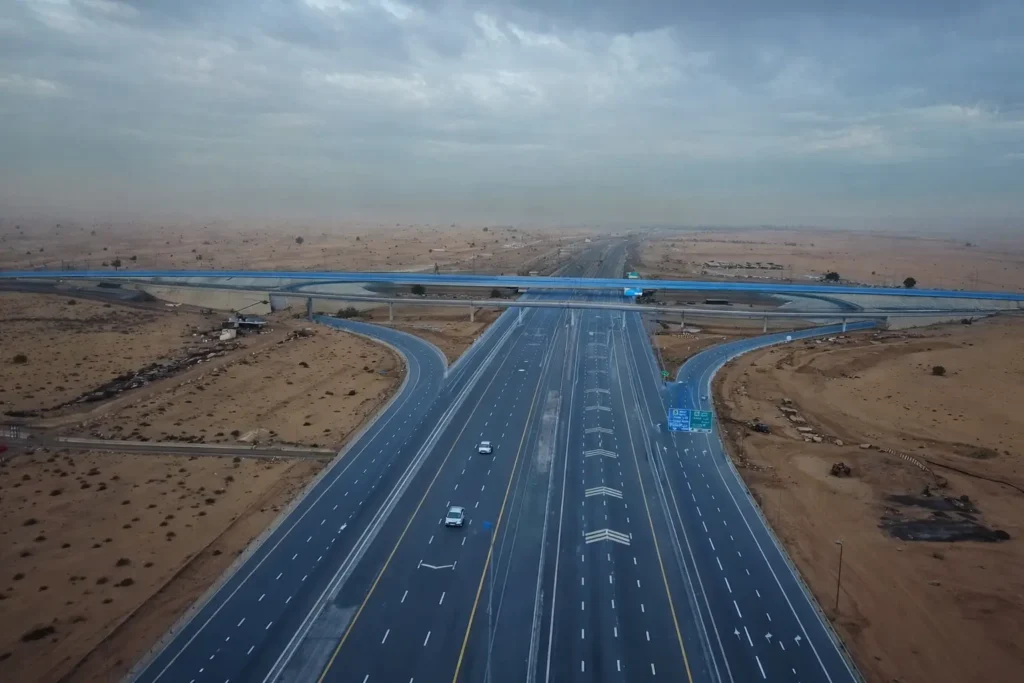
Waiting time at the intersection has also been reduced significantly. Traffic delays dropped by about 55 percent, with average waiting times decreasing from over 100 seconds to roughly 50 seconds. This improvement helps commuters experience faster journeys and less stress during peak hours.
Reduced congestion not only benefits drivers but also supports public transport efficiency, emergency vehicle access, and overall road safety.
Additional Infrastructure Enhancements
The Al Qudra Road project is not limited to a single bridge. Authorities are also upgrading several intersections, constructing bridges extending roughly 2,700 metres, and widening existing roads across an 11.6-kilometre stretch.
These improvements are expected to cut travel time dramatically. Estimates suggest journeys along this corridor could reduce from about 9.4 minutes to nearly 2.8 minutes, representing a major improvement for commuters.
The project also includes service roads, auxiliary lanes, and new connections to surrounding developments. This integrated approach ensures smoother traffic flow without disrupting main road operations.
Communities That Benefit Most
The infrastructure upgrade primarily serves residential and development zones accommodating an estimated 400,000 residents and visitors. Key communities benefiting include Arabian Ranches, Dubai Studio City, Dubai Motor City, DAMAC Hills, Mudon, and The Sustainable City.
These areas have seen rapid population growth in recent years. Improved road connectivity enhances daily commutes, increases property value, and makes these neighbourhoods more attractive for investors and residents.
Better accessibility also supports local businesses, schools, healthcare facilities, and recreational destinations, contributing to a more connected urban lifestyle.
Economic and Urban Development Impact
Infrastructure development plays a crucial role in Dubai’s economic growth. Projects like the Al Qudra Road bridge support urban expansion, facilitate business activity, and encourage investment in emerging communities.
Efficient transport networks reduce travel time for workers, improve logistics, and enhance overall productivity. This aligns with Dubai’s long-term vision of becoming a global hub for commerce, tourism, and innovation.
Moreover, improved roads encourage sustainable urban planning by distributing traffic more evenly across the city, reducing pressure on central highways.
Also Read: Is It Allowed to Vape in Dubai? UAE Laws, Rules and What You Should Know
Future Transport Vision in Dubai
Dubai’s transport strategy focuses on smart mobility, sustainability, and technological integration. The Al Qudra Road project is part of broader efforts to modernise infrastructure, including new metro lines, smart traffic management systems, and upgraded highways.
Authorities aim to create a seamless transport ecosystem where residents can move easily between work, home, and leisure destinations. Continued investments in roads, bridges, and public transport will play a vital role in supporting population growth and economic expansion.
Such projects also reflect Dubai’s commitment to safety, efficiency, and environmental responsibility in urban development.