

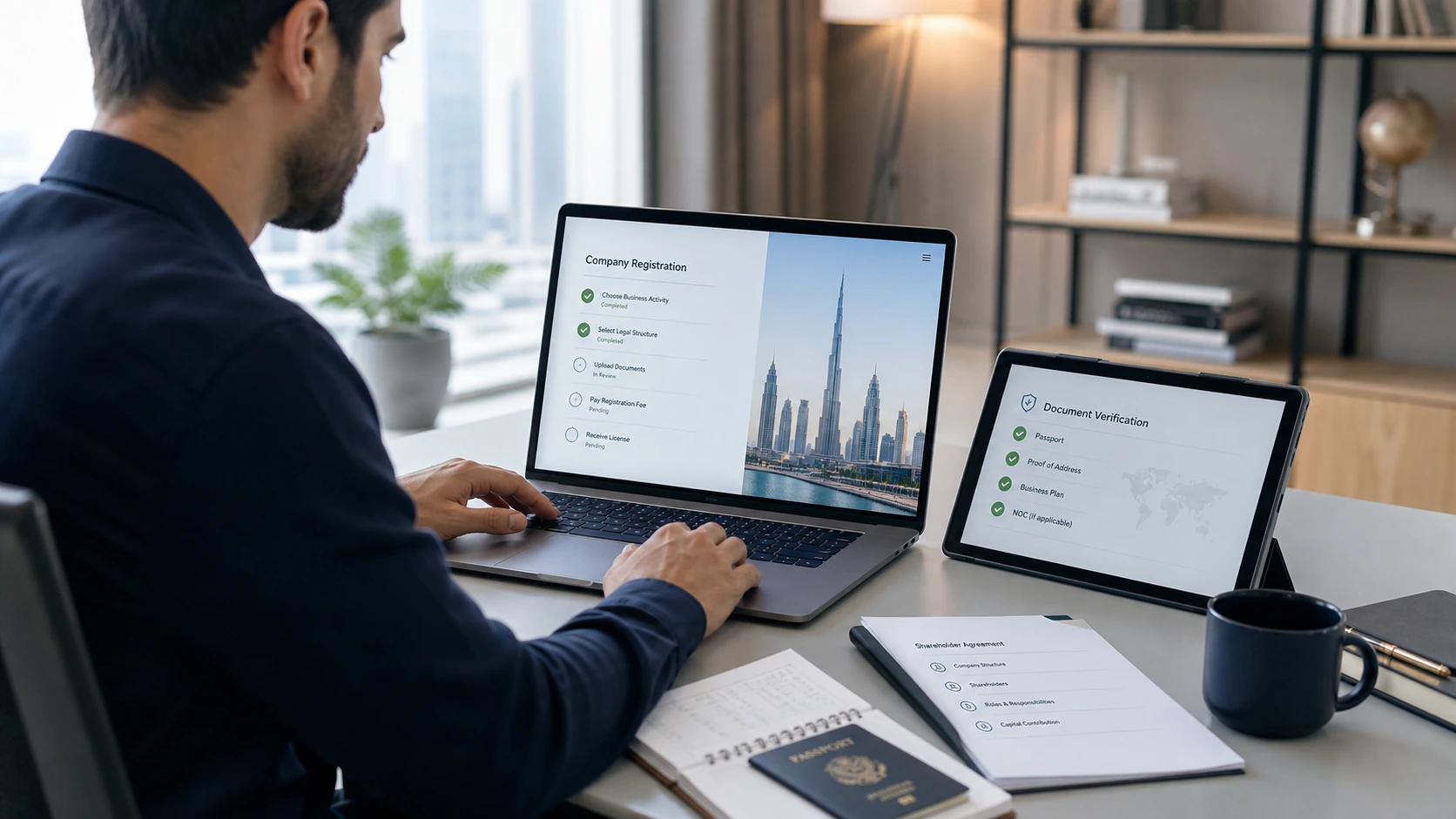
Starting a business in Dubai no longer always means booking a flight first. For overseas founders, several parts of the company formation process can now be handled entirely online, which means it is genuinely possible to set up a UAE business before ever stepping foot in the country.
This can be especially useful for entrepreneurs who want to get a Dubai-based company up and running before relocating, or who plan to run the business without ever becoming UAE residents themselves. That said, going remote does not mean every part of the process happens digitally.
The biggest distinction here is between company formation, banking, and residency. A founder may well be able to get a trade licence without travelling at all, while opening a corporate bank account can take longer, and getting a UAE residence visa still requires certain physical steps that simply cannot be skipped.
What can be done online?
For founders outside the UAE, several free zones now offer digital platforms that let key parts of the company formation process run remotely. This can include picking a business activity, reserving a company name, submitting an application, and uploading identity documents.
Digital identity checks can also cut down the need for an initial in-person appointment. Depending on the free zone and the founder’s specific situation, verification might involve uploading documents and completing video or photo-based identity checks instead.
That makes the initial setup a lot more convenient for international entrepreneurs. Even so, founders should double-check the exact requirements of their chosen free zone, since documentation, activities, shareholder structures, and approval procedures can all vary.

Dubai company registration and the banking process are different
One common mistake is assuming that getting a trade licence automatically means your company’s bank account is ready to go too. In reality, corporate banking runs on its own separate compliance process, and banks carry out their own checks before approving any new business account.
Corporate bank account opening commonly takes two to six weeks after the licence and supporting documents have been submitted, though this timeline can stretch out longer in some cases. Non-resident founders may also face extra scrutiny depending on the bank’s own risk assessment.
Because of this, entrepreneurs should factor banking time into their business launch plan from the start. A company can legally exist while its banking arrangements are still being sorted out in the background.
Document attestation is a key part of remote setup
For overseas founders, the paperwork can end up mattering more than the online application itself. Foreign-issued documents used for company formation may need to pass through a required authentication and legalisation process before UAE authorities will accept them.
Documents like a corporate shareholder’s certificate of incorporation or a power of attorney can require additional legalisation. This process can involve authentication in the country where the document was issued, legalisation through the UAE diplomatic mission, and final attestation by the UAE Ministry of Foreign Affairs.
The UAE also has a digital layer for verifying documents, including QR-based verification for certain legalised paperwork. That said, this digital verification does not remove the underlying attestation requirements wherever those still apply.
Can a founder get UAE residency without visiting?
This is where the remote setup process runs into an important limitation. Company formation and UAE residency are two entirely different processes, and getting a residence visa cannot be completed entirely from outside the country.
Once a residence visa application gets approved and an entry permit is issued, the applicant needs to physically enter the UAE within the applicable validity period. In-country procedures can include the required medical examination, status-related steps, and Emirates ID biometrics.
Founders who only want to set up and run a company without personally taking UAE residency may not need to go through this stage at all. The business can be established without the founder obtaining a personal residence visa, depending on the company’s structure and applicable rules.
Why free zones matter for overseas entrepreneurs
Free zones play a big part in Dubai’s business setup ecosystem, especially for founders looking for a more structured company formation process. Several free zones have built digital systems that make remote applications a lot easier for entrepreneurs based outside the UAE.
Dubai South Business Hub Free Zone, for instance, offers online processes for licensing, company-name reservation, and document submission. Its digital approach is especially relevant for entrepreneurs planning a UAE business before actually moving to the country.
That said, a free zone cannot remove requirements controlled by federal authorities. Document legalisation and the physical procedures tied to UAE residency remain separate steps, no matter how digital the initial company registration process is.
Also Read: Dubai Police Seize 497 Vehicles Over Unpaid Traffic Fines in First Half of 2026
What overseas founders should plan before applying
Before starting a Dubai company remotely, founders should first work out what business activity they actually want to run and which company structure and jurisdiction fit that activity best. This choice can affect licensing requirements, documentation, banking, and future visa options.
It also pays to prepare identity and corporate documents early. If documents need authentication or legalisation in the founder’s home country, getting that sorted in advance can prevent delays once the company application actually gets underway.
Banking should also be treated as its own separate project rather than something that happens automatically alongside company registration. Founders should be ready to provide business information and supporting documents during the bank’s compliance review.
Remote setup offers convenience, but planning remains essential
The growth of digital company formation means overseas entrepreneurs can now take real steps toward setting up a Dubai business without physically travelling to the UAE. Online applications and digital identity checks make that first stage a lot easier.
At the same time, remote incorporation should not be mistaken for a completely paperless, travel-free business journey. Banking checks, document attestation, and UAE residency procedures all come with their own separate requirements and timelines.
For founders planning a Dubai company setup from outside the UAE, understanding these distinctions before submitting an application can save you from delays and unexpected costs down the road. The most important thing is treating the licence, documentation, banking, and residency stages as separate steps, rather than lumping them together as one single process.