

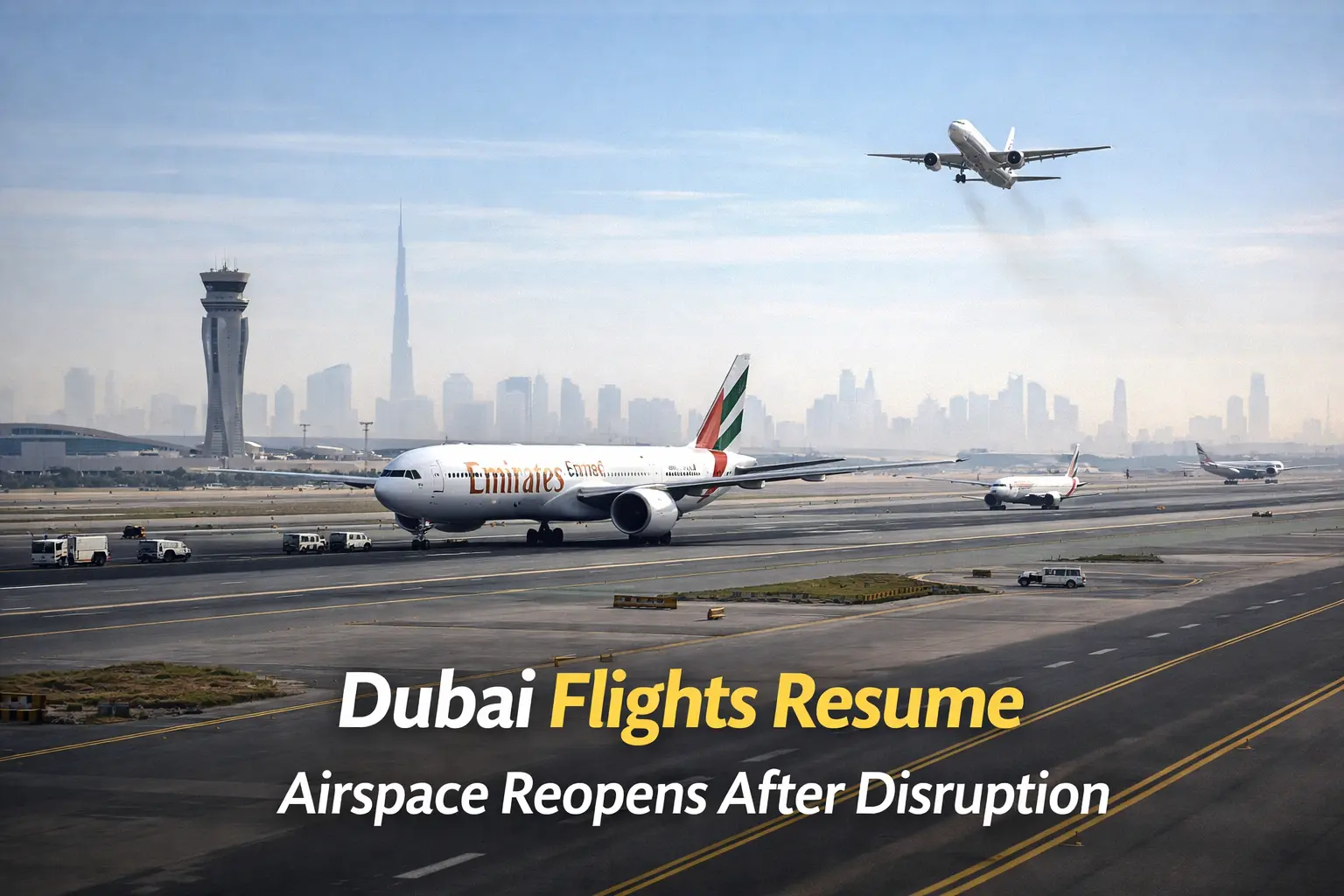
Dubai airports have resumed normal flight operations after a temporary airspace closure triggered by regional security concerns. The precautionary shutdown was implemented to ensure passenger safety during heightened tensions in the Middle East.
Flights have gradually returned to normal schedules, with airlines restarting services and clearing delays. Passengers are advised to check flight updates as operations stabilize across the region.
Why UAE Airspace Was Temporarily Closed
The UAE briefly restricted its airspace as a safety measure following rising tensions linked to the ongoing conflict involving Iran, Israel, and the United States. The move was part of a broader regional response to security risks.
Authorities acted quickly to prevent any potential threat to aviation infrastructure. Such precautionary closures are standard during geopolitical situations that could impact air travel safety.
The decision affected multiple flights, with several airlines suspending or delaying services for a short period.
Flights Resume Across Dubai and the UAE
After the situation stabilized, UAE authorities reopened the airspace and allowed flights to resume. Dubai International Airport and other major airports quickly began restoring operations.
Airlines resumed departures and arrivals, though some delays continued as schedules were adjusted. Passengers experienced temporary disruptions, but services are now returning to regular flow.
Airport officials worked closely with airlines to manage passenger movement and ensure the smooth resumption of services.
Airlines Restore Services and Clear Backlog
Airlines operating in and out of Dubai have been actively working to clear the backlog caused by the disruption. Several flights that were cancelled or delayed have been rescheduled.
Carriers are also offering support to affected passengers, including rebooking options and updated travel information. Travelers are encouraged to stay in touch with airlines for real-time updates.
The quick recovery highlights the efficiency of Dubai’s aviation infrastructure in handling unexpected disruptions.
Impact of Regional Conflict on Travel
The temporary closure of UAE airspace reflects the wider impact of geopolitical tensions on global travel. The ongoing situation involving Iran and its regional dynamics has created uncertainty in air travel routes.
Reports suggest that Iran’s actions are linked to broader strategic tensions in the Middle East. These developments have increased caution among aviation authorities in nearby countries.
Travel disruptions have not been limited to the UAE, as airlines across the region adjusted routes and schedules to ensure safety.
Passenger Advisory and Travel Updates
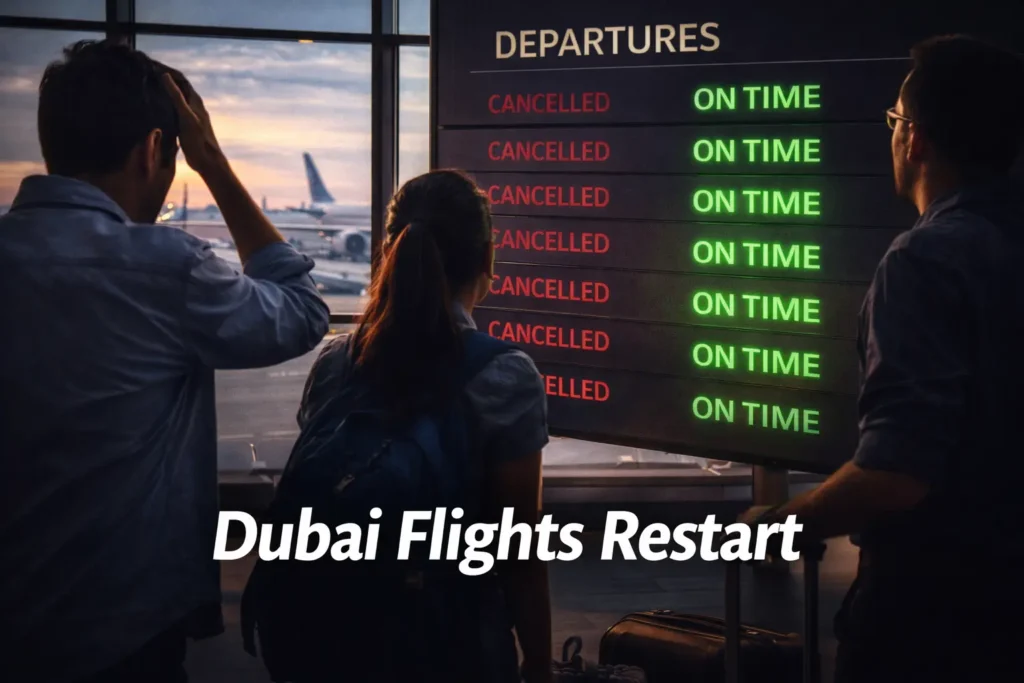
Authorities have advised passengers to stay updated on flight schedules before heading to the airport. Checking airline notifications and airport announcements is essential during such situations.
Travelers may still experience minor delays as operations fully normalize. However, the overall situation has improved significantly since the temporary closure.
Passengers are also encouraged to arrive early at the airport to avoid any last-minute issues.
UAE Ensures Aviation Safety During Crisis
The UAE has emphasized that passenger safety remains its top priority during regional tensions. The temporary airspace closure was a precautionary measure aimed at protecting both travelers and aviation infrastructure.
Dubai airports are equipped with advanced systems that allow quick response to emergencies. This ensures minimal disruption while maintaining high safety standards.
Authorities continue to monitor the situation closely and are ready to take further action if needed.
Also Read: Eid Al Fitr 2026 in Dubai: Free Parking and Transport Timings
Travel Sector Shows Strong Recovery
The quick reopening of airspace and resumption of flights demonstrate the resilience of Dubai’s travel sector. Despite short-term disruptions, the city continues to function as a major global aviation hub.
Dubai International Airport plays a key role in connecting passengers worldwide. Even during challenging situations, the airport has shown its ability to recover quickly and maintain operations.
Airlines and airport authorities are now focused on restoring full normalcy while ensuring passenger convenience and safety.