

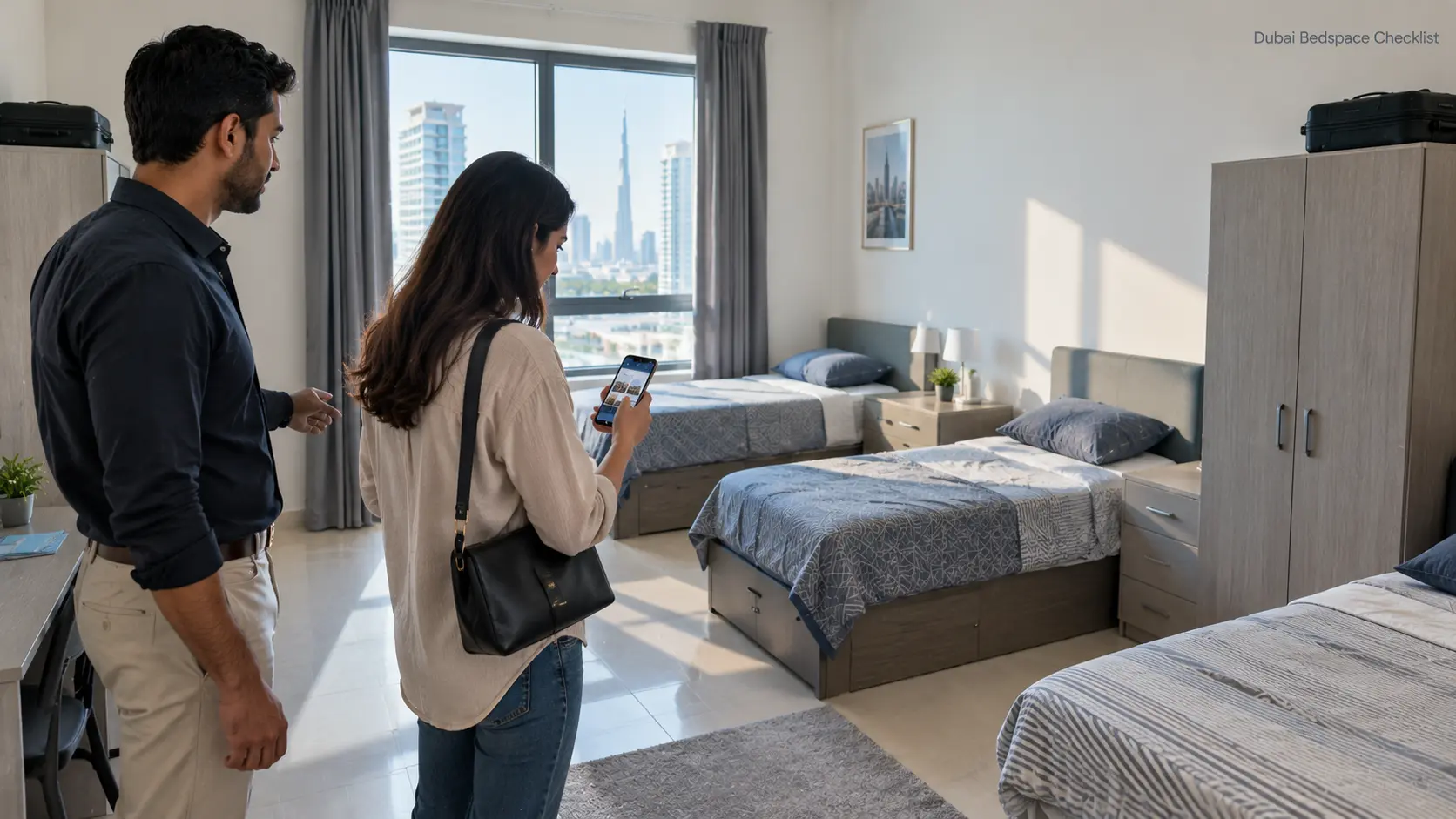
Looking for a bedspace in Dubai? Hold off on that deposit for a minute. Even if the building sits in one of the more than 44 areas approved for shared housing, that doesn’t mean it follows the new rules.
Dubai Municipality announced its latest guidelines on October 7, 2026. Shared accommodation now has to meet clear licensing, occupancy, and safety requirements. So how do you know if a bedspace is legal? Here are five checks to run first.
1. Is the Building in an Approved Area?
Dubai Municipality has named areas where shared housing is allowed. These include Al Barsha 1, Al Rigga, Karama, Al Nahda 1 and 2, Al Qusais, Naif, Oud Metha, Al Muraqqabat, Jumeirah 1 and Al Warqa 1.
In some places, shared housing is allowed only in certain parts. These are Al Satwa, Abu Hail, Al Baraha, Mankhool and Al Jaffiliya. On Sheikh Zayed Road, Jumeirah Road, Al Wasl Road and Baniyas Road, shared housing is limited to families.
Even in an approved area, not every building can be turned into shared housing. It still needs to meet planning, construction and occupancy rules and hold the right permits. If you want the full list, we’ve broken down which areas will allow or ban shared housing.
2. Is the Person Renting It Out Allowed To?
Under the new framework, only property owners or authorised establishments with the right licences and permits can offer shared accommodation. That means a regular tenant can’t just rent out beds in an apartment they’ve leased.
Here’s an example. Say someone rents a two-bedroom flat for Dh6,000 a month, puts in bunk beds, and charges six other people Dh1,000 each. That arrangement isn’t automatically legal, even if the landlord said yes verbally. Before paying, find out whether you’re dealing with the owner or an authorised establishment.
3. Is There Enough Bedroom Space?
Each occupant must get at least five square metres of bedroom space. A room shared by four people would need at least 20 square metres. The number of people must also stay within approved occupancy limits and health and safety rules.
In housing for individuals, several people can share a bedroom, and living rooms can be used as sleeping areas where allowed. Before moving in, ask how many people will share your room and check that the space adds up.
4. Are There Enough Bathrooms and Shared Facilities?
The rules ask for at least one complete bathroom for every four occupants, in both family and individual housing. A complete bathroom has a washbasin, toilet, and shower.
If toilets and showers are separate, you need one toilet for every four people and one shower for every six. That setup is allowed only for individuals. Buildings housing individuals must also have multipurpose areas for dining and recreation, plus enough laundry and drying space.
5. Does the Property Have the Right Permits and Safety Approvals?
A good location and enough space still aren’t enough. The property needs a shared housing permit from Dubai Municipality, and applications and renewals go through the Build in Dubai platform.
Before a permit is given, Dubai Civil Defence must confirm the fire alarms and firefighting systems meet requirements. The property must also meet Security Industry Regulatory Agency (SIRA) rules for CCTV. Where the rules require a whole building or villa to be used for shared housing, an owner can’t convert just one section without approval.
What About Existing Shared Housing?
Existing operators have a one-year grace period, from September 8, 2026 to September 8, 2027, to fix their properties. That doesn’t excuse existing building violations, unauthorised changes of use or public safety hazards.
If you want the bigger picture on what changed, here’s our explainer on why Dubai bans families and individuals from sharing the same home.
The Bottom Line
Before you pay for a bedspace, check the location, who is renting it out, the space per person, the bathrooms, and the permits. It takes a little time, but it can save you money and stress later.
And once you’re settled in, getting around the city might get easier too. Dubai has just begun testing driverless pods, which you can read about in our look at the four week Glydways trial at Bluewaters.