

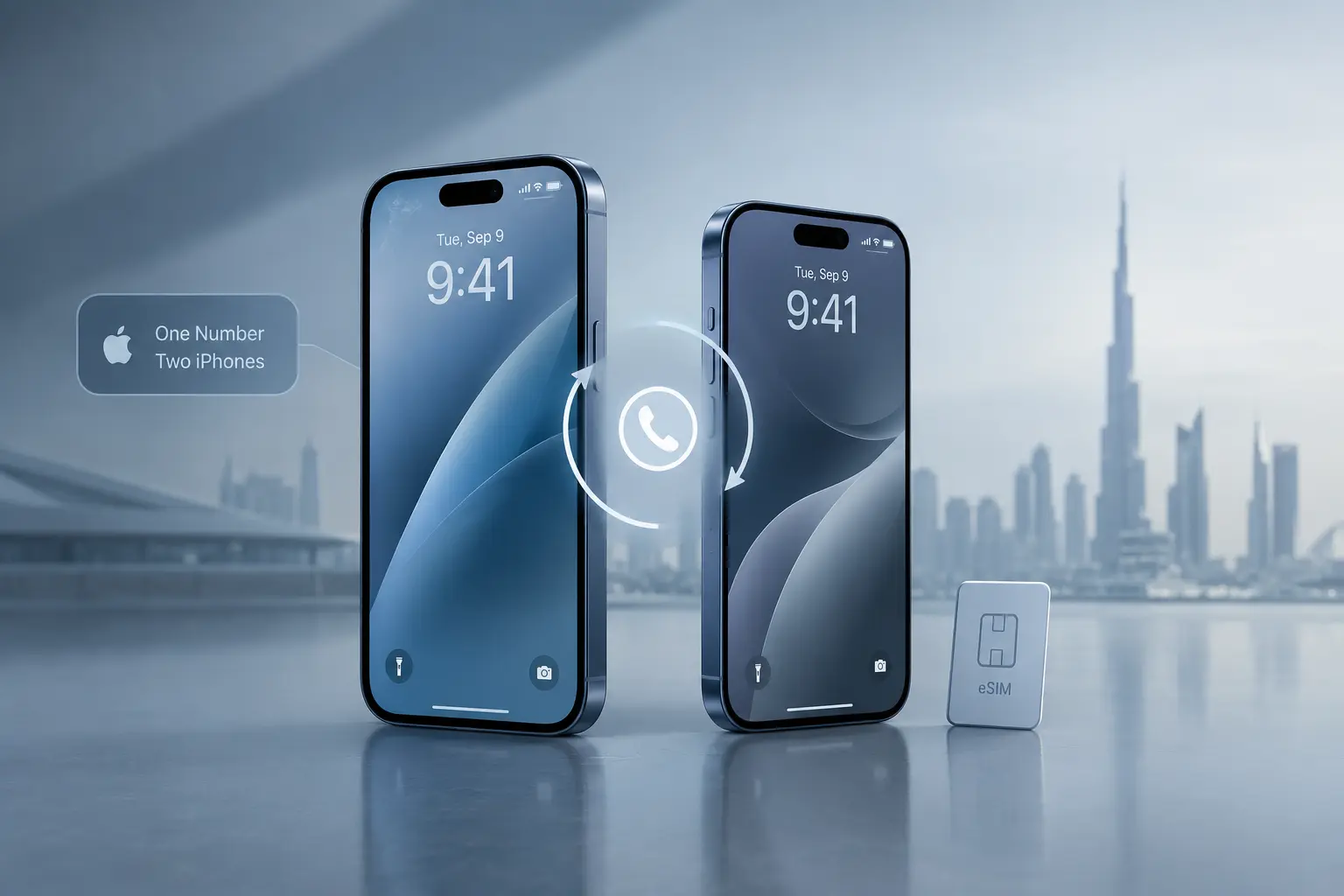
Apple has introduced a new iPhone Handoff feature with iOS 27 that allows users to use the same mobile number across two iPhones. The feature is designed for people who regularly switch between two devices but do not want to manage separate phone numbers.
There is one important limitation. Although the same number can be set up on both iPhones, only one device can be connected to the mobile network at a time.
When the user changes the active phone, calls, voicemail, and messages move to the iPhone currently being used. This includes iMessage, RCS, SMS, and MMS.
How Does iPhone Handoff Work?
iPhone Handoff works by adding an eSIM for the same mobile number to a second compatible iPhone. Both devices need to be signed in to the same Apple Account for the feature to work.
Apple provides the setup through Settings > Cellular > Set Up Cellular or Add eSIM. Users can then select the option labelled “Use Number on This iPhone and Another” and follow the instructions to add the number to the second device.
Once the setup is complete, users do not need to manually transfer their eSIM every time they move between the two iPhones. The active device changes as the user switches phones.
Only One iPhone Is Active On The Network
iPhone Handoff is different from having two phones connected to the same number at the same time. Both devices can have the number set up, but only one iPhone is active on the cellular network.
Unlocking one of the two iPhones makes it the active device. The other iPhone becomes inactive on the mobile network until it is selected again.
This means the feature is not designed to make both iPhones ring independently at the same time. Instead, it makes switching between two devices easier while keeping the same mobile number.
Calls And Messages Move To The Active iPhone
When a user switches to the other iPhone, their communication services follow the active device. Calls and voicemail are moved to the iPhone that is currently connected to the network.
Messages also follow the active phone. The feature supports iMessage, RCS, SMS, and MMS, allowing users to continue their conversations without manually changing SIM or eSIM settings.
The user’s Find My location also follows the iPhone that is currently being used. This means the location shown through Find My is linked to the active device.
What Do You Need To Use iPhone Handoff?
Apple’s iPhone Handoff requires both iPhones to meet certain software and account requirements. The devices need to run iOS 27 or later and be connected to Wi-Fi during the setup process.
Users also need the appropriate Apple Account settings, along with Messages, FaceTime and iMessage configured correctly. The mobile operator must also support the new feature.
iCloud continues to keep supported data in sync between the two iPhones. This means information stored through iCloud can remain available when users move from one device to another.
Who Could Benefit From iPhone Handoff?
The feature could be useful for people who regularly move between different iPhone sizes. For example, someone might prefer a larger iPhone at home but carry a smaller device while travelling.
It could also help users who want to keep a second iPhone available without paying for or maintaining another mobile number. The same number can be associated with both supported devices through the Handoff system.
For frequent device switchers, removing the need to transfer an eSIM manually could make the process much simpler.
Will iPhone Handoff Work in the UAE?
UAE users may need to wait before they can use iPhone Handoff. Apple’s UAE website confirms that iOS 27 includes the feature and says customers can switch between two iPhones with the same number when their carrier supports the service.
However, Apple does not currently list UAE telecom operators among the carriers confirmed to offer iPhone Handoff.
This means having an eSIM-supported iPhone or an eSIM-enabled mobile plan does not automatically mean the Handoff feature will work.
e& And du Support eSIM, But Handoff Is Different
The UAE already has broad eSIM support. Apple lists e& and du among the more than 500 carriers worldwide supporting eSIM for its new iPhone Duo.
However, standard eSIM support and iPhone Handoff are two different things. A carrier can support eSIM technology without supporting the specific network features required to use one number across two iPhones.
For UAE customers, the availability of iPhone Handoff will therefore depend on whether local operators introduce support for Apple’s new service.
Which Carriers Currently Support iPhone Handoff?
At launch, Apple’s iPhone Handoff is available through T-Mobile in the United States and Deutsche Telekom in Germany. Other operators are also preparing to support the feature.
Verizon in the US and EE in the UK are expected to add support later in 2026. Availability can vary by country, operator, and mobile plan.
Apple advises customers to contact their mobile carrier to confirm whether iPhone Handoff is available in their country or region.
Also Read: PANKAJ TRIPATHI TO MAKE HIS IIFA DIGITAL AWARDS 2027 HOSTING DEBUT
iPhone Handoff Pricing Can Vary
The cost of using iPhone Handoff can also depend on the mobile operator. There is no single global price for the service.
For example, T-Mobile charges $5 per month for the service. Deutsche Telekom charges €6.95 on plans that do not already include the required multi-SIM functionality.
UAE operators could have different pricing or plan requirements if the feature becomes available locally. Any UAE pricing would depend on the individual telecom provider and the plan offered.
What UAE iPhone Users Need To Know
For UAE iPhone owners, the main point is that the technology is already part of iOS 27, but access depends on carrier support. Having a compatible iPhone, iOS 27 and an eSIM alone does not guarantee that Handoff can be activated.
Users who want to use one number across two iPhones should check with their telecom operator before changing their mobile setup. Apple’s support guidance also recommends confirming availability directly with the carrier.
Until UAE operators officially support the feature, users will continue to need the existing options available through their mobile plans for managing multiple iPhones and numbers.