

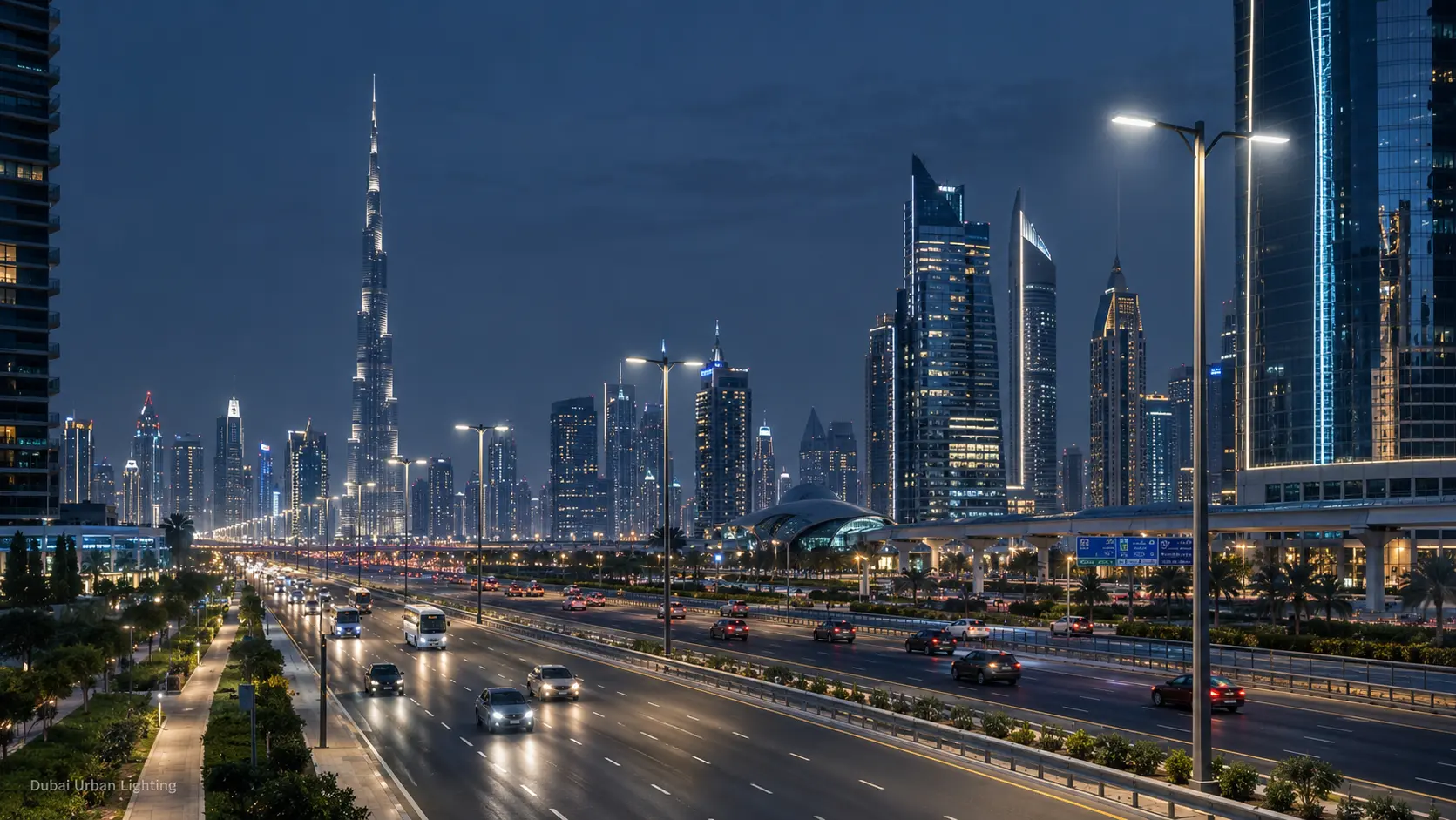
Dubai is developing an integrated urban lighting system that could change how public spaces and major areas across the emirate look and feel after dark. Dubai Municipality announced the new framework as part of its push for more consistent and effective lighting standards.
The system will set technical, regulatory, and governance requirements for lighting projects across Dubai. The goal is to improve the quality of lighting while cutting down on problems like excessive glare and light pollution.
The initiative also ties into Dubai’s wider goal of improving quality of life. By making lighting more efficient and carefully planned, the city hopes to create safer and more attractive spaces for residents, visitors and businesses.
New Standards for Lighting Projects Across Dubai
One of the main goals of the framework is to introduce unified standards for urban lighting projects. This will help ensure different developments follow a more consistent approach instead of using lighting systems with wildly different designs and performance levels.
The framework will cover requirements for both government entities and private-sector partners, along with clearer responsibilities for planning, implementation, compliance and oversight.
The new approach will align with the Dubai Building Code and the objectives of the Dubai Civility Committee, which should help lighting projects support both practical urban needs and Dubai’s distinctive visual identity.
Reducing Light Pollution and Glare
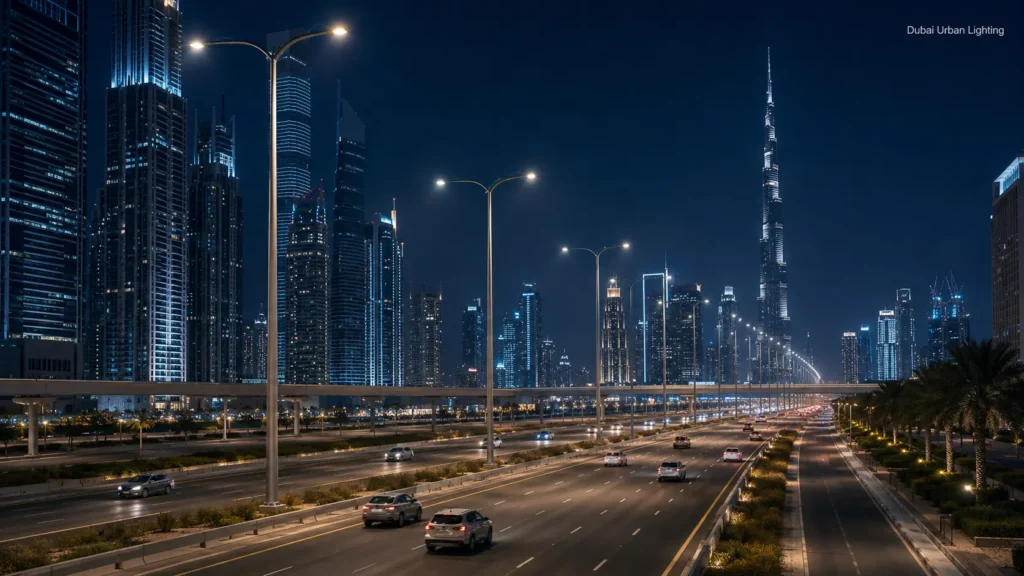
Excessive artificial lighting can affect how people experience urban spaces, especially when bright lights create unnecessary glare. Dubai’s new framework will focus on reducing these issues while making sure streets, public areas and important destinations stay properly lit.
The plan aims to strike a better balance between visibility and responsible lighting. Instead of simply cranking up the brightness, future projects can focus on using light where it is actually needed and controlling it more carefully.
This approach could also improve how Dubai looks at night overall. More coordinated lighting can create a cleaner visual environment while letting important buildings and landmarks stand out without excessive illumination.
Improving Safety in Public Spaces
Lighting plays a big role in making public areas feel safer after dark. Well-planned illumination can improve visibility on streets, pedestrian routes and other spaces where residents and visitors spend time.
Dubai Municipality expects the new framework to support safer public environments across the emirate. Better lighting design can help people move through areas more comfortably while improving the overall experience of public spaces.
This initiative is not just about aesthetics, either. Safety, accessibility and quality of life sit right at the centre of the planned lighting system.
Supporting Dubai’s Night-Time Economy
Dubai has a thriving evening and night-time economy, with restaurants, shopping areas, entertainment destinations and attractions continuing to draw visitors well after sunset. The new lighting framework is expected to support these activities by improving the appearance and atmosphere of urban areas.
A more cohesive approach to lighting could make commercial and leisure destinations more appealing at night, while also helping build a stronger identity for areas that are increasingly active beyond the usual daytime hours.
The wider aim is to make Dubai’s public spaces more enjoyable while supporting the businesses and destinations that rely on evening visitors.
Highlighting Dubai’s Landmarks
Dubai’s skyline and landmarks are a big part of the city’s global image. The proposed lighting system will help ensure key landmarks can be highlighted in a more coordinated and visually appealing way.
Dubai Municipality Director General Marwan bin Ghalita described lighting as more than just a functional feature, saying it can help define the city’s character, tell its story and put its landmarks on the map internationally.
The framework will therefore weigh Dubai’s visual identity alongside technical requirements, which could help build a stronger connection between lighting design, architecture and the cultural character of different areas.
Smart Lighting Controls to Improve Energy Efficiency
Energy efficiency is another major piece of the planned system. Dubai intends to promote high-efficiency lighting technologies that can deliver the required illumination while using less electricity.
Smart controls will also play a big role. Dynamic dimming and optimised operating hours will let lighting levels adjust based on location, activity and time, rather than keeping lights at the same intensity all night long.
These measures could help cut down energy consumption and carbon emissions, supporting Dubai’s wider push to use technology and smarter infrastructure to improve the efficiency of urban services.
Protecting Coastal and Desert Environments
The new framework will also weigh the impact of artificial light on sensitive natural environments. Dubai has important coastal and desert areas where excessive lighting can disrupt surrounding ecosystems.
The planned system will introduce measures designed to limit unnecessary artificial light in these locations, with clear criteria to help project developers understand where additional controls may be required.
This environmental angle means lighting will be considered not just from a human perspective but also in relation to the natural surroundings, adding another layer to Dubai’s approach to more responsible urban development.
Digital Workflows Could Speed Up Approvals
The new system is also expected to bring in clearer digital workflows for applications, licensing and inspections, making the process easier for both government bodies and private-sector developers.
Better digital coordination can help cut down delays and make requirements more transparent. It can also support long-term monitoring and compliance once lighting projects are up and running.
The framework will include governance and oversight mechanisms alongside an execution roadmap, with measures also being developed to assess the impact of the new system over time.
Also Read: Dubai Municipality Introduces Greenery and Plantation Manual 2026
Implementation Will Take Place in Phases
Dubai Municipality plans to develop and roll out the lighting framework in several stages. The first phase will focus on coordination between public-sector and private-sector stakeholders.
This will be followed by a review of international practices and technical standards, after which the municipality will establish core lighting requirements and build out a detailed implementation roadmap.
This phased approach is meant to make sure the new system is practical and can keep pace with Dubai’s rapid urban growth, while also letting the emirate draw on international best practices without losing a lighting identity that feels distinctly Dubai.
Dubai Civility Committee’s Role
The project is being developed under the objectives of the Dubai Civility Committee, established in September 2025 by Sheikh Hamdan bin Mohammed bin Rashid Al Maktoum.
The committee’s involvement ties the lighting initiative into Dubai’s wider focus on the quality and character of urban spaces, treating lighting as part of the broader experience of living, working and spending time in the city.
By bringing technical standards, design, safety, sustainability and governance together, Dubai Municipality aims to build a more coordinated approach to lighting across the emirate.