

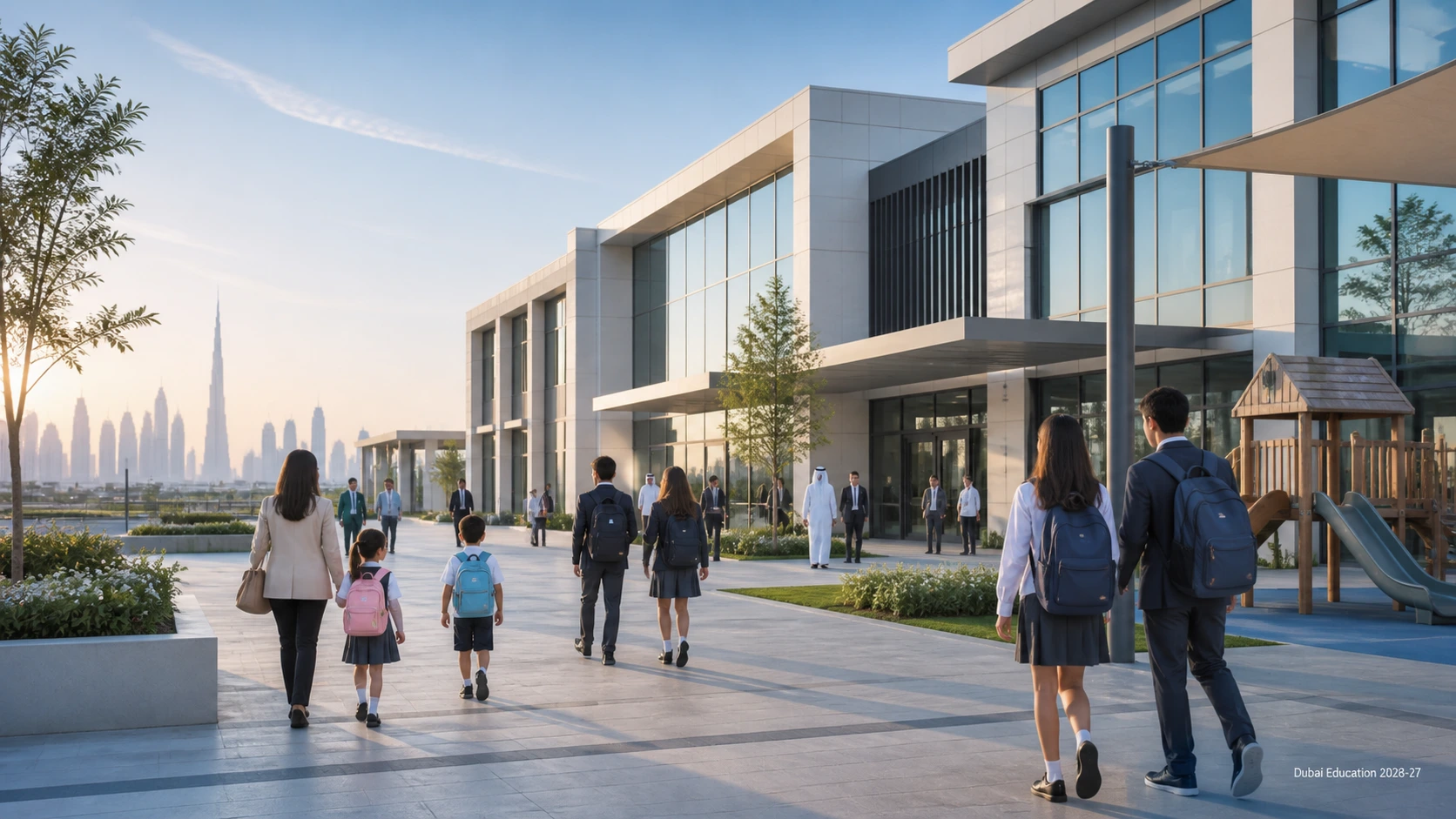
Dubai’s private education sector is adding significant capacity in the 2026-27 academic year. Twenty-six new institutions are opening — 17 early childhood centres, seven private schools and two international higher education institutions — expanding the choices available to families and students across every stage of learning.
The seven new schools will add 16,846 places, while the early childhood centres will contribute more than 1,700 additional spots. The numbers reflect an education sector that has been growing consistently, with annual growth of 4.6% recorded across early childhood education, schools and higher education over the past three academic years.
Seven New Private Schools to Add Nearly 17,000 Seats
The biggest addition to the 2026-27 landscape comes from the seven new private schools, which together will create close to 17,000 new student places. Four of the schools will offer the UK curriculum and three will follow the International Baccalaureate programme.
The names arriving are worth noting. Harrow International School Dubai, Queen Elizabeth’s School Dubai Sports City and Rugby School Dubai are all new Dubai campuses of well-established British institutions — a signal that international education providers continue to see the emirate as a market worth investing in.
The expansion builds on steady momentum. Twenty-one new schools opened across Dubai over the past three years, and overall private school enrolment grew by 3.1% during the same period. The new additions continue that trajectory.
17 New Early Childhood Centres Coming to Dubai
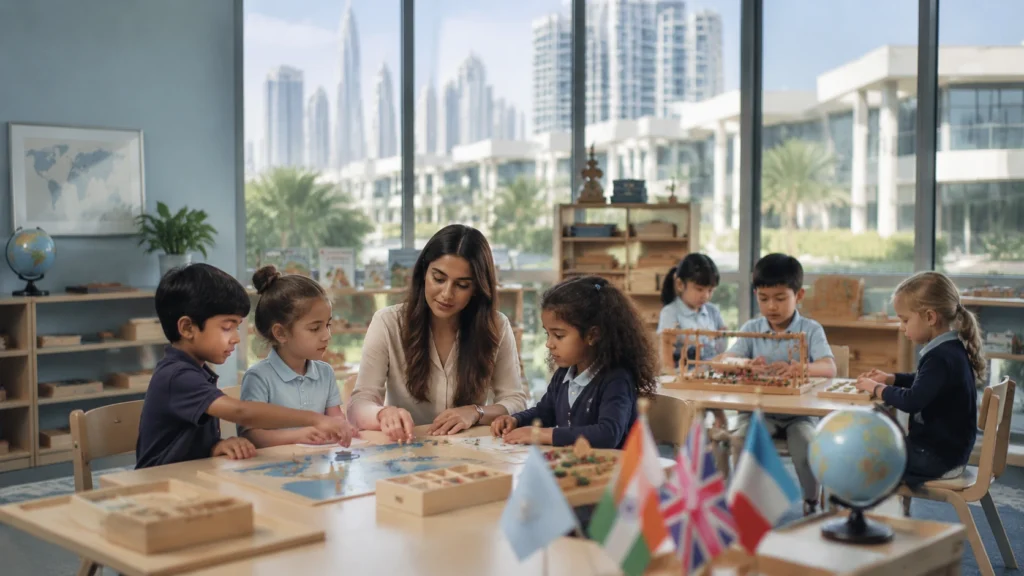
Early education is the part of the expansion with the most new institutions — 17 new early childhood centres joining the landscape in 2026-27, adding more than 1,700 places for the youngest learners.
The curriculum variety on offer is broad: UK’s Early Years Foundation Stage, Montessori, Ontario, French and Indian programmes will all be available, giving parents meaningful choice rather than simply more of the same.
Dubai has been building out this part of its education ecosystem rapidly. Eighty-seven new early childhood centres opened over the past three years, and enrolment in the sector grew by 2.6% over the same period. The 17 new centres continuing that growth suggest demand is not slowing.
Two International Higher Education Institutions Expand Choices
The higher education additions are perhaps the most internationally notable part of the 2026-27 expansion.
The American University of Beirut’s Dubai campus is scheduled to open in September 2026, adding a respected regional university brand to Dubai’s growing portfolio of higher education options.
Peking University HSBC Business School is expected to launch MBA and EMBA programmes in Dubai in January 2027. Ranked 47th globally in the QS rankings, its arrival signals that Dubai is increasingly capable of attracting genuinely globally ranked institutions — not just regional names looking for a satellite location.
Higher Education Enrolment Continues to Grow
The two new arrivals follow an already strong period for Dubai’s higher education sector. Eleven new higher education institutions have opened in the emirate over the past three years, and enrolment grew by 29% during the same period — a figure that speaks to the scale of unmet demand that existed and the pace at which the sector is responding.
That growth comes from multiple directions: local students who previously had to leave the UAE for internationally recognised programmes, international students choosing Dubai as a study destination, and working professionals seeking executive education close to where they live and work.
Teacher Numbers Rise Across Dubai’s Private Education Sector
More students means more teachers, and Dubai’s education workforce has been expanding to match. Teacher numbers in the private education sector rose by 17.5% over the past three academic years.
A growing educator workforce matters for quality as much as capacity. An expanding school can only deliver a good education if the people teaching in it are qualified and well-supported. The ability to attract international teachers — bringing expertise across different curricula and educational traditions — is one of Dubai’s genuine advantages in building a private education sector that serves a highly diverse student population.
Education 33 Strategy Supports Sector Expansion
The expansion sits squarely within the Education 33 Strategy, Dubai’s framework for improving education quality, widening learner choices and attracting internationally recognised institutions — itself part of the broader Dubai Economic Agenda D33.
Aisha Miran, Director General of the Knowledge and Human Development Authority, described the continued growth as a reflection of confidence from learners, families, educators and investors in what Dubai’s education system is becoming. The strategy focuses on creating multiple learning pathways and preparing students with the knowledge and skills that will serve them in further study, employment and broader life opportunities.
Also Read: Dubai Tops Global Ranking for Cultural and Creative FDI Projects for Fourth Consecutive Year
More Curriculum Choices for Dubai Families
The range of curricula being introduced across the new institutions — UK, International Baccalaureate, Montessori, French, Indian and Ontario — is particularly relevant in a city where families from dozens of nationalities live and work simultaneously.
For many parents in Dubai, curriculum choice isn’t just about educational philosophy. It’s about continuity of their children’s education when the family eventually moves on, or about aligning with the university systems and qualification frameworks their children are likely to encounter. Having genuine variety across different parts of the school system gives families the ability to make that choice thoughtfully rather than taking whatever is closest or most available.
Dubai Strengthens Its Position as an Education Hub
The combined effect of 26 new institutions, nearly 18,000 new education places, a growing educator workforce and two globally ranked higher education arrivals is a private education sector that is measurably larger and more internationally credible than it was a year ago.
The 4.6% annual growth sustained across the sector over the past three academic years — maintained even through the difficulties of the 2025-26 academic year — reflects an education market driven by genuine demand rather than speculation. As Dubai’s population grows and more internationally mobile families choose the emirate as a long-term home, the pressure on quality private education supply is only going to increase. The 2026-27 expansion is a meaningful step toward meeting it.