

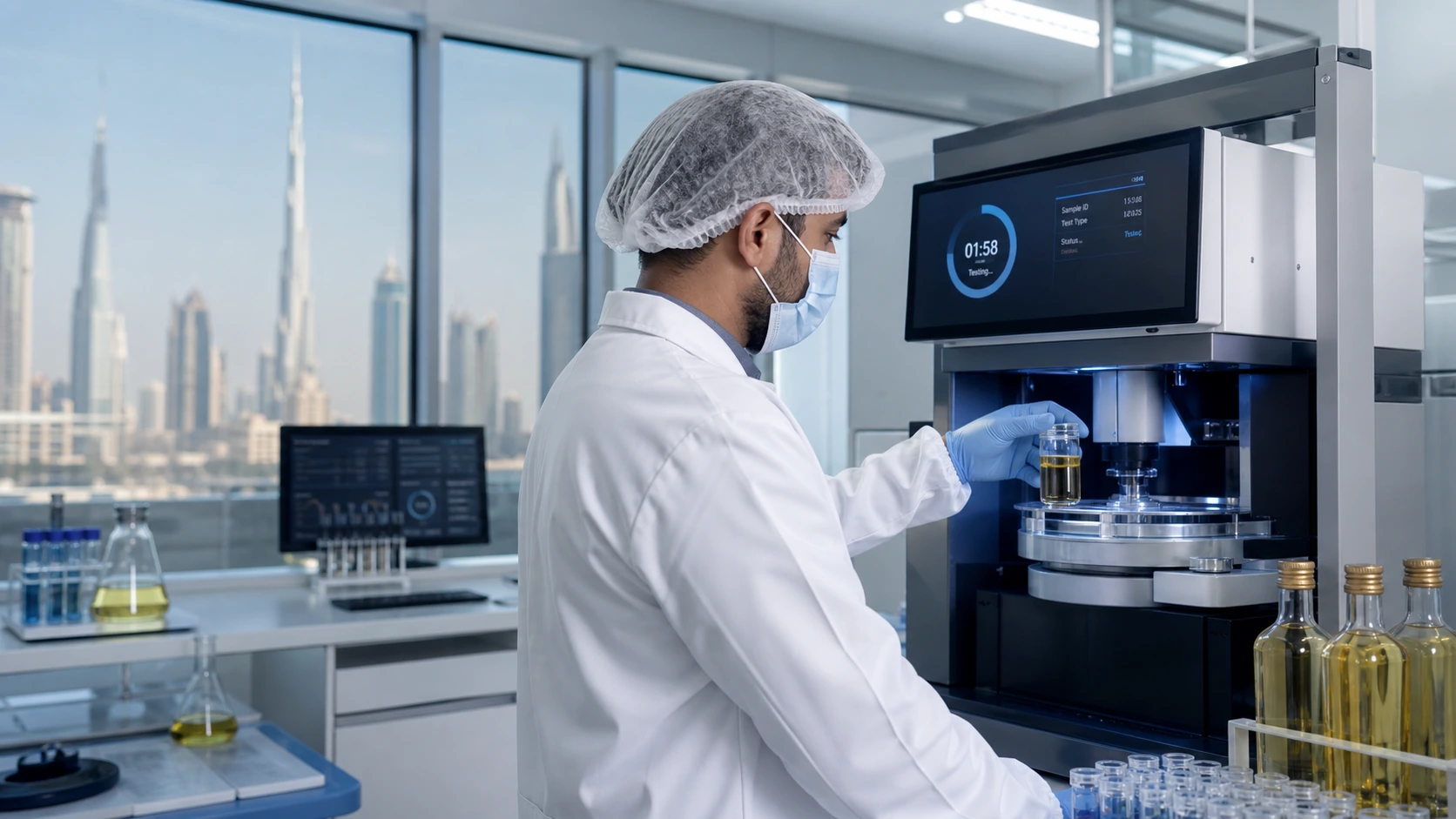
Dubai has introduced a new automated testing system that cuts the time needed to check the quality of oils and fats from around two hours down to just two minutes. It’s the kind of improvement that sounds incremental until you think about what it means across a food safety operation that handles large numbers of samples every day.
The faster process significantly increases the number of samples a laboratory can handle without any corresponding increase in resources or time, and it supports Dubai’s ongoing effort to maintain strong food safety standards across one of the region’s most active and diverse food and hospitality sectors.
Food Safety Checks Can Now Be Completed Much Faster
Traditional laboratory food testing takes time — and when a busy commercial hub is generating large volumes of samples from restaurants, hotels, catering companies and food suppliers, that time adds up. A backlog of samples waiting for results is a gap in the system.
The new automated approach closes that gap considerably. Two minutes per test rather than two hours doesn’t just mean faster results for individual samples — it means the whole pipeline moves more quickly, potential problems get identified sooner and the waiting period for food businesses and safety teams alike becomes much shorter.
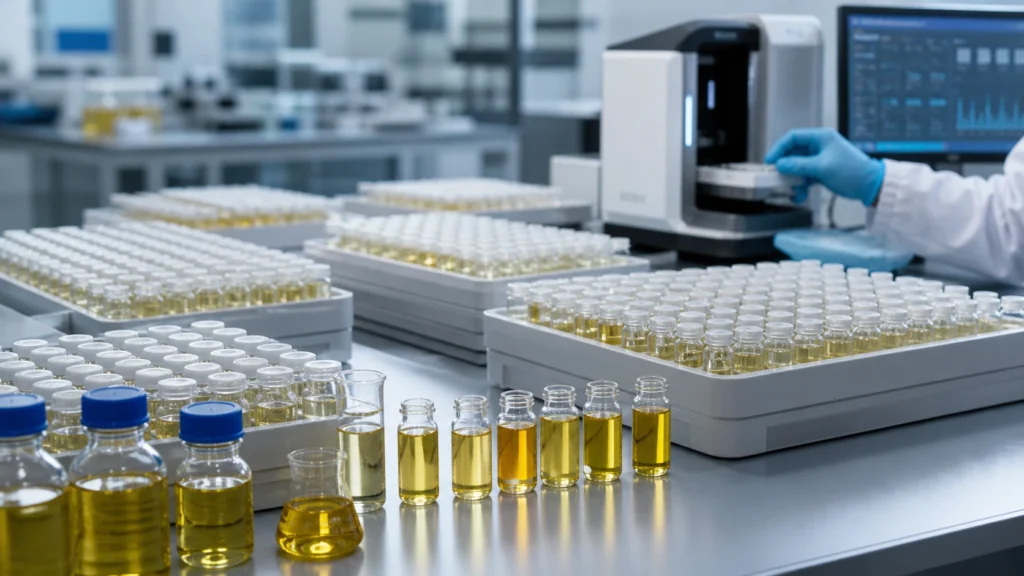
Oil and Fat Quality Testing Gets a Major Boost
The specific focus of the new technology is oils and fats — ingredients used in commercial kitchens across the city every day, in quantities that make their quality a genuine public health concern.
Cooking oil that has degraded beyond safe limits is a real risk in any food service environment, and identifying it quickly matters. With testing time reduced to two minutes, laboratories can flag quality concerns well before a compromised product has had time to cause widespread harm. Food establishments can also get more timely feedback on the products they’re using, which supports better day-to-day quality management in commercial kitchens.
Laboratory Testing Capacity Rises by Up to 900%
Speed is the headline improvement, but the capacity increase is equally significant. The technology reportedly boosts laboratory testing capacity by as much as 900% — meaning up to nine times more samples can be processed in the same period as before.
That figure matters in a city with the scale and density of Dubai’s food sector. During high-demand periods or when a quality concern requires widespread checking, the ability to process significantly more samples without extending the timeline or adding additional laboratory infrastructure gives food safety teams a real operational advantage.
What Faster Food Testing Means for Restaurants and Food Businesses
For food businesses, the practical benefit is more timely information. Regular quality checks are part of operating any commercial kitchen, and the faster those results come back, the sooner businesses can confirm their ingredients meet required standards — or take corrective action if they don’t.
For food safety authorities, the improved capacity means a greater proportion of the food sector can be monitored consistently rather than selectively. When laboratories can handle more samples without compromising turnaround time, oversight becomes broader and more systematic rather than reactive.
Technology Is Changing Dubai’s Food Safety System
The move to automated food testing reflects a broader pattern in how Dubai approaches regulatory operations. Technology is increasingly being used not to replace human expertise but to handle the volume and speed demands that human processes alone can’t efficiently manage.
Automation is particularly well-suited to laboratory settings where the process is methodologically consistent — same test, many times, needing to be done quickly and accurately. It reduces the risk of backlogs building up during high-volume periods and frees up laboratory capacity for the cases that genuinely require closer human attention.
Also Read: Can You Start a Dubai Company Without Travelling to the UAE?
Why Faster Testing Matters as Dubai’s Food Sector Grows
Dubai’s food industry isn’t standing still. The restaurant scene keeps expanding, hotel and tourism capacity keeps growing, and with it comes an increasing volume of food safety monitoring that laboratories need to keep pace with.
A system that processes nine times more samples in the same timeframe is a system that can grow with the industry rather than becoming a bottleneck as demand increases. The two-minute testing time also opens up possibilities for more frequent and more routine monitoring — checking more establishments more regularly rather than relying on periodic spot inspections.
Faster Checks Can Support Stronger Food Safety Monitoring
Put it all together, and the picture is straightforward. Faster testing means earlier identification of quality issues. Higher capacity means broader coverage across the sector. Automation means consistent results regardless of volume or time pressure.
For a city that takes its reputation as a world-class food destination seriously — and that hosts millions of international visitors every year who eat in its restaurants and hotels — having a food safety system that can keep pace with the scale of the industry is genuinely important. The shift from two hours to two minutes is a small number to say out loud, and a significant change in practice.