

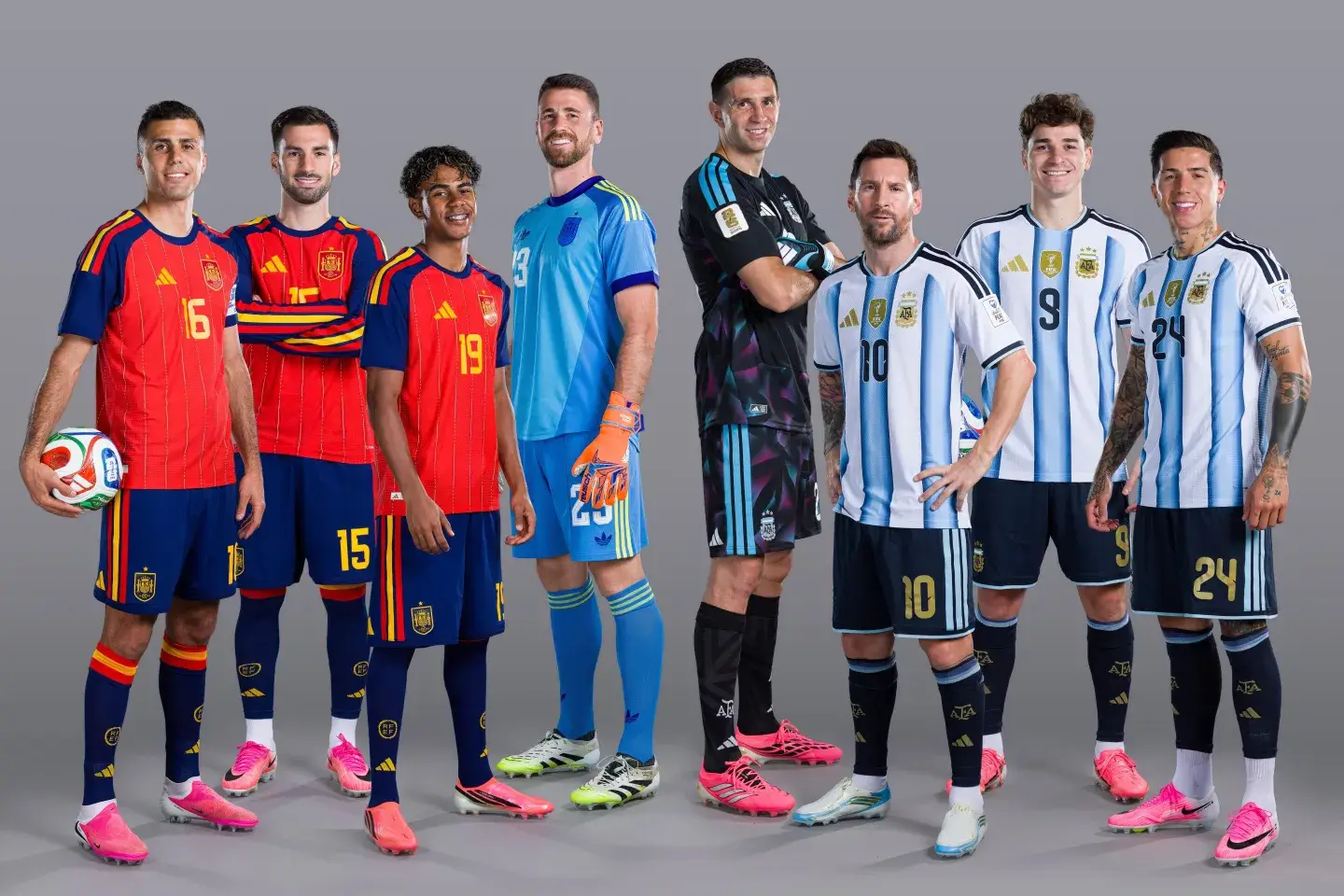
There are World Cup finals that feel like obligations — two deserving teams, a good game, a worthy winner. And then some finals feel like events. Spain against Argentina on July 19, 2026, at MetLife Stadium in New Jersey is very much the second kind.
The European champions and FIFA’s top-ranked team against the World Cup holders and South American champions. Lionel Messi, at 39, is chasing a second consecutive World Cup and what would be the most extraordinary exit to any footballing career in history. Lamine Yamal, at 19, is waiting to show the world what he can do on the sport’s biggest single stage. This is the kind of final that makes people set alarms, cancel plans, and find somewhere to watch with other people rather than alone.
Here is the full breakdown of both teams heading into Sunday.
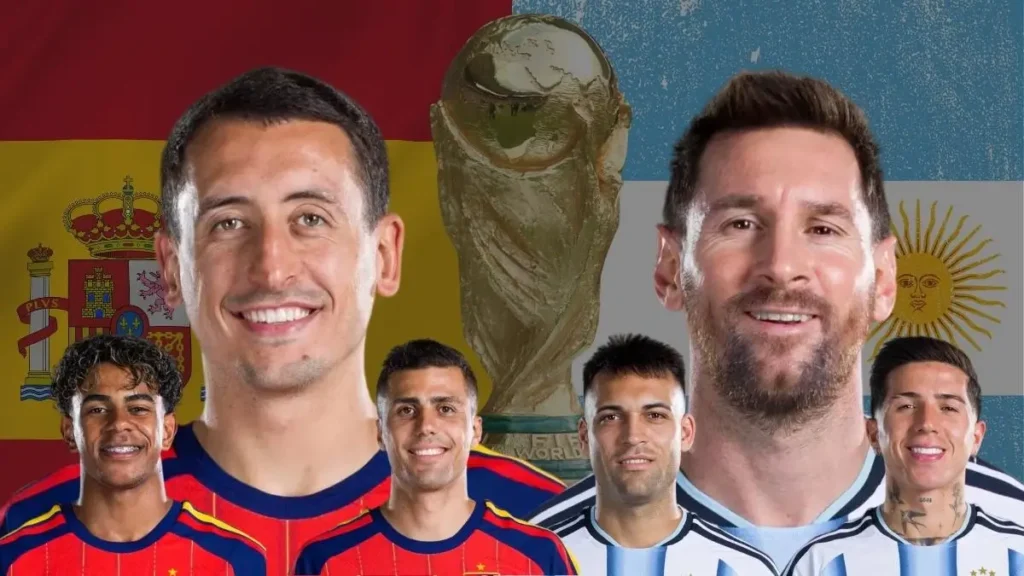
Argentina — Defending Champions
FIFA Ranking: 3 | Best World Cup Finish: Winners (1978, 1986, 2022)
The Story So Far
Argentina’s journey through this tournament has been significantly less tidy than their reputation would suggest. They have won — convincingly at times — but they have also been pushed to the edge in ways that the 2022 Qatar squad rarely experienced after the opening Saudi Arabia shock.
They swept through the group stage with eight goals and just one conceded, but the knockout rounds told a different story. Cape Verde and Egypt both pushed them to 3-2 wins. Switzerland required extra time to be put away 3-1 in the quarterfinals. The semifinal against England saw Argentina trail 2-0 with eleven minutes of normal time remaining before completing a 2-1 comeback that will be remembered as one of the great World Cup moments of this edition.
They have not lost a match since a 1-0 defeat in Ecuador in qualifying — a 14-game winning streak that includes this entire tournament — but they have found winning harder than the streak makes it sound.
The Strength: Everything Runs Through Messi
At 39, Lionel Messi is heading for the World Cup Golden Boot with eight goals. The numbers are extraordinary. The context is even more so — he is doing this at an age when most footballers have already retired.
The midfield trio of Enzo Fernández, Alexis Mac Allister, and Paredes has functioned throughout this tournament less as a creative unit and more as a protective one. Analysts and commentators have compared them to personal bodyguards for Messi — their primary job is to win the ball back quickly and give it to him in positions where he can do damage. It has worked.
The Weakness: The Same Thing
The problem with building everything around Messi is that the question of what Argentina look like without him has never been properly answered. Giuliano Simeone and Julián Álvarez offer pace. Lautaro Martínez offers goals. Lisandro Martínez is a commanding presence at the heart of the defence. But the creative spark that turns good possession into genuine danger runs almost entirely through one 39-year-old man.
If Messi picks up an injury — or simply has a quiet game against a Spain side that knows exactly how to reduce the space around a central creative player — Argentina’s Plan B is worryingly undefined.
Players to Watch
Messi is the obvious answer, but watch what Scaloni does from the bench when the game gets tight. The semifinal comeback against England came after he introduced Rodrigo De Paul, Nicolás González, and Lautaro Martínez as substitutes. The depth is real, even if it is less effective without Messi pulling the strings.
Spain — European Champions and World Number One
FIFA Ranking: 1 | Best World Cup Finish: Winners (2010)
The Story So Far
Spain’s World Cup began with a jolt — a 0-0 draw against Cape Verde in the opening match that was widely described as one of the great group stage shocks of the tournament. A 4-0 win against Saudi Arabia settled the nerves, and a narrow 1-0 win against Uruguay sent them through as group winners.
The knockout rounds were harder than the scorelines suggest. Austria were dispatched 3-0 with reasonable comfort, but Portugal and Belgium each held Spain to one-goal winning margins. The real test came in the semifinals against France, and Spain passed it with, as one report put it, flying colours. France had been regarded by many as the tournament’s most likely winner at various points — Spain removed them with authority.
They have not lost in 37 consecutive matches. Their last defeat in a competitive fixture was against Scotland in a Euro 2024 qualifier in March 2023.
The Strength: Organisation and One Goal Conceded
In a tournament with 104 matches and dozens of high-scoring games, Spain have conceded exactly one goal across their entire World Cup campaign. That defensive record is the foundation of everything.
Their possession-based game — the tiki-taka style that Pep Guardiola developed at Barcelona and which the Spanish national team made famous during their dominant period between 2008 and 2012 — remains the framework. Rodri and Fabián Ruiz control the midfield tempo. The system is designed to suffocate opponents through ball retention and make any team that wants to play against them work exhaustingly hard for the ball.
The Weakness: Pace and the Low Block
Spain’s short passing game has been noticeably slower than the version that won them the 2010 World Cup and their back-to-back European Championships. Against teams that sit deep, defend in a low block, and deny them space between the lines, Spain have found goals difficult to come by.
Argentina will almost certainly set up exactly that way. If Spain go ahead early, Argentina will have to open up — which suits the Spanish perfectly. If the game stays tight and goalless, Spain need someone to create something individual rather than collective. That responsibility falls most naturally to Lamine Yamal.
Players to Watch
Yamal has scored once at this tournament — against Saudi Arabia in the group stage. Williams has yet to score. Both of Spain’s most exciting attackers have been below their best at this World Cup, and Sunday feels like the match where at least one of them needs to produce something special. Yamal won the La Liga Player of the Season award with Barcelona and is a genuinely world-class talent — the final stage on which to finally show it in this tournament.
Also Read: Dubai Police Warn Public Against Fake Visa and Job Scams Online — Here’s How to Protect Yourself
Head-to-Head and What to Expect
| Category | Spain | Argentina |
|---|---|---|
| FIFA Ranking | 1 | 3 |
| Goals Scored | 14 | 19 |
| Goals Conceded | 1 | 8 |
| Unbeaten Run | 37 games | 14 games |
| Key Player | Lamine Yamal | Lionel Messi |
| Style | Possession, organisation | Counter, Messi-dependent |
Spain’s defensive record is superior. Argentina’s attacking record is considerably better. The final will almost certainly be decided by which story holds — whether Spain’s organisation can contain Messi long enough to find a goal that breaks Argentina’s defensive shape, or whether Argentina’s ability to survive tight games and find moments of individual brilliance sees them join Brazil and Italy as the only nations to win back-to-back World Cups.
The last team to do it was Brazil in 1958 and 1962. It is an extremely short list. Messi wants to put his name on it.
Spain wants to be world champions for the second time in their history.
One of them will be. Sunday night will tell us which.