

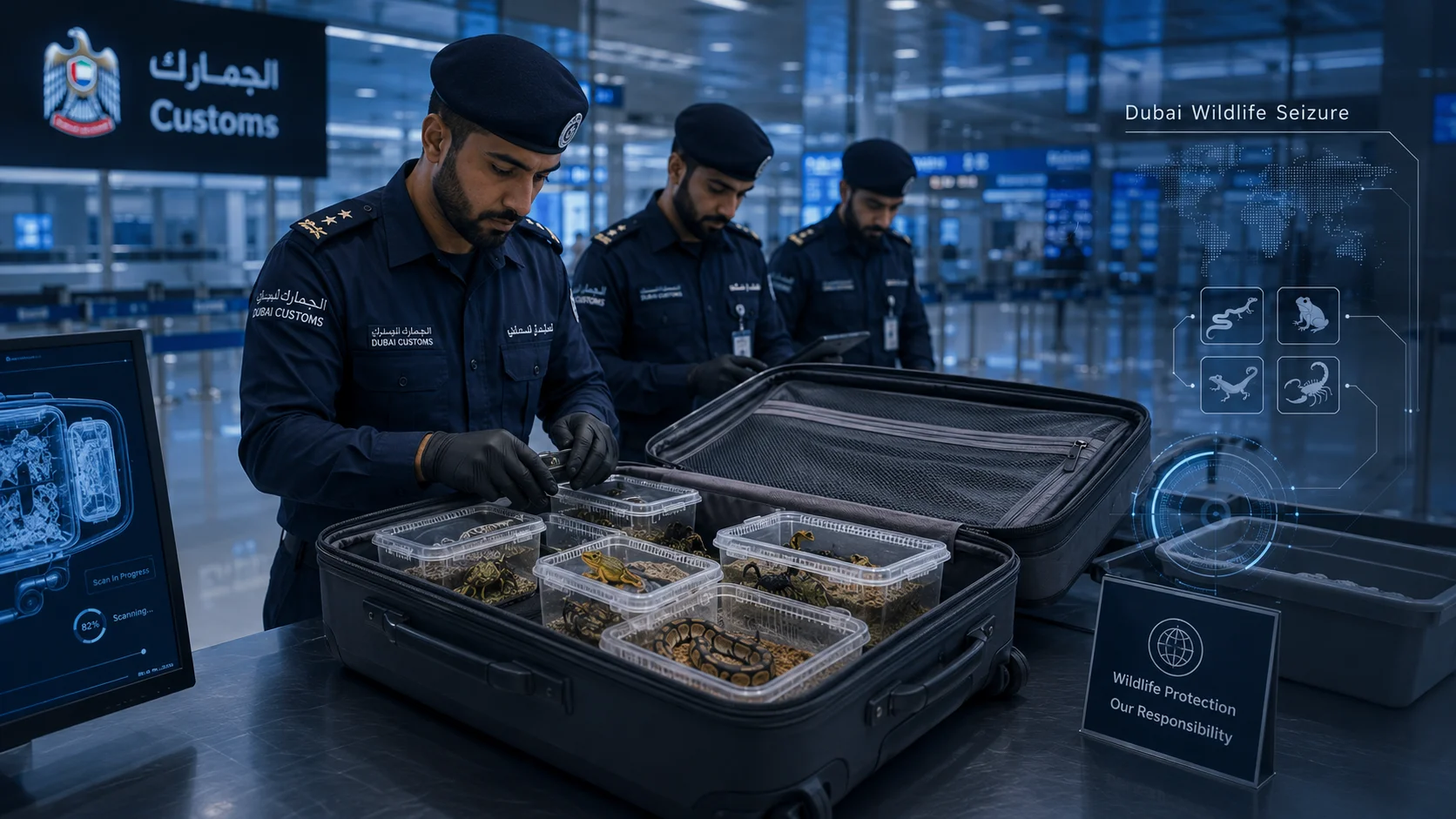
An abandoned suitcase at Dubai International Airport turned out to contain something far more alarming than forgotten belongings. When customs officers opened the unattended bag during routine monitoring, they found 223 live animals packed inside — snakes, scorpions, frogs, lizards, and other exotic species — transported without permits, proper containers, or any concern for their welfare.
The discovery has been described as one of the more significant wildlife smuggling seizures at the airport in recent memory.
Abandoned Suitcase Raises Suspicion
The case began when officers noticed an unattended bag during standard airport procedures. Unattended luggage triggers immediate attention at any major international hub, and Dubai International is no exception. When inspectors opened it, what they found went well beyond the usual concerns.
The animals had been concealed inside containers and packages within the suitcase, clearly transported by someone who had left the bag behind — either deliberately or in a panic.
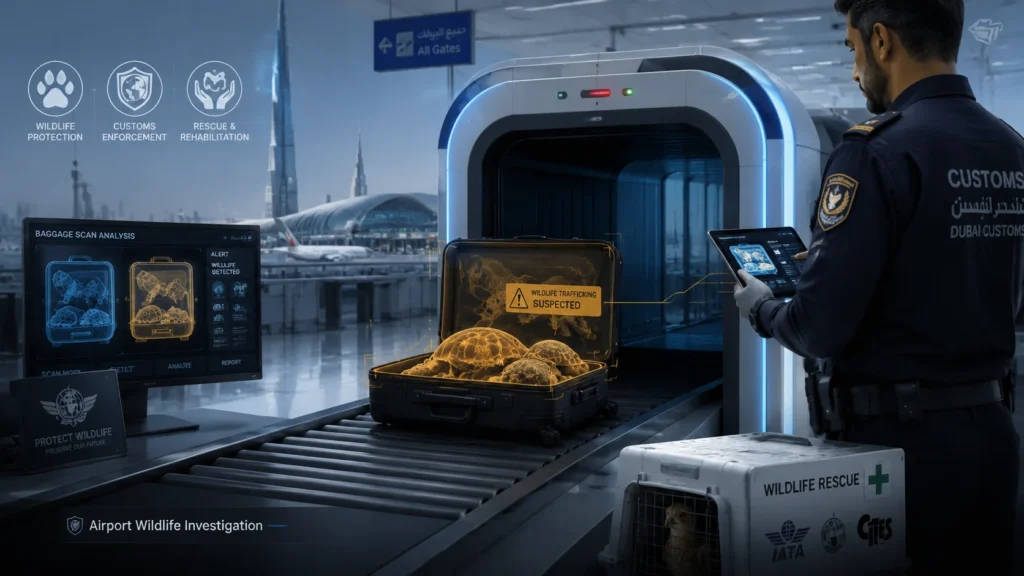
Hundreds of Animals Rescued
The full count came to 223 live animals from multiple species. Many were found in conditions that posed serious risks to their health. Wildlife specialists were brought in immediately to assess the situation and provide care for the rescued creatures.
The fact that this many animals were found alive despite the conditions they were transported in is itself significant — it speaks to both the scale of the attempt and the urgency of the response.
Wildlife Smuggling Remains a Global Concern
Illegal wildlife trafficking sits among the largest criminal enterprises in the world. The profits are substantial, the harm is widespread, and the animals involved are among the most vulnerable. Transport happens without veterinary checks, proper permits, or humane conditions, and the mortality rate among trafficked animals is significant.
Beyond animal welfare, there are genuine public safety dimensions. Some exotic species carry diseases that can affect humans or local ecosystems. Introducing non-native animals into new environments can cause ecological damage that takes years to reverse.
Dubai’s Strong Customs Enforcement
Dubai Customs has built a reputation for rigorous screening and advanced detection systems. Officers receive specialized training to identify wildlife trafficking attempts and recognize the behavioral patterns associated with illegal transport. Modern scanning technology and risk assessment tools back that training up.
Cases like this one demonstrate that the investment in those systems is working — and that Dubai’s ports of entry are not an easy route for smugglers.
International Agreements Protect Wildlife
The UAE participates in international agreements that regulate wildlife trade, requiring proper documentation and permits for any legal transport of protected species. Violations carry serious consequences — confiscation, significant fines, criminal investigation, and potential prosecution.
Also Read: Kane Williamson Retires: New Zealand Legend Ends International Cricket Journey
Animal Welfare Takes Priority
Following the seizure, the rescued animals received immediate attention from wildlife specialists. Their health was assessed and arrangements were made for appropriate care — whether through rehabilitation centers, conservation facilities, or approved institutions depending on the species and condition of each animal.
Growing Focus on Combating Wildlife Crime
Enforcement agencies globally are strengthening their response to wildlife crime through better technology, improved international cooperation, and tougher regulations. Dubai’s continued investment in customs infrastructure is part of that broader effort.
The 223 animals found in that suitcase are a reminder that wildlife trafficking is not an abstract problem — it happens at airports like Dubai International, and it takes consistent vigilance to catch it.