

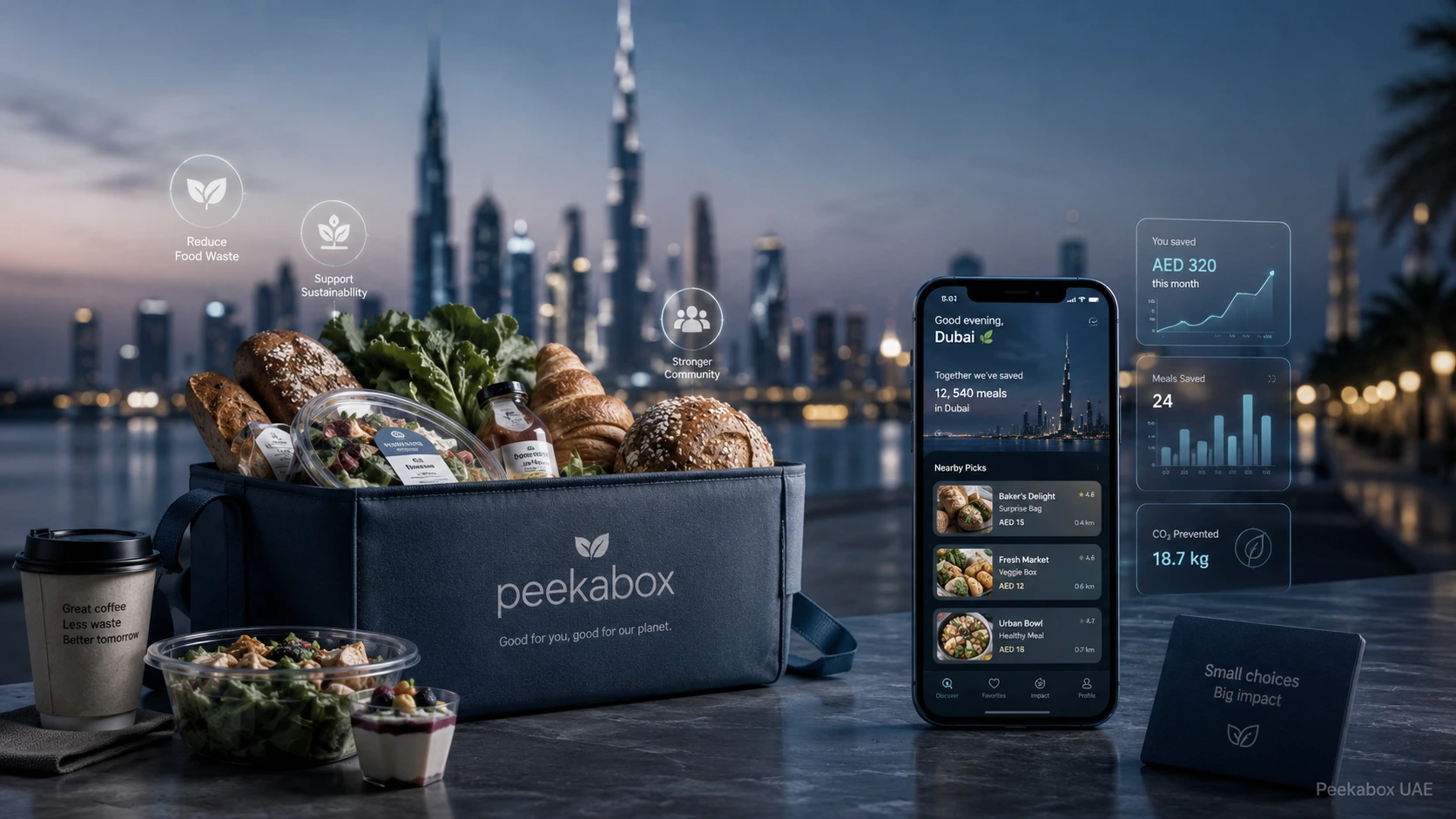
Here’s a simple idea that somehow hadn’t been properly solved until now. Every day, restaurants, bakeries, cafes, and supermarkets across the UAE throw away large quantities of perfectly good food — items that didn’t sell before closing time but are still fresh and completely safe to eat. Meanwhile, residents are looking for ways to stretch their food budgets further. Peekabox was built to connect those two realities.
The Dubai-born app lets users buy surplus food from participating outlets at discounts of 50% to 70%. The concept is straightforward, and the execution appears to be working — the platform has already seen rapid uptake since launch.
How Peekabox Works
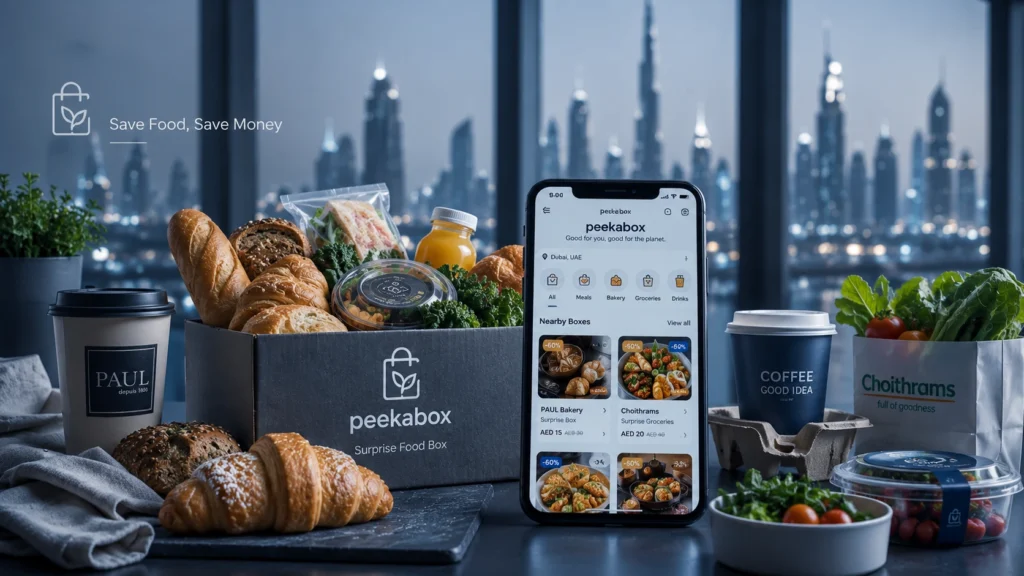
The core mechanic is what the company calls “surprise boxes.” Participating outlets load their unsold stock into these boxes at the end of the day, and customers can browse what’s available from nearby stores through the app. You reserve and pay online, then collect during the designated pickup window.
The surprise element is real — you don’t know exactly what you’ll get, because the contents depend on what the outlet has left. But that’s part of the appeal. Most grocery surprise boxes start at around Dh15, while bakery, coffee shop, restaurant, and meal boxes generally run around Dh30. The company guarantees minimum savings of 50% on every order without needing promo codes or meeting spending thresholds.
The partner list already covers more than 1,000 stores across the UAE, including names like Costa Coffee, Paul, Tim Hortons, Dunkin’, Krispy Kreme, Pret A Manger, Choithrams, Union Coop, Al Maya, and Eataly, among others.
Dubai Brothers Behind the Food-Saving Idea
Peekabox was founded by brothers Hasan and Omair Sarwar, who grew up in Dubai and spotted the problem firsthand. Hasan, serving as CEO, has described watching shelves of freshly prepared food being discarded simply because it hadn’t been purchased by end of day — a pattern playing out across thousands of outlets city-wide.
The business case for solving this is clear on both sides. Retailers recover some value from inventory they’d otherwise write off entirely. Customers access quality food at prices that genuinely make a difference to household budgets.
The startup secured $1.5 million in seed funding and crossed 50,000 app downloads with more than 5,000 orders in just its first two weeks. That kind of early traction is hard to ignore.
Addressing UAE’s Food Waste Challenge
Food waste is a significant and well-documented problem in the UAE. Millions of tonnes of food end up in landfills annually, with the economic cost running into billions of dollars. The UAE government has committed to cutting food waste by 50% before 2030 through initiatives including Ne’ma, the National Food Loss and Waste Initiative.
Apps like Peekabox contribute to that goal in a practical, market-driven way — no enforcement required, just a platform that makes it financially sensible for both businesses and consumers to redirect food that would otherwise be discarded.
The topic resonates with residents too. Community discussions online regularly surface frustration about perfectly edible food being thrown away, and the appetite for affordable, sustainable alternatives is real.
Also Read: Dubai Shared Housing Law 2026: 5 Big Changes Every Tenant and Landlord Must Know
Growing Demand for Affordable Food Solutions
The timing isn’t accidental. Rising food prices have made cost-conscious shopping more of a necessity for many households, and the surplus food model addresses that directly. At the same time, businesses dealing with tighter margins are more open to recovering even partial value from unsold inventory.
Several similar platforms have emerged across the region in recent years, drawing inspiration from food-rescue models that have taken off in Europe and beyond. Peekabox has moved quickly to build a substantial network of partners, positioning itself as one of the more significant players in the space.
The company’s stated ambition is to become the leading food surplus marketplace across the Middle East — a goal that, given the early numbers and the genuine need the platform addresses, doesn’t seem unreasonable.