

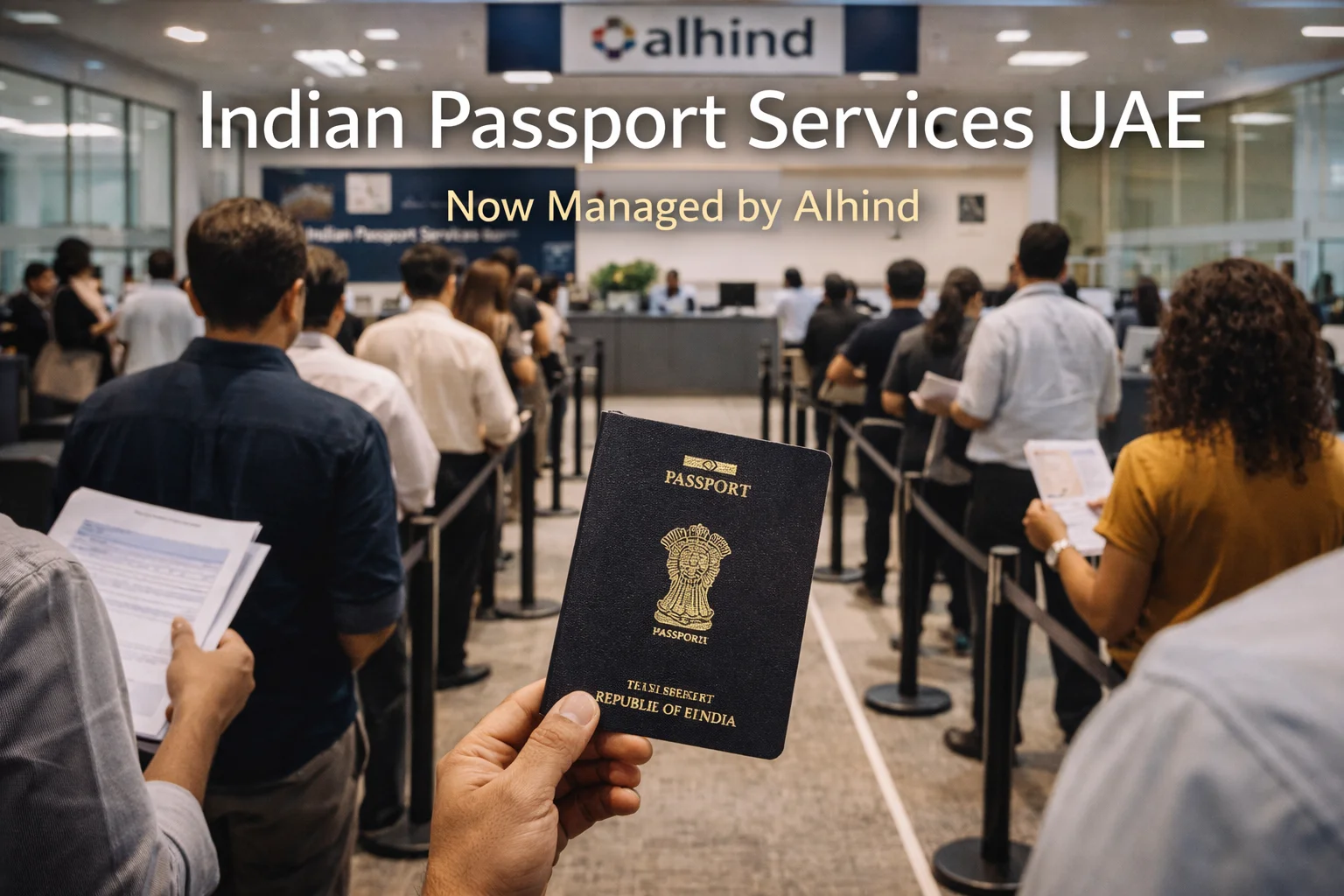
Alhind Tours & Travels wins contract to handle Indian passport, visa, OCI, and consular services in the UAE. If you’re part of the Indian community in the UAE and you’ve ever had to deal with passport renewals, visa paperwork, or OCI cards, this news directly affects you.
Alhind Tours & Travels Pvt. Ltd. has been officially awarded the contract to manage Indian consular outsourcing services in the UAE. The announcement came from the Embassy of India in Abu Dhabi, and it covers both the Embassy in Abu Dhabi and the Consulate General in Dubai.
This is a meaningful change. For several years, another agency handled these services, and Indian residents across the UAE built their documentation processes around that setup. Alhind is now stepping in, and while the full transition hasn’t kicked in yet, it’s worth understanding what this means before it does.
How Did Alhind Win This Contract?
The selection process started back in November 2025 when a competitive tender was opened. Multiple companies put in bids, and after evaluating everyone against the required criteria, Alhind came through as the lowest financial bidder that met all the necessary conditions.
It’s a fairly standard procurement process for contracts of this nature — open bidding, evaluation against set requirements, and selection based on who offers the best combination of competence and cost. Alhind apparently ticked all the boxes.
The company isn’t new to this space. Founded in 1992, they’ve been operating in travel and visa services for over three decades and have an established presence in the UAE. That background is relevant — managing consular services at this scale requires systems and experience, not just a winning bid.
What Services Will Alhind Actually Handle?
The scope is broad. Under this contract, Alhind will manage:
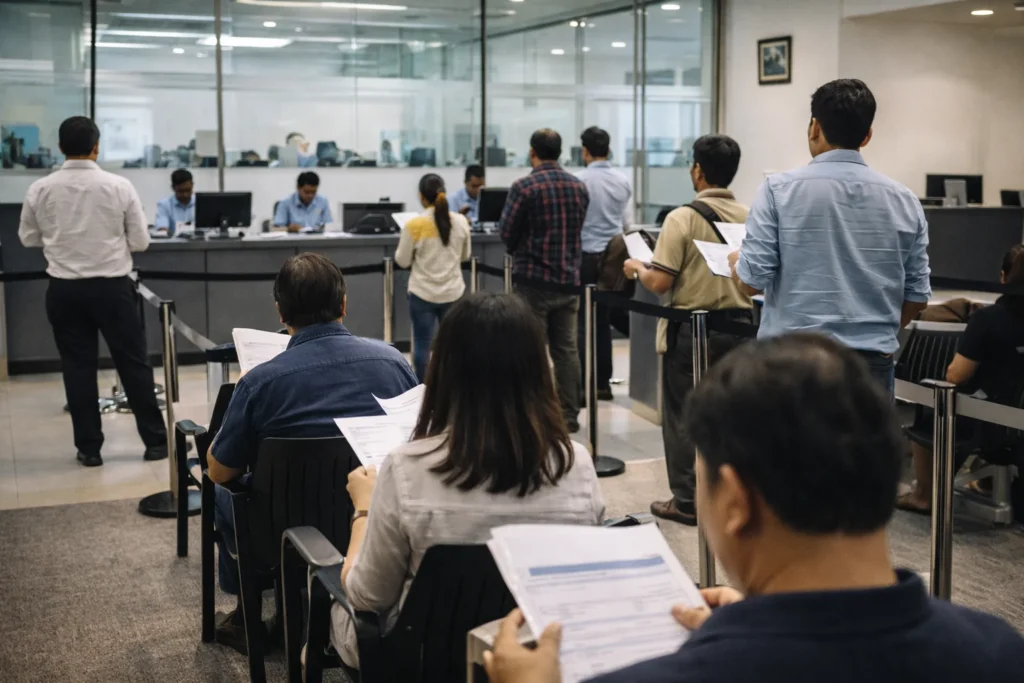
Passport applications and renewals, visa-related services, Overseas Citizen of India (OCI) card applications, police clearance certificates, surrender certificates, Global Entry Program verification, and attestation and documentation services.
That covers the vast majority of what Indian residents in the UAE regularly need from consular offices. The idea of having all of this under one provider — with a single point of contact and a unified process — should, in theory, make things more straightforward for applicants.
Has the Transition Happened Yet?
Not fully. The contract has been awarded, but the implementation timeline hasn’t been officially announced yet.
Alhind needs to meet all operational requirements before it can actually start running services. Until that transition is complete, the existing service centres continue operating as normal. So if you have an appointment already booked or an application in progress, you don’t need to worry about that being disrupted.
The changeover will happen in phases, and official communication from the Embassy and Consulate will clarify the exact timelines when they’re ready to share them.
Where Will the New Service Centres Be?
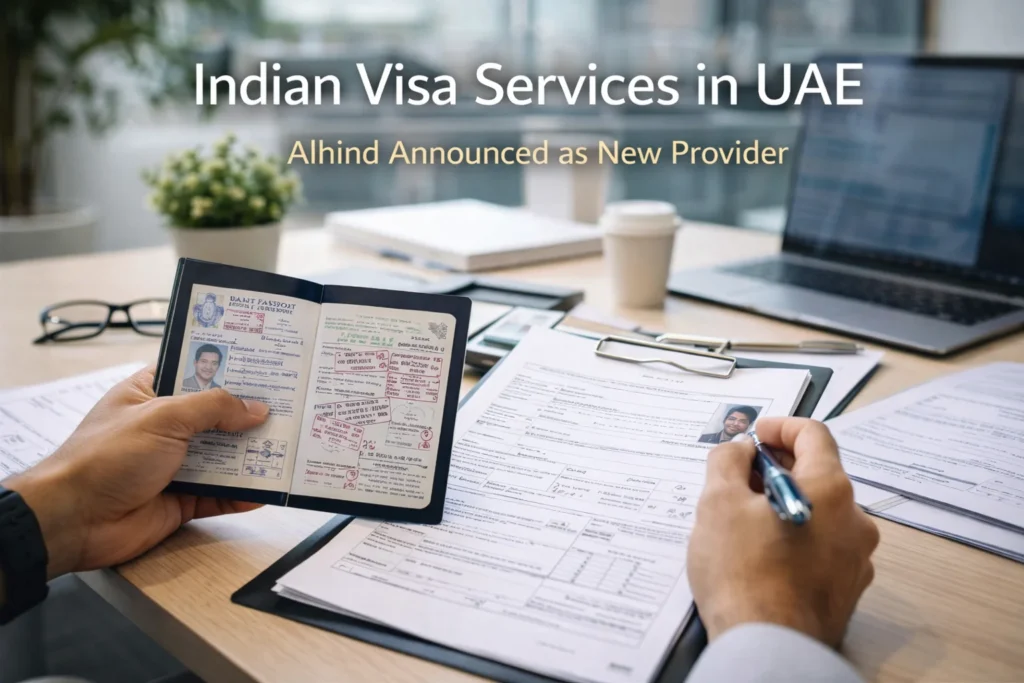
Reports suggest that Alhind plans to establish service centres across multiple emirates — Abu Dhabi, Dubai, and Sharjah are mentioned, along with other locations. A wider geographic spread is genuinely useful for a community as large and spread out as the Indian population in the UAE.
Right now, many residents have to travel significant distances for consular services, especially those based in emirates further from the main centres. If Alhind’s network is more distributed than the previous setup, that could make a real practical difference in terms of time and convenience.
Shorter travel distances also tend to mean shorter queues and better appointment availability — particularly during peak periods when demand spikes.
What Might Actually Change for Applicants?
It’s a fair question, and the honest answer is: we’ll know more once the transition is complete and the new systems are running.
What typically changes when a new service provider takes over contracts like this includes the appointment booking system, the application portal, the fee structure for service charges, and the physical locations where you submit documents.
The underlying requirements from the Indian government — what documents you need, what forms to fill — those don’t change. The consular rules are set by the Embassy and Consulate regardless of who the outsourcing partner is. What changes is the experience of interacting with the service.
If Alhind brings better digital infrastructure and improved customer support to the table — which they presumably have an incentive to do given they’ve just won a high-visibility contract — that would be a positive outcome for a community that processes thousands of applications regularly.
Also Read: Dubai Launches Work From Park Initiative to Turn Public Spaces Into Flexible Work Hubs
Why This Matters So Much
The UAE has one of the largest Indian expatriate populations in the world. Passport renewals, OCI cards, police clearance certificates for employment — these aren’t occasional administrative tasks for most Indian residents; they’re a regular part of managing life abroad.
Any friction in consular services creates real problems for real people. Delayed passports affect travel plans and family visits. Slow police clearance certificates hold up job applications. These things matter in concrete, daily-life ways.
That’s why the appointment of a new service provider — even if it sounds like a dry administrative announcement — is actually significant news for hundreds of thousands of people.
What Should You Do Right Now?
For most applicants, the practical advice is straightforward. Keep using the current system as normal until there’s an official announcement about the transition timeline. Don’t assume anything has changed yet.
Follow the official channels—the Embassy of India in Abu Dhabi and the Consulate General of India in Dubai—for updates on when Alhind’s services go live, where the new centres will be, and how the appointment system will work.
Once the transition details are announced, there will likely be a short adjustment period as everyone gets used to the new process. Being aware of the change ahead of time — which you now are — means you won’t be caught off guard when it happens.