

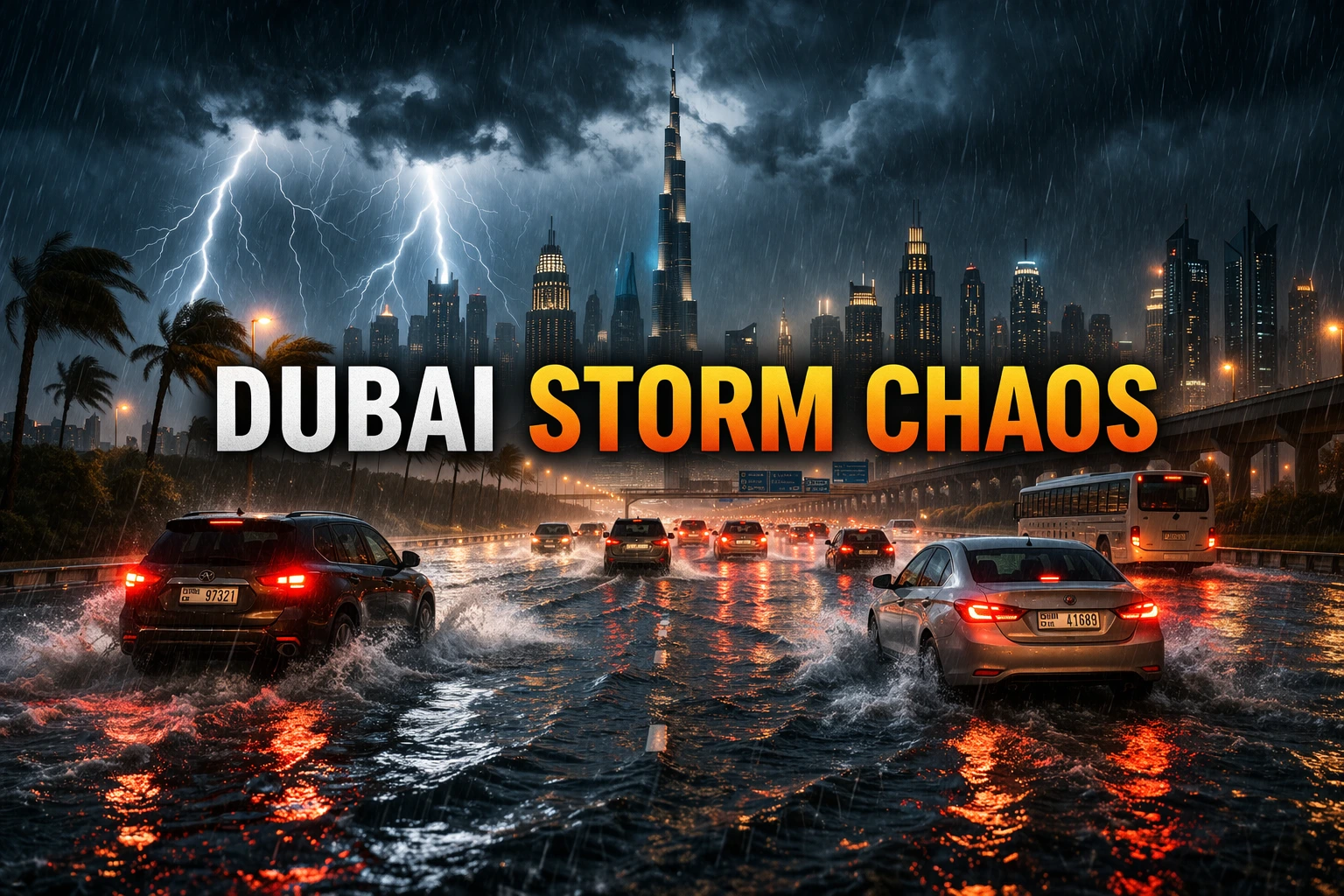
In March 2026, a powerful and very rare storm struck Dubai and the rest of the UAE, causing significant disruption in various sectors. On one hand, there were flooded roads, as well as postponed flights; on the other hand, the abrupt change of weather influenced the life of one of the most organized urban landscapes in the world.
The storm was accompanied by heavy precipitation, thunderstorms, and powerful winds, which are not common in the area. The government was quick to issue warnings and recommendations to keep the people safe and reduce risks to a minimum.
Rare Storm Hits Dubai and UAE
The storm that occurred in March 2026 was not a normal weather event in the UAE. It had abnormally high rainfall, thunderous foul clouds, and lightning in such cities as Dubai and Abu Dhabi.
Scientists termed the system an unusual atmospheric phenomenon that can result in serious thunderstorms and powerful winds. In certain locations, the amount of rainfall that falls was projected to reach a level of almost an annual average within a few days.

Heavy Rain Leads to Flooded Roads
Waterlogging of major roads in Dubai was also one of the most direct effects of the storm. Large highways and urban streets were flooded, which slowed the movement of the traffic.
Drivers also encountered a problem of maneuvering through standing water, particularly during the peak hours. The presence of rain and dust made the roads more hazardous since visibility was reduced.
Traffic Disruptions and Visa Delays Across Major Areas
The weather led to massive traffic jams around Dubai and other neighbouring emirates. The commuter complained of long delays due to the slowness of vehicles plying the flooded and slippery roads.
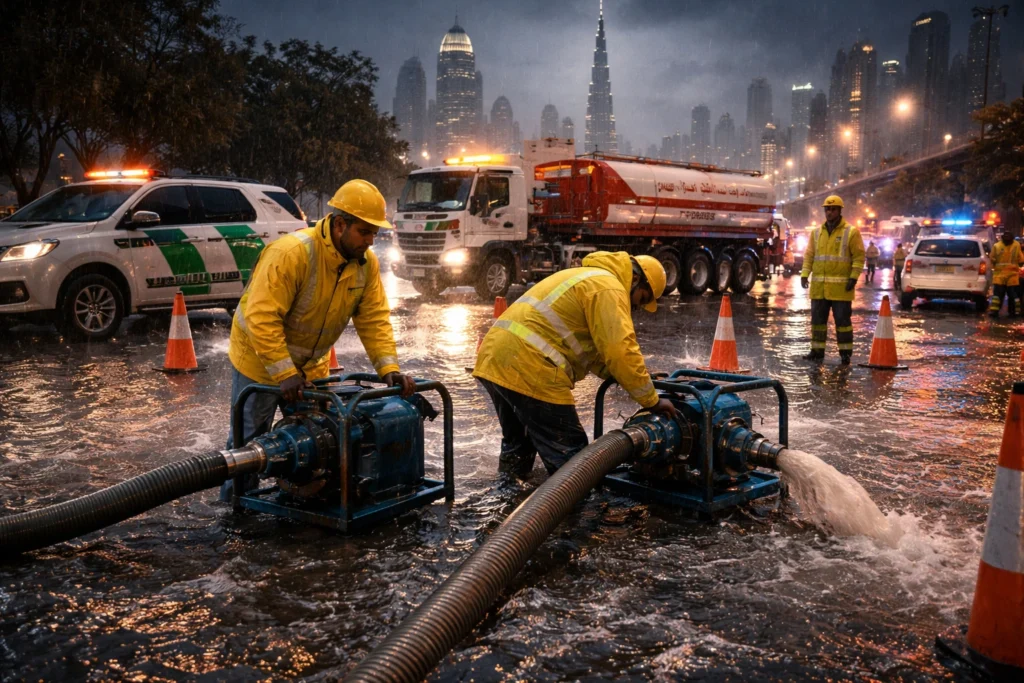
The government encouraged people to slow down and prevent unnecessary travel. Emergency squads were dispatched to deal with traffic and help stranded drivers in the affected regions.
Airport Disturbances and Flight Cancellations
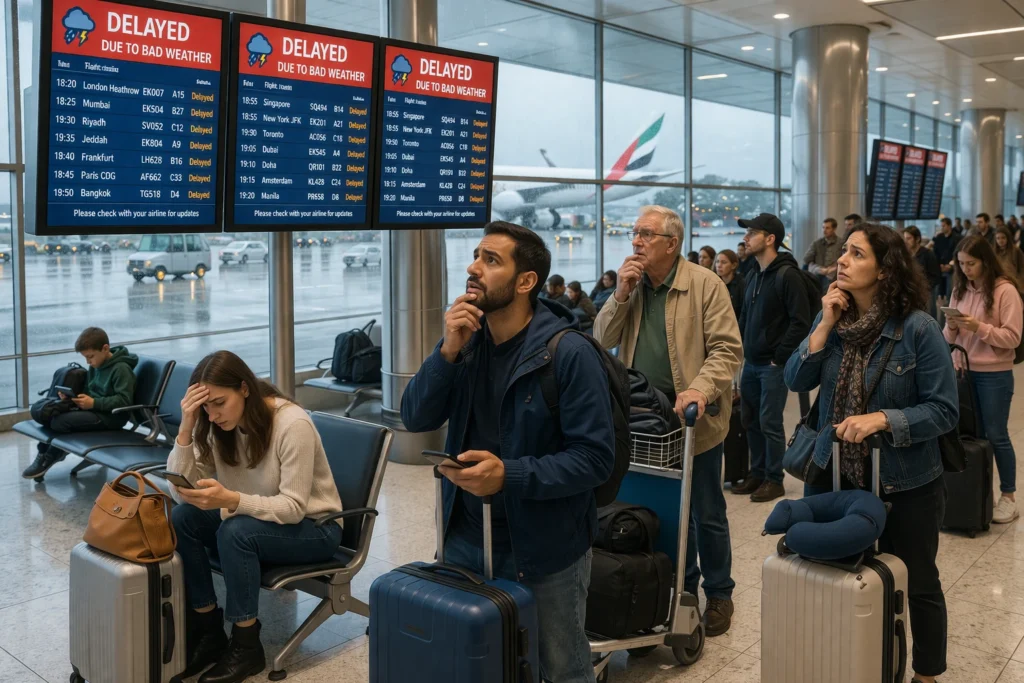
Lots of air travel was also affected by the storm period. Here, Dubai Airports sent messages to customers informing them of potential delays and inconveniences because of poor weather conditions.
A number of airline companies changed the time, and passengers were requested to check flight status before going to the airport. The weather and other various uncertainties present in the region contributed to travel upsets.
Impact on Public Transport and Travel Plans
The weather was also bad, and this resulted in delays caused by poor weather conditions in the transport systems. Traffic congestion affected buses and taxis, and slowed down the movement around the city due to the road conditions.
Travelers were forced to change their plans with additional time to commute. A big number of the residents preferred to remain at home to evade inconveniences and exposure to danger.
Government Response and Safety Measures
The UAE authorities responded promptly to handle the situation. The weather warnings were put out, and people were urged not to use areas that were low-lying and roads that had flooded.
The emergency services were put on high alert to help in responding to storm-induced incidents. Education campaigns were conducted to educate people on how to be safe during extreme weather.
Also Read: Dubai Extends Distance Learning Till April 3: KHDA Issues New Guidelines
Schools and Businesses Affected
Disruption due to storms was not just on travel, with schools and workplaces in Dubai being affected. Several institutions switched to remote functioning because it was safe.
Students or workers were urged to work and study at home. This assisted in cutting down on travel that transpired throughout the city during the storm.
Economic and Daily Life Impact
Dubai was affected by the storm, which affected economic life and activity in the country. The weather slowed down the activities of the retail, logistics, and outdoor businesses temporarily.
There were also disruptions in supply chains and deliveries due to the disruptions in the normal operations caused by transportation delays. Nevertheless, the services that were necessary were still operating with modifications.
Why This Storm Was Unusual for Dubai
Dubai has a desert climate and the rainfall is usually scarce. The intensity was what made the March 2026 storm significant as well as its duration.
The weather scientists attributed the situation to climatic insecurities and instability of the weather. Extreme weather patterns are being observed to be increasing in areas that are supposed to be enjoying dry climate.
Key Impacts of Dubai Storm March 2026
Here is a quick overview of the major disruptions caused by the storm:
| Sector | Impact |
|---|---|
| Roads & Traffic | Flooding, congestion, reduced visibility |
| Flights | Delays, schedule changes, advisories issued |
| Public Transport | Slower operations due to road conditions |
| Schools | Shift to remote learning in some cases |
| Businesses | Temporary slowdown in operations |
What Residents Experienced During the Storm
Sudden shifts in the weather conditions occurred among the residents of Dubai. The city was subjected to an unusual environment because of heavy rainfall, lightning, and strong winds.
Numerous individuals experienced being stuck in flooded streets, all the delays in their travels, and schedule adjustments. The storm also demonstrated the speed with which things could change even in such a prepared city as Dubai.
Ongoing Monitoring and Future Preparedness
The officials are still keeping a close watch on the weather patterns in order to act upon any subsequent disturbances. It is also predicted that the unstable weather conditions will last briefly before they can improve.
The storm that took place in March of 2026 has also raised issues of infrastructure preparedness and climate resilience for discussion. The reaction of Dubai shows that it can deal with unexpected difficulties and still provide necessary services.