

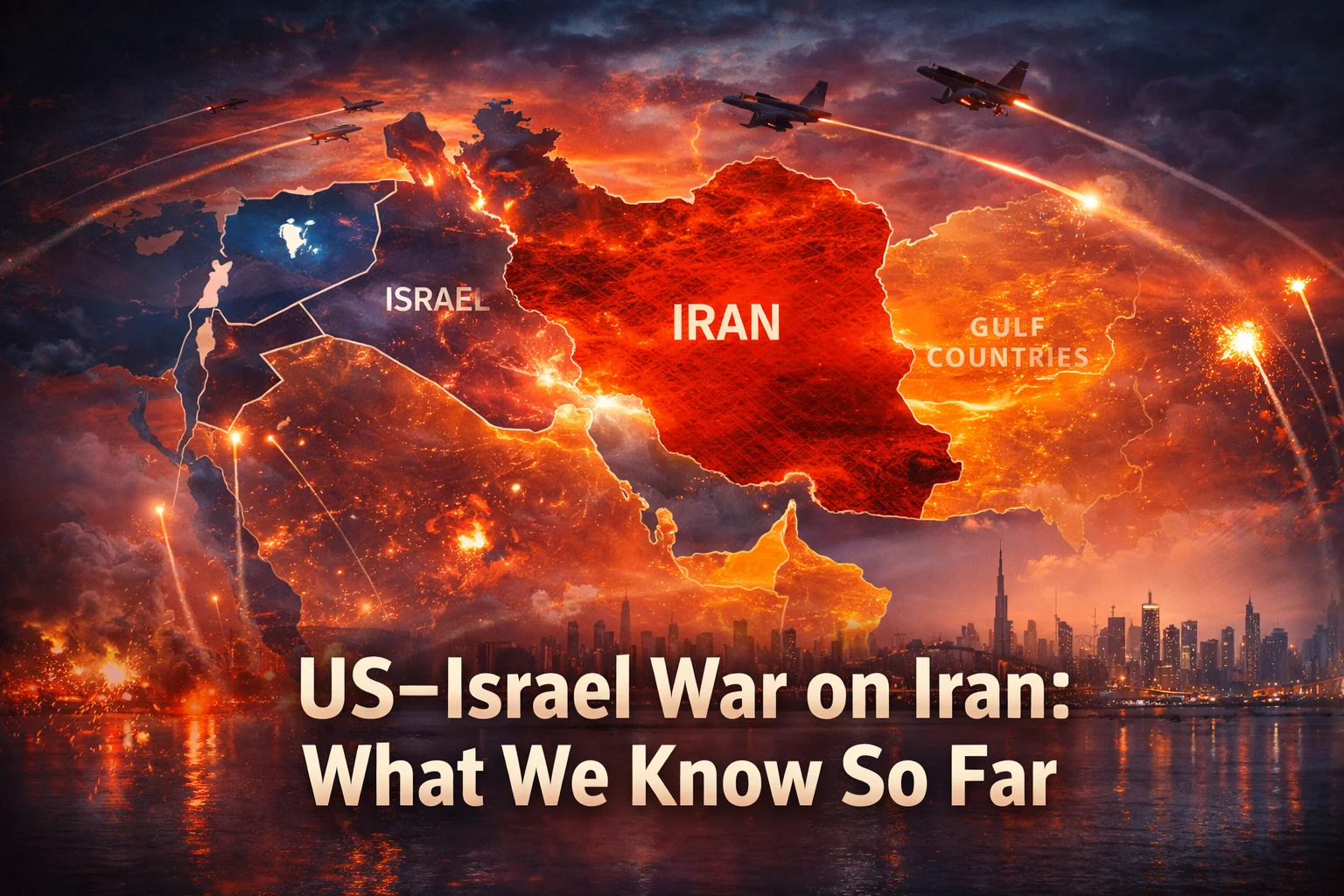
The conflict between the United States, Israel, and Iran has quickly escalated into one of the most serious geopolitical crises in the Middle East in recent years. Over the past ten days, the situation has intensified with missile interceptions, military strikes, regional evacuations, and airspace closures affecting several Gulf nations. From defensive operations in the UAE to major battlefield developments involving US forces and Iran, the conflict continues to reshape security and stability across the region. Here is a detailed day-by-day timeline explaining the key events and major developments that have unfolded so far.
Table of Contents
Overview of the US-Israel War on Iran
The confrontation has triggered missile strikes, airspace shutdowns, evacuations, and military operations across the region.
Many Gulf countries, including the United Arab Emirates, Saudi Arabia, and others, have taken emergency measures to protect civilians and maintain stability. Governments have implemented safety procedures, aviation restrictions, and temporary policy changes as the situation continues to evolve.
Below is a detailed day-by-day breakdown of the first ten days of the conflict and the major developments reported across the region.
Day 1: UAE Intercepts Missiles as Regional Airspace Closes
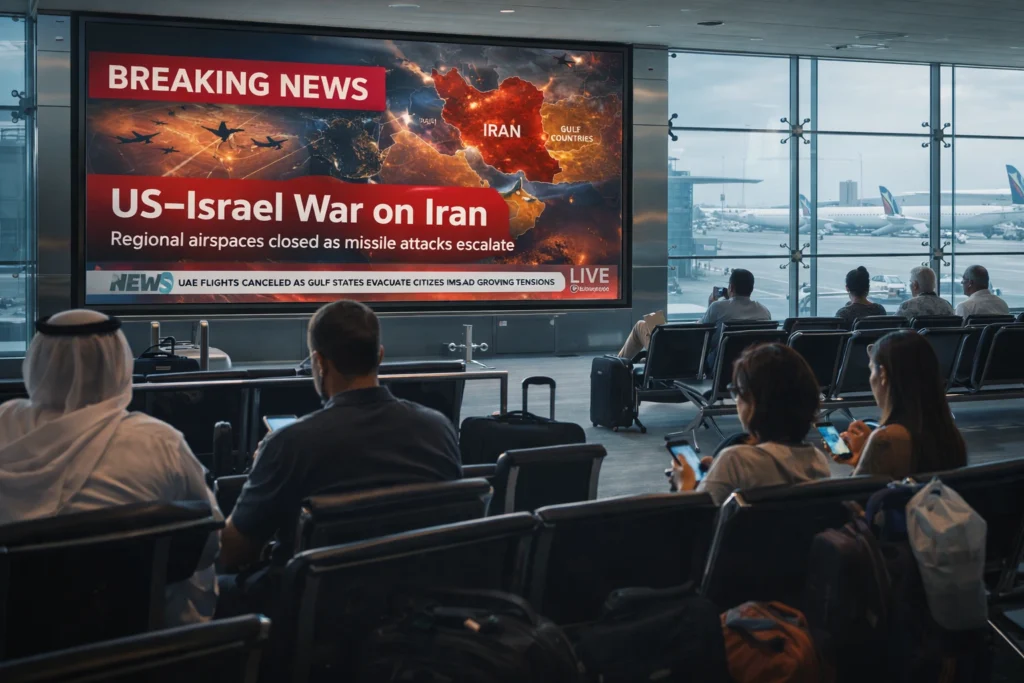
The conflict intensified on the first day when missile threats were detected across parts of the Middle East. Air defence systems in the United Arab Emirates responded quickly to intercept incoming projectiles.
Authorities also announced temporary closures of regional airspace as a precautionary safety measure. Airlines across the Gulf began suspending or diverting flights as the security situation became uncertain.
This early stage of the conflict created immediate disruptions for international travel and raised concerns about civilian safety across the region.
Day 2: UAE Airlines Extend Flight Cancellations
On the second day of the conflict, UAE-based airlines announced extended flight cancellations due to ongoing airspace restrictions. The aviation sector faced major operational challenges as several regional flight routes were affected.
Airlines worked to reroute flights where possible, but many services were suspended entirely for safety reasons. Passengers traveling to or from the Middle East experienced delays and cancellations.
Authorities urged travelers to monitor airline announcements and stay updated on flight schedules.
Day 3: Trump Outlines ‘Clear’ Iran War Objectives
By the third day of the conflict, US leadership began outlining strategic objectives for the military campaign. Former US President Donald Trump stated that the mission had defined goals related to regional security and military deterrence.
Officials emphasized that the operations were aimed at limiting Iran’s military capabilities. The statements signaled that the conflict could continue for an extended period, depending on developments on the ground.
These remarks also highlighted the growing geopolitical stakes surrounding the confrontation.
Day 4: Dubai Contains Fire Near US Consulate
Security concerns continued on the fourth day when a fire was reported near the US Consulate area in Dubai. Emergency services responded quickly to contain the situation.
Authorities confirmed that the fire was brought under control without major injuries. Officials continued to monitor the area as part of wider security measures across the city.
The incident highlighted how tensions in the region were impacting even areas far from active battle zones.
Day 5: UAE Waives Overstay Fines After Airspace Closure
Travel disruptions caused by airspace closures led to a policy response from UAE authorities on the fifth day of the conflict. The government announced that visitors affected by flight cancellations would not face penalties for overstaying their visas.
This decision provided relief for many travelers who were unable to leave the country due to aviation restrictions. Immigration authorities clarified that the temporary waiver was designed to support visitors during the crisis.
The move demonstrated the country’s efforts to minimize the impact of the conflict on tourists and residents.
Day 6: Schools and Universities Move Spring Break Forward
As tensions continued to rise, educational institutions across parts of the region adjusted their schedules. Schools and universities moved spring break dates earlier than planned.
Some academic institutions also postponed or cancelled exams to avoid disruption. The changes were introduced to ensure student safety and reduce travel risks.
Education authorities stated that additional adjustments could be made depending on how the situation develops.
Day 7: Thousands Evacuated From the Middle East
The seventh day saw large-scale evacuation operations being organized for foreign nationals. Governments began arranging flights and transport to help citizens leave conflict-affected areas.
Thousands of people were evacuated from different parts of the Middle East as tensions continued to escalate. Diplomatic missions worked closely with local authorities to coordinate safe departures.
These evacuation efforts highlighted the seriousness of the situation and the uncertainty surrounding the conflict.
Day 8: US Forces Intensify Military Operations
By the eighth day, the military campaign entered a more aggressive phase. Reports indicated that US forces carried out significant strikes targeting Iranian military infrastructure.
Officials described the attacks as strategic operations designed to weaken Iran’s ability to launch further threats. At the same time, political leaders in Washington highlighted what they described as battlefield progress.
These developments signaled that the conflict was moving toward a broader military confrontation.
Day 9: Gulf Nations Face Fresh Attacks
The ninth day of the conflict brought renewed concerns for Gulf countries as additional attacks were reported in the region. Security forces across several nations increased defensive measures.
Air defence systems remained on high alert to respond to potential missile threats. Governments also strengthened security around key infrastructure and diplomatic facilities.
The developments raised fears that the conflict could spread further across the Middle East.
Day 10: Mojtaba Khamenei Named Supreme Leader
On the tenth day of the conflict, a major political development emerged in Iran. Mojtaba Khamenei was reported to have been named the country’s new supreme leader during the ongoing crisis.
This announcement marked a significant shift in Iran’s political leadership during wartime. At the same time, Gulf countries continued to face security threats linked to the conflict.
Regional governments remained on high alert as military operations and political changes continued to unfold across the Middle East.
Regional Impact and Global Attention
The war between the United States, Israel, and Iran has quickly become a major global concern. Its effects are already visible in aviation disruptions, economic uncertainty, and heightened security across the Middle East.
Countries in the Gulf region remain particularly cautious as the conflict unfolds nearby. Authorities continue to monitor developments closely while implementing precautionary measures to maintain safety and stability.