


Can Tourists Drive in Dubai? Yes, tourists can legally drive in Dubai if they have a valid driving license from an approved country, along with the required travel documents. Many visitors choose to rent cars because Dubai has modern highways, clear road signs, and excellent infrastructure.
Dubai is a modern city known for excellent roads, advanced traffic systems, and tourist-friendly infrastructure. Many travelers prefer driving because it offers flexibility to explore beaches, malls, deserts, and nearby emirates. If you are planning a trip, understanding driving rules can make your journey easier.
The good news is that tourists can legally drive in Dubai if they meet certain requirements. These include having a valid driving license, passport, tourist visa, and usually an International Driving Permit. Knowing these rules before arrival helps avoid stress and ensures a smooth travel experience.
Table of Contents
Can Tourists Legally Drive in Dubai?
Yes, tourists can drive in Dubai with a valid driving license from approved countries such as the US, UK, Canada, Australia, GCC nations, and many European countries. These licenses are generally accepted for short visits. However, many car rental companies strongly recommend carrying an International Driving Permit.
An International Driving Permit is especially useful when the original license is not in English or Arabic. It serves as an official translation and makes verification easier. While not always legally required, it helps with insurance and rental approvals.
Tourist driving privileges apply only with a visit visa. If you move to a residence or Golden Visa, you must obtain a UAE driving license. Understanding this distinction prevents legal complications later.
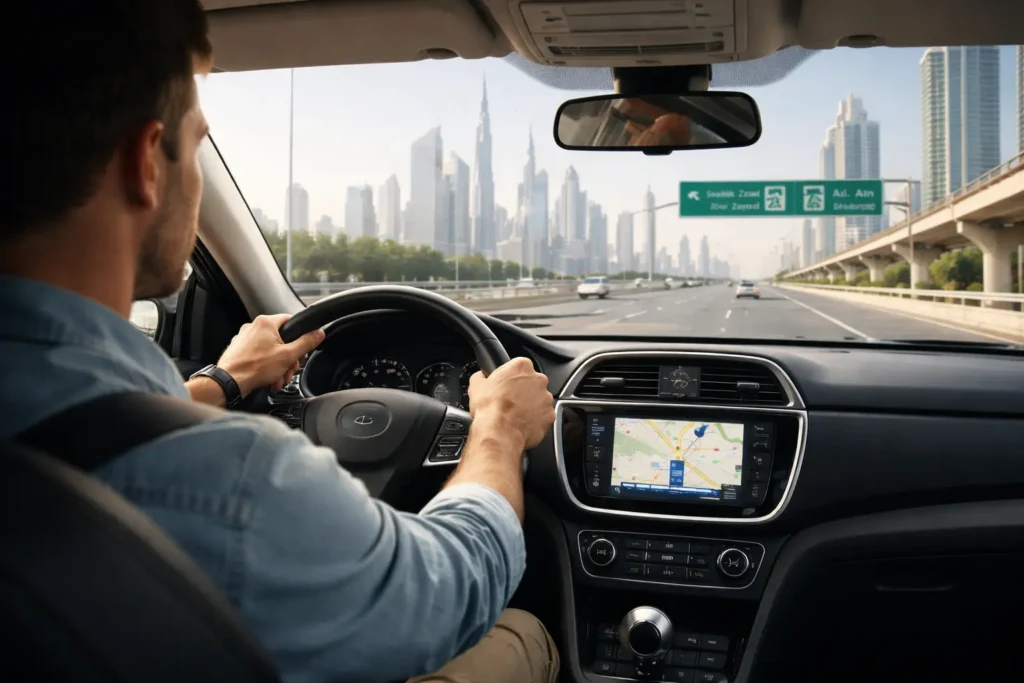
Driving License Requirements for Tourists
Your home country license must be valid and unexpired to drive legally. Temporary or learner permits are not accepted. Always carry the original license along with your passport and visa.
Visitors from GCC countries can usually drive without an International Driving Permit. Others may need one depending on their nationality and rental company policies. Checking requirements before travel is always advisable.
Some long-term visitors may benefit from initiatives like license exchange programs. These programs allow eligible travelers to convert their foreign license to a UAE license if their stay extends. It simplifies driving for extended visits.
Documents Needed to Rent a Car
To rent a car in Dubai, tourists typically need a passport copy with a visa stamp, a valid home driving license, an International Driving Permit, and a credit card. Rental companies use the credit card for security deposits. Cash deposits are rarely accepted.
Most rental packages include basic third-party insurance. Additional insurance coverage can be purchased for extra protection. Reviewing insurance details carefully helps avoid unexpected costs.
Age requirements usually start at 21 years for rentals, though legal driving age is 18. Drivers under 25 often pay a surcharge. Rental agreements also restrict off-road or desert driving unless specifically allowed.
Important Road Rules in Dubai
Driving in Dubai follows right-hand traffic rules, similar to the US and many European countries. Road signs are clear and available in both English and Arabic. This makes navigation relatively easy for international visitors.
Speed limits vary from about 40 to 60 km/h in city areas and 100 to 140 km/h on highways. Speed cameras are widespread and strict enforcement is common. Staying within limits avoids fines and ensures safety.
Seatbelts are mandatory for all passengers, and using handheld phones while driving is prohibited. Indicators must be used when changing lanes. Roundabouts typically give priority to vehicles already inside.
Alcohol and Safety Laws
Dubai has zero tolerance for drinking and driving. Even a small amount of alcohol can lead to heavy fines, license suspension, or imprisonment. Tourists should always choose taxis or rideshares if they plan to drink.
Drug-related driving offenses are treated even more seriously. Strict enforcement reflects the UAE’s strong focus on road safety. Awareness of these laws helps avoid serious legal trouble.
Road safety standards in Dubai are generally high. Well-maintained highways, good lighting, and advanced monitoring systems support safe travel. Responsible driving ensures a comfortable experience.
Traffic Fines and Penalties Tourists Should Know
Speeding fines in Dubai usually range from AED 600 to AED 2,000 depending on severity. These violations also carry black points on the driving record. Rental companies charge fines directly to your credit card.
Using a mobile phone while driving can lead to an AED 800 fine and black points. Jumping a red light often results in higher penalties. Serious violations may involve vehicle confiscation.
Accumulating 24 black points can suspend driving privileges. Tourists usually settle fines through rental companies or official traffic apps. Keeping track of penalties helps avoid travel complications.
Also Read: Dubai Launches Unified Health Screening Service for Residency Visa Applicants
Recent Driving Updates in Dubai 2025–2026
Recent federal traffic law updates introduced smarter traffic systems and stricter safety measures. The UAE is actively investing in smart mobility, including autonomous vehicles and advanced monitoring technology. These changes aim to improve road safety.
Dubai has also introduced variable speed systems on certain roads. New parking facilities and improved traffic management help reduce congestion. Delivery rider regulations have also tightened for safety reasons.
Driverless taxi services are gradually being tested, and tourists may soon access them widely. Despite these innovations, there are no major restrictions preventing tourists from driving. Standard requirements remain mostly unchanged.
Practical Driving Tips for Tourists
Using GPS apps like Google Maps or Waze is highly recommended. These tools provide real-time traffic updates and route guidance. They are especially helpful for first-time visitors.
Avoid peak traffic hours, usually between 7–9 AM and 5–8 PM. Dubai traffic can become heavy during these times. Planning trips outside rush hours saves time and reduces stress.
Carry all documents while driving, including license, passport copy, and rental agreement. In case of accidents, contact the police immediately. Emergency numbers are clearly displayed on major roads.
Dubai fuel prices are relatively affordable compared to many global cities. Parking can be paid for through SMS or official transport apps. For short stays, taxis or public transport may sometimes be more convenient than driving.