

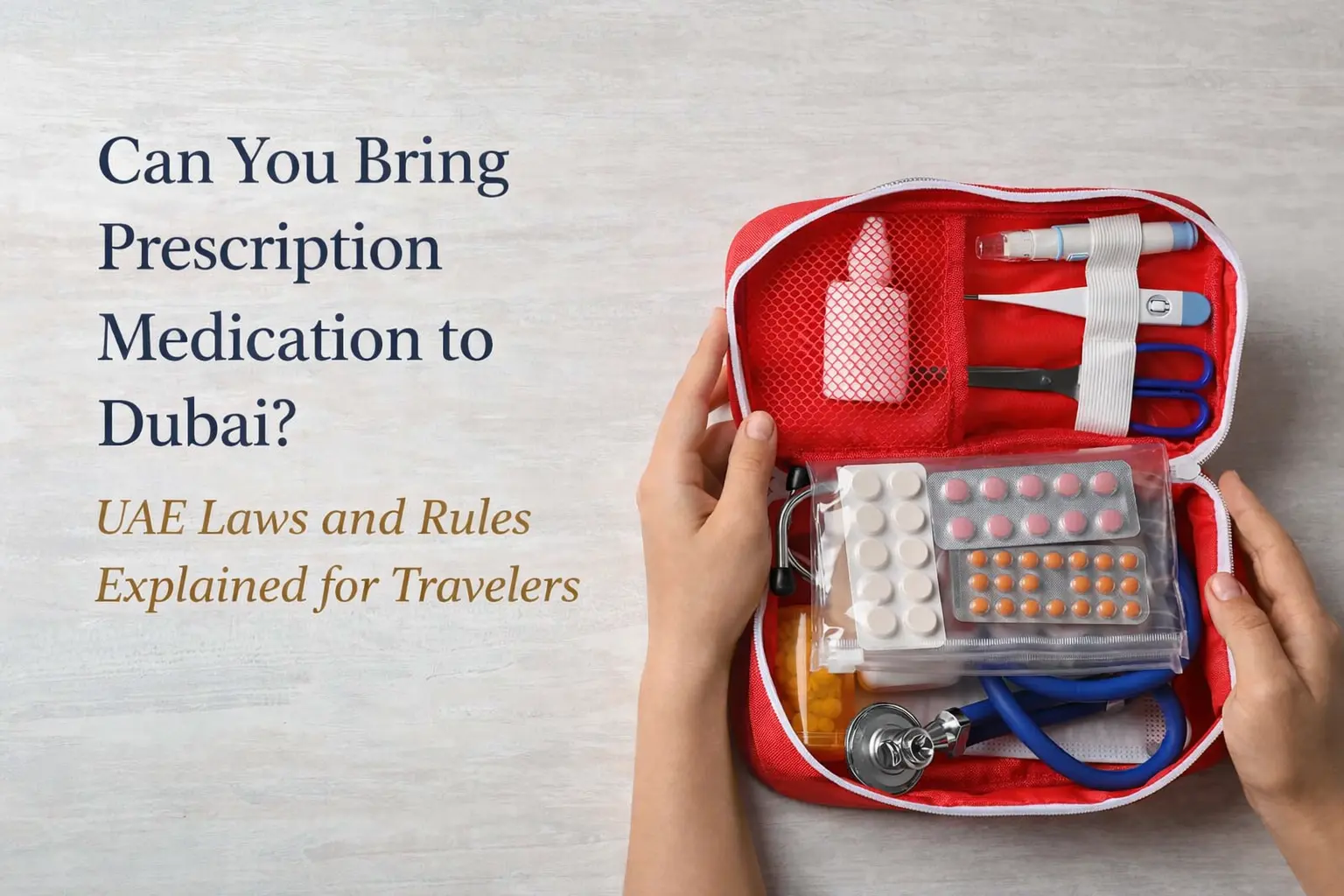
Dubai is a global travel hub that welcomes millions of tourists, expats, and business travelers every year. Many visitors often wonder whether they can bring prescription medication with them. The answer is yes, you can bring prescription medicine to Dubai for personal use, but the UAE has strict regulations. Following the rules carefully helps avoid fines, delays, or legal complications at customs.
Understanding medication rules before travel is especially important because some medicines commonly available in other countries may be restricted or controlled in the UAE. This guide explains the key laws, documentation requirements, approval processes, and practical travel tips based on the latest information available in 2026.
Table of Contents
UAE Rules for Bringing Prescription Medication
Travelers are generally allowed to carry prescription medication for personal medical use when entering Dubai. However, the amount should be reasonable and clearly intended for personal consumption.
Most guidelines allow up to a three-month supply of medication. Some sources suggest keeping the amount closer to 30 days unless special approval is obtained, especially for controlled medicines.
Carrying excessive quantities without proper authorization may raise suspicion at customs. Authorities want to ensure medicines are not being imported for resale or illegal distribution.
Strict enforcement applies to narcotic, psychotropic, or controlled medications. These require additional documentation or prior approval.
Required Documents for Carrying Medication
Documentation plays a crucial role when bringing prescription medicines into Dubai. Proper paperwork makes customs clearance smoother.
Always carry medication in its original packaging with pharmacy labels intact. This helps confirm authenticity and prescribed dosage.
An English language prescription from your doctor should include your name, medication details, dosage instructions, and treatment duration. This prescription should match your passport identity.
A doctor’s letter is highly recommended, especially for strong medicines. Some cases require including your passport number on the letter for verification.
Keeping documents easily accessible in hand luggage is advisable in case customs officers request inspection.
Declaring Medication at Customs
Declaring medication upon arrival in Dubai is a good practice, particularly for controlled drugs. Transparency helps avoid misunderstandings.
Medications should ideally be kept in carry-on luggage rather than checked baggage. This allows quick access if authorities ask questions.
Failure to declare restricted medicines could lead to penalties, confiscation, or legal action, even if the medication is medically necessary.
Customs officers typically focus on compliance rather than punishment when documentation is complete.
Approval Process for Controlled Medicines
If your medication falls under controlled, narcotic, or psychotropic categories, prior approval from UAE authorities is often required.
Travelers can apply online through the Ministry of Health and Prevention portal. The permit process is usually free, and approvals may arrive within about one day.
Before applying, check the official controlled medicines list because some common medications, such as codeine based painkillers or certain sleep aids, may require permits.
Approval documents should be printed or stored digitally for easy presentation at airports.
Planning this step well in advance ensures smooth travel.
Medicines That May Need Extra Attention
Some medications legal in other countries may be restricted in the UAE. These can include strong painkillers, certain anti-anxiety medicines, sleeping tablets, and stimulant-based treatments.
Even over-the-counter medicines may require documentation if they contain controlled substances.
Checking official UAE health authority lists before travel helps prevent unexpected issues.
If unsure, contacting the UAE health authorities or your embassy is a safe approach.
Recent Updates as of 2026
There have been no major changes to the UAE medication travel rules in early 2026. Authorities continue to maintain strict compliance policies.
The emphasis remains on personal medical use only, with zero tolerance for recreational or undeclared controlled substances.
Travel advisories continue recommending verification through official Ministry of Health portals before travel.
Keeping updated with official guidelines helps avoid outdated information.
Also Read: 5 Best Chinese Restaurants in Abu Dhabi to Celebrate Chinese New Year
Practical Travel Tips for Carrying Medicines
Preparing properly before traveling to Dubai makes carrying prescription medication stress-free.
Carry only the amount needed for your trip duration.
Keep prescriptions and medical letters in English.
Check whether your medicine appears on the UAE controlled list.
Apply for permits early if required.
Pack medicines in the original labeled packaging.
Declare medicines honestly at customs.
These steps help ensure safe and smooth entry into Dubai.
Health Insurance and Pharmacy Availability in Dubai
Dubai has excellent healthcare facilities and licensed pharmacies throughout the city. If you run out of medication, local doctors may prescribe equivalent medicines when appropriate.
Travel health insurance covering prescriptions is recommended for extended stays.
However, do not assume all medications available in your home country will be easily accessible in Dubai. Planning is safer.
Travelers staying long-term should consult healthcare providers locally for continuity of treatment.
Cultural and Legal Awareness While Traveling With Medicines
The UAE maintains strict drug laws to ensure public health and safety. Respecting these laws reflects responsible travel behavior.
Authorities typically appreciate transparency and proper documentation. Problems usually arise only when rules are ignored or misunderstood.
Being prepared, organized, and informed helps travelers carry necessary medications confidently while respecting UAE regulations.