


Dubai is home to one of the world’s most diverse expatriate populations. People from Asia, Europe, the Middle East, and North America live and work in the city, bringing their food cultures with them. Because of this diversity, grocery shopping in Dubai is unique and international compared with many other cities.
Expats usually shop for groceries in a mix of hypermarkets, neighborhood supermarkets, and premium stores, depending on their budgets and lifestyles. Many residents also rely on grocery delivery apps for quick purchases. The combination of global food imports and local ingredients makes it easy for expats to find familiar products from home.
Understanding where expats shop and what they buy gives a clear picture of everyday life in Dubai. From rice and lentils to imported cheese and ready-to-eat meals, the typical expat grocery basket reflects the multicultural character of the city.
Where Expats Usually Shop for Groceries in Dubai
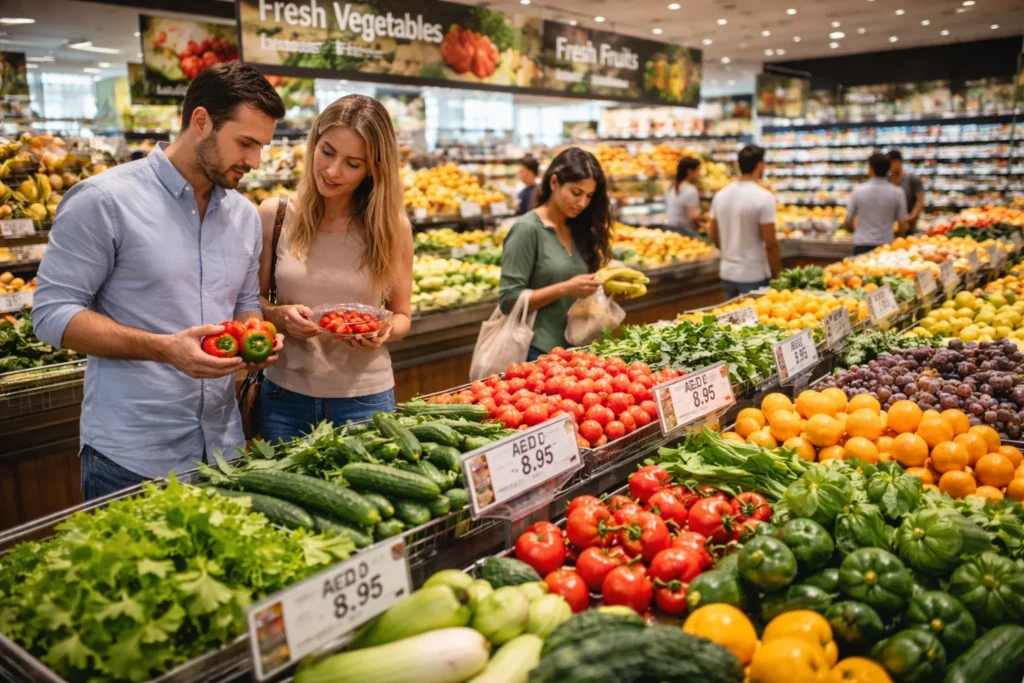
Most expatriates in Dubai shop at large hypermarkets because they offer good prices and wide product selections. Popular chains include Carrefour, LuLu Hypermarket, and Union Coop.
These hypermarkets are located across Dubai in major shopping malls and residential areas. They are known for selling everything from fresh produce and meat to international packaged foods. Expats often visit these stores once a week or every two weeks to stock up on essential groceries.
For many residents, hypermarkets are the most practical option because they combine affordability with variety. They also frequently offer discounts and promotions on staple food items.
Mid-Range and Neighborhood Supermarkets Popular with Expats
Many expats also rely on mid-range grocery chains located near residential communities. Stores such as Choithrams, Al Maya, and West Zone are commonly used for quick shopping trips.
These supermarkets are smaller than hypermarkets but often stock products tailored to nearby expat communities. They are convenient for buying fresh bread, vegetables, dairy products, and household items during the week.
Many expats prefer these stores because they are close to apartments and villas. This makes them ideal for quick top-up grocery runs between larger shopping trips.
Premium Grocery Stores for Imported Brands
Dubai also has premium supermarkets that specialize in high-quality fresh foods and imported products. Two well-known examples are Spinneys and Waitrose.
These stores are particularly popular among European and Western expats who want familiar brands from their home countries. Products such as imported cheese, organic vegetables, specialty breads, and gourmet snacks are widely available.
Although prices in premium stores are higher than in hypermarkets, many residents value the quality and international product range. These stores also offer excellent bakery sections and ready-to-eat meal options.
What South Asian Expats Typically Buy
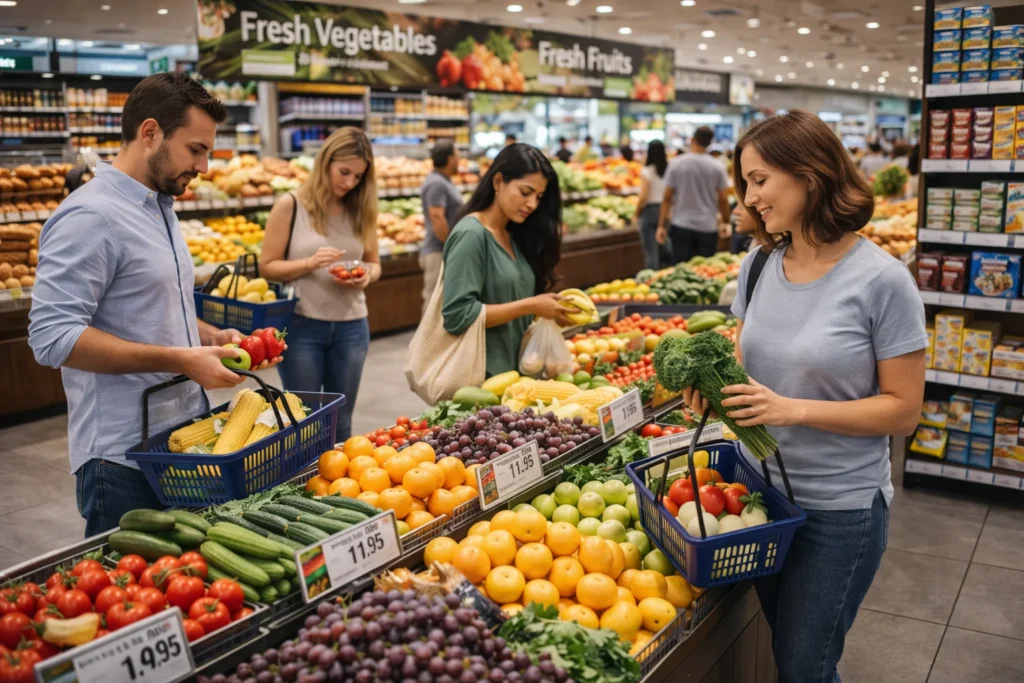
A large percentage of Dubai’s expatriate population comes from India, Pakistan, Bangladesh, and Sri Lanka. Their grocery baskets usually include staple foods used in daily cooking.
Rice is one of the most important items, especially basmati and sona masoori varieties. Wheat flour for making flatbreads such as chapatis and parathas is another common purchase.
Lentils and pulses like toor dal, moong dal, and chickpeas are also essential ingredients. Many South Asian expats regularly buy spices such as turmeric, cumin, coriander, and garam masala to prepare traditional curries and rice dishes.
Grocery Preferences of Arab and Mediterranean Expats
Arab and Mediterranean communities in Dubai often buy ingredients used in Middle Eastern cuisine. Pantry staples typically include chickpeas, bulgur, couscous, and lentils.
Olive oil, olives, and pickled vegetables are common purchases for everyday meals. These items are widely available in Dubai supermarkets and specialty food sections.
Fresh Arabic bread and flatbreads are also popular grocery items. Many supermarkets sell freshly baked pita bread and other Middle Eastern bakery products daily.
What Western Expats Usually Shop For
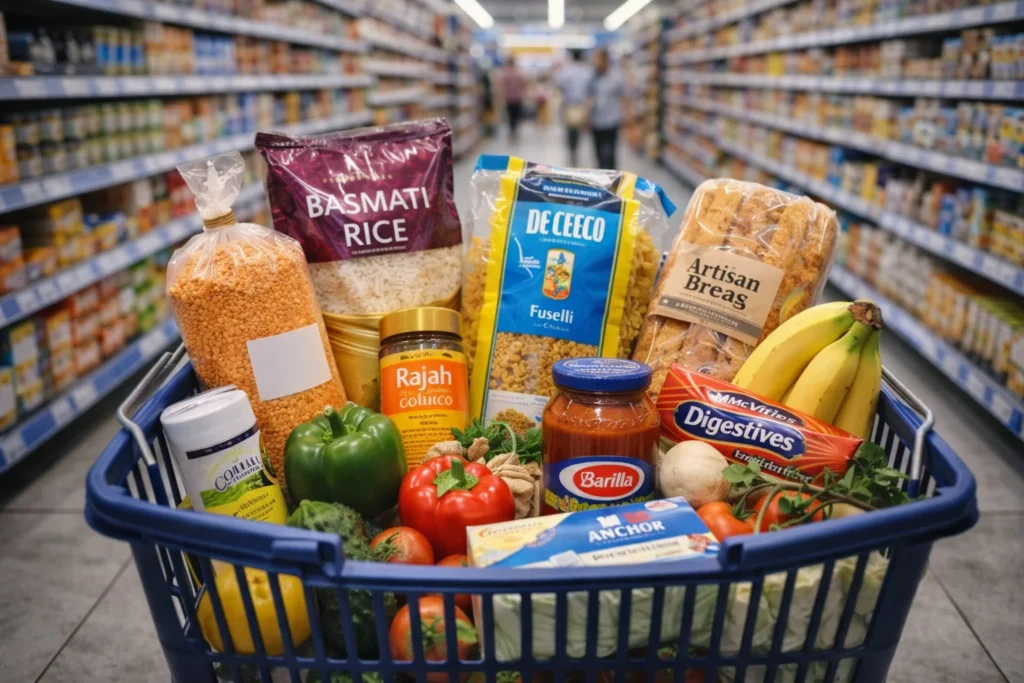
Western expatriates from the UK, Europe, North America, and Australia often buy foods similar to those available in their home countries. Breakfast foods such as cereals, oats, yogurt, and butter are common grocery staples.
Imported cheeses and dairy products are widely available in premium supermarkets. Many Western expats also purchase bread varieties such as sourdough, bagels, and sandwich loaves.
Frozen foods are another popular category. Items like frozen pizzas, ready meals, and international snack brands are commonly found in Dubai’s large supermarkets.
The Rise of Ready-to-Eat and Health Foods
Modern lifestyles have changed grocery shopping habits among expats in Dubai. Ready-to-eat meals have become increasingly popular because they save time and require minimal cooking.
Supermarkets now offer a wide selection of chilled meals such as biryani, noodles, salads, and Middle Eastern mezze. These options are convenient for busy professionals who prefer quick meals after work.
Health-focused products are also growing in popularity. Items such as almond milk, oat milk, vegan cheese, gluten-free foods, and organic produce are now widely available in major grocery chains.
Also Read: Where to Buy Cheap Electronics in Dubai? Best Stores and Shopping Tips
How Much Expats Spend on Groceries
The cost of groceries in Dubai varies depending on lifestyle and household size. A single expat who cooks regularly may spend around AED 800 to AED 1,500 per month on groceries.
Couples typically spend between AED 1,200 and AED 2,000 monthly, depending on shopping habits and product choices. Families with children often spend significantly more because of larger food consumption.
Even though Dubai is known for luxury shopping, grocery prices are often comparable to other major global cities. Many residents find cooking at home more affordable than dining out frequently.
Grocery Delivery Apps and Online Shopping
Online grocery shopping has grown rapidly in Dubai in recent years. Many expats use delivery services connected to supermarkets or specialized grocery apps.
Popular options include online services from Carrefour and quick-delivery platforms such as Careem, Talabat, Instashop, and Noon.
These services allow customers to order groceries from nearby stores and receive delivery within minutes or hours. The convenience of online grocery shopping has made it increasingly popular among busy professionals and families.
Current Trends in Expat Grocery Shopping
Recent retail trends show that many Dubai residents are becoming more price-conscious when shopping for groceries. Inflation and rising living costs have encouraged shoppers to look for promotions and discounts.
Some expats are also switching to private-label supermarket brands because they offer lower prices. Discount chains and value stores are attracting more customers who want to manage household expenses.
Despite these changes, Dubai’s grocery market continues to grow and adapt to its multicultural population. Supermarkets now focus on offering international products, healthier options, and faster delivery services to meet the needs of expat shoppers.