

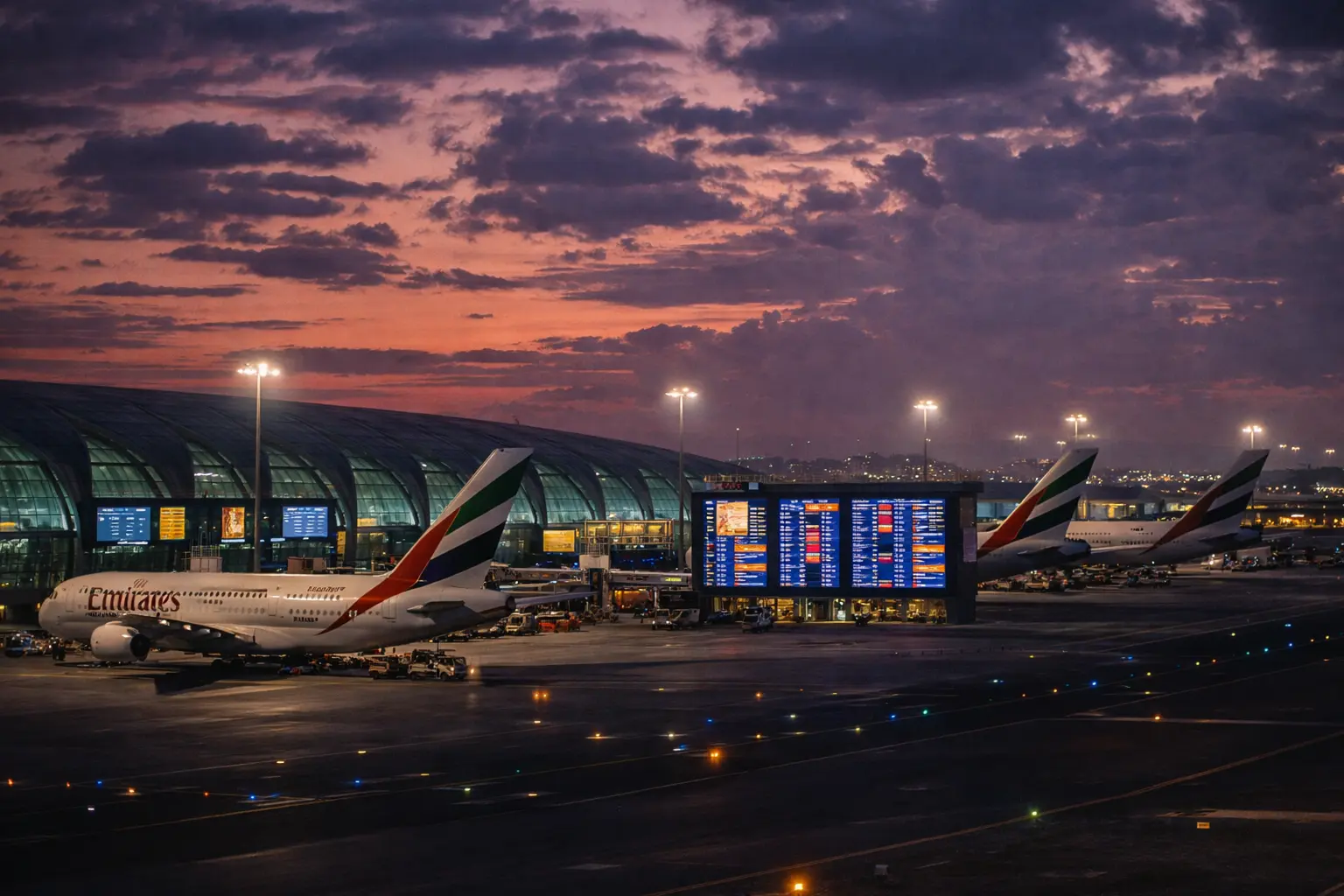
The ongoing conflict between the United States, Israel, and Iran has significantly disrupted air travel in the Middle East, prompting major UAE airlines to extend flight cancellations. Emirates, Etihad Airways, Flydubai and Air Arabia announced that they will suspend services in the coming days in response to airspace closures and safety concerns. The decision reflects the broader impact of escalating military action on civil aviation and regional connectivity.
The restrictions come after coordinated US-Israeli military strikes on Iran triggered retaliatory actions by Tehran, including missile and drone strikes near Gulf states. As a result, airspace over key hubs such as Dubai and Abu Dhabi remains restricted, making normal flight operations unsafe at this time. Airlines are closely monitoring the situation as they balance operational demands with passenger safety.
Extended Flight Suspensions and Travel Chaos
UAE carriers initially halted flights as a precaution, but extended these suspensions into the following week as airspace remained closed or unpredictable due to ongoing regional tensions. Emirates has paused flights in and out of Dubai until at least midday on Monday, giving travelers time to rebook or seek refunds through official airline channels.
Etihad Airways, based in Abu Dhabi, announced similar extensions of flight suspensions, citing regional airspace uncertainty. Flydubai and Air Arabia also decided to temporarily suspend scheduled services, prioritizing passenger safety above operational continuity.
Below is a snapshot of the key UAE airline responses to the situation:
| Airline | Suspension Status | Notes |
|---|---|---|
| Emirates | Extended until Monday afternoon | Rebooking and refunds offered |
| Etihad Airways | Extended suspension | Monitoring airspace safety |
| Flydubai | Temporary halt | Prioritising passenger safety |
| Air Arabia | Flights suspended | Updates via airline channels |
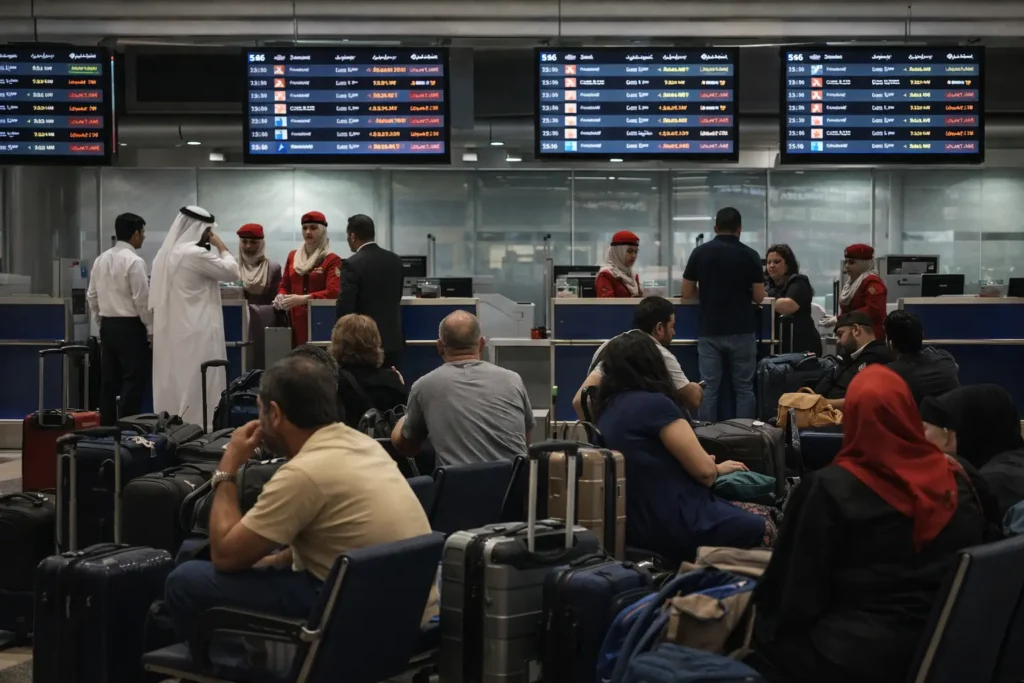
Passengers have faced considerable disruption, with many international flights postponed or canceled entirely. Transit passengers connecting through the UAE have also experienced delays as major Gulf air hubs adjust to ongoing airspace restrictions.
Regional Context and Airspace Closures
The interruption of airline operations in the UAE mirrors similar measures across the Gulf region. Bahrain, Qatar, and Kuwait each reported temporary restrictions on airspace, prompting airlines to alter flight routes or delay departures. Airlines from India, Europe, and other regions canceled flights into affected cities, leaving travelers stranded or seeking alternate routes.
Overall, more than 1,500 inbound flights across Gulf Cooperation Council countries were canceled, amplifying travel uncertainty. Several international carriers also opted to avoid Middle Eastern airspace for scheduled services, prioritizing safety until conditions stabilize.
Impact on Passengers
Passengers affected by these suspensions have had to navigate last-minute changes and uncertainties. Many travelers found themselves waiting at airports or seeking updated flight information from airlines’ customer service desks. Airlines have been offering rebooking options, flight refunds, and accommodation assistance for those stranded due to cancellations.
In some cases, national aviation authorities and foreign embassies have provided guidance to assist stranded travelers. Others have advised people to stay informed through official airline channels and avoid unnecessary travel until airspace restrictions lift.
UAE Leadership Response
Amid the disruption, the UAE leadership maintained open communication with international partners. The President of the UAE held a phone conversation with the US President, discussing the regional security situation and ongoing military tensions. Both leaders underscored the importance of stability and explored diplomatic avenues to address the conflict.
The phone call reflects continued collaboration between the UAE and international allies in navigating the broader geopolitical crisis. Leaders from Qatar and the UAE also condemned attacks that threatened civilian territories and stressed the need to de-escalate tensions in the Gulf region.
Safety Precautions and Aviation Monitoring
Aviation authorities in the UAE have emphasized that flight suspensions are temporary and in the interest of safety due to ongoing threats in neighbouring airspace. The General Civil Aviation Authority continues to monitor conditions closely and will update airlines and passengers accordingly.
Airport operators have maintained high levels of readiness and implemented safety protocols for staff, travelers, and aircraft. Runway operations have been adjusted as air traffic control works with international agencies to manage evolving flight schedules.
Also Read: Sahar Ghavami Unveils “Home Again” in Dubai, Transforming Loss into Visual Worlds
Global Effects of Middle East Airspace Disruptions
The suspension of flights across Gulf hubs has ripple effects across global aviation networks. Dubai International Airport and Abu Dhabi’s hub are major connecting points between Asia, Europe, Africa, and the Americas. Disruptions at these key points have forced long-haul carriers to delay flights or reroute around closed airspaces.
Some airlines have temporarily redirected flights through alternative corridors over Africa or other airspaces, leading to extended flight durations. International carriers also continue to review travel advisories and adjust schedules based on ongoing developments.
Real-Time Updates for Travelers
Travelers are encouraged to stay updated through official airline apps, airport websites, and government travel advisories. Airlines are providing real-time notifications about flight status, and customer service channels remain open to assist with rescheduling.
In this volatile situation, passengers are advised to avoid unnecessary travel plans to the region until aviation authorities confirm a full resumption of normal flight operations. Authorities will continue to evaluate safety conditions and work toward restoring reliable air travel links across the Middle East.