

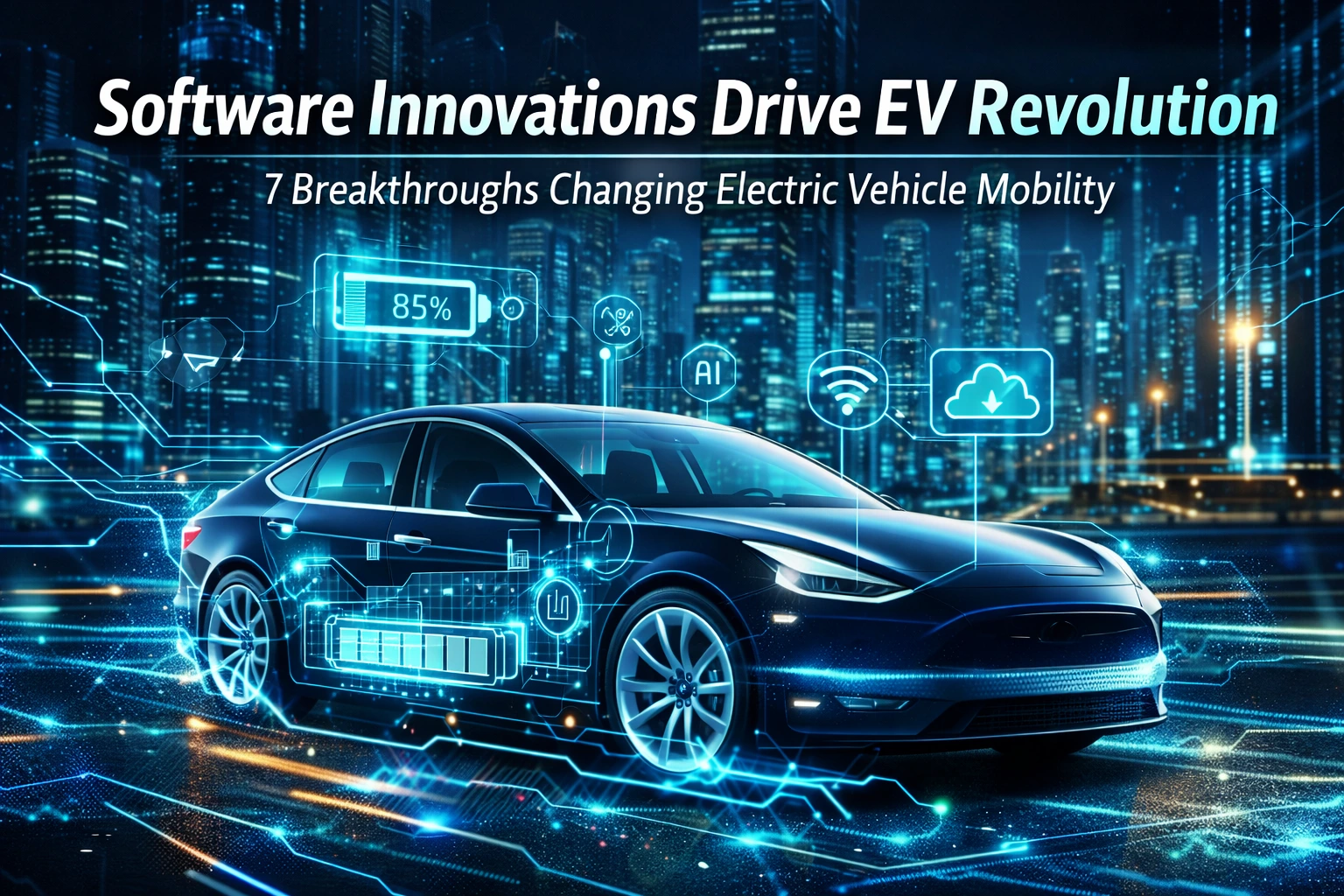
Electric vehicles are no longer just about batteries and motors. Software has become the real engine behind innovation, improving performance, efficiency, and user experience. This shift is turning EVs into intelligent machines rather than just transport tools.
Over the past few years, software-driven technologies have helped solve major challenges like range anxiety and charging inefficiencies. Today, EVs are evolving into connected systems that interact with drivers, infrastructure, and even the power grid.
1. Smart Range Prediction Reducing Anxiety
Range anxiety has long been one of the biggest concerns for EV buyers. Software now uses AI to predict battery usage and driving range with high accuracy. This helps drivers plan trips with more confidence.
These systems analyze driving patterns, terrain, weather, and traffic conditions in real time. As a result, drivers get more reliable estimates, reducing uncertainty and improving overall trust in EV technology.
2. Intelligent Route Planning with Charging Integration
Software is making EV navigation smarter than ever. Advanced systems can now suggest optimal routes based on battery levels and available charging stations.
These platforms even compare charging speeds, costs, and compatibility to recommend the best stop. This ensures drivers save time while avoiding inefficient or crowded charging points.
3. AI-Powered Battery Management Systems
Battery performance is at the heart of every electric vehicle. Software-driven battery management systems monitor health, temperature, and charging cycles in real time.
AI can now predict battery lifespan and detect issues early, improving safety and reliability. These innovations help extend battery life while reducing maintenance costs for users.
4. Ultra-Fast Charging Enabled by Smart Software
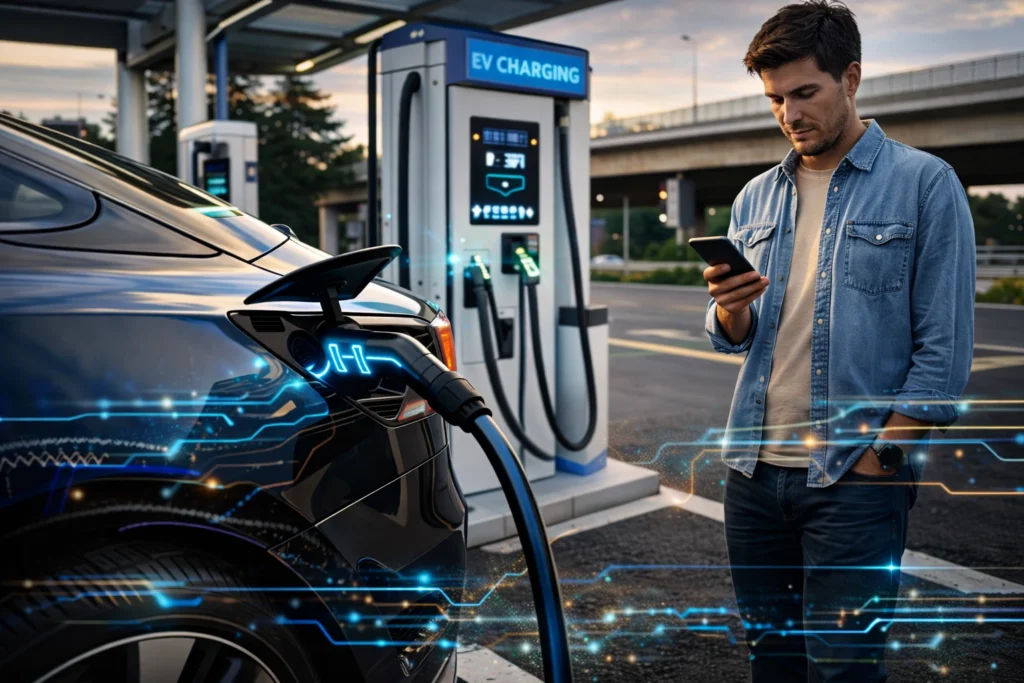
Charging technology has seen rapid improvements thanks to software optimization. New systems can manage energy flow more efficiently, enabling faster and safer charging experiences.
With innovations like high-speed charging and predictive load balancing, EVs are moving closer to refueling speeds similar to traditional cars. Future advancements could enable charging in just a few minutes.
5. Vehicle-to-Grid (V2G) Integration
One of the most exciting breakthroughs is the ability of EVs to interact with the power grid. Through vehicle-to-grid technology, EVs can store energy and send it back when needed.
This turns every electric car into a mobile energy storage unit. It not only helps stabilize the grid but also allows owners to earn money by supplying power during peak demand.
6. Digital Twin Technology for Real-Time Insights
Digital twin technology creates a virtual replica of an EV’s battery and systems. This allows software to simulate real-world conditions and predict performance outcomes.
By combining real-time data with historical insights, manufacturers can optimize performance and improve safety. This also helps drivers get better diagnostics and smarter maintenance alerts.
7. Cloud Connectivity and Over-the-Air Updates
Modern EVs are constantly improving through software updates. Over-the-air (OTA) updates allow manufacturers to enhance features, fix bugs, and improve performance without physical service visits.
Cloud connectivity also enables vehicles to learn from global data. This means every update makes the system smarter, creating a continuously evolving driving experience.
Beyond Cars: EVs as Part of the Energy Ecosystem
Electric vehicles are no longer isolated machines. They are becoming part of a larger energy ecosystem that includes homes, charging networks, and renewable sources.
Software enables this integration by managing energy flow and optimizing usage patterns. This helps reduce energy waste and supports sustainable power systems.
The Role of Infrastructure and Policy Support
While software plays a key role, infrastructure and policies are equally important. Expanding charging networks and supportive regulations are helping accelerate EV adoption globally.
Countries that invest in infrastructure and digital ecosystems are seeing faster adoption rates. This combination of technology and policy is shaping the future of transportation.
Also Read: Dubai Churches Close Temporarily: Worshippers Asked to Pray from Home Amid Safety Concerns
Why Software Is the Future of Mobility
The EV revolution is no longer just about replacing fuel with electricity. It is about transforming vehicles into intelligent, connected platforms.
Software is driving this transformation by improving efficiency, safety, and user experience. As innovation continues, the line between mobility and technology will become even more blurred.