

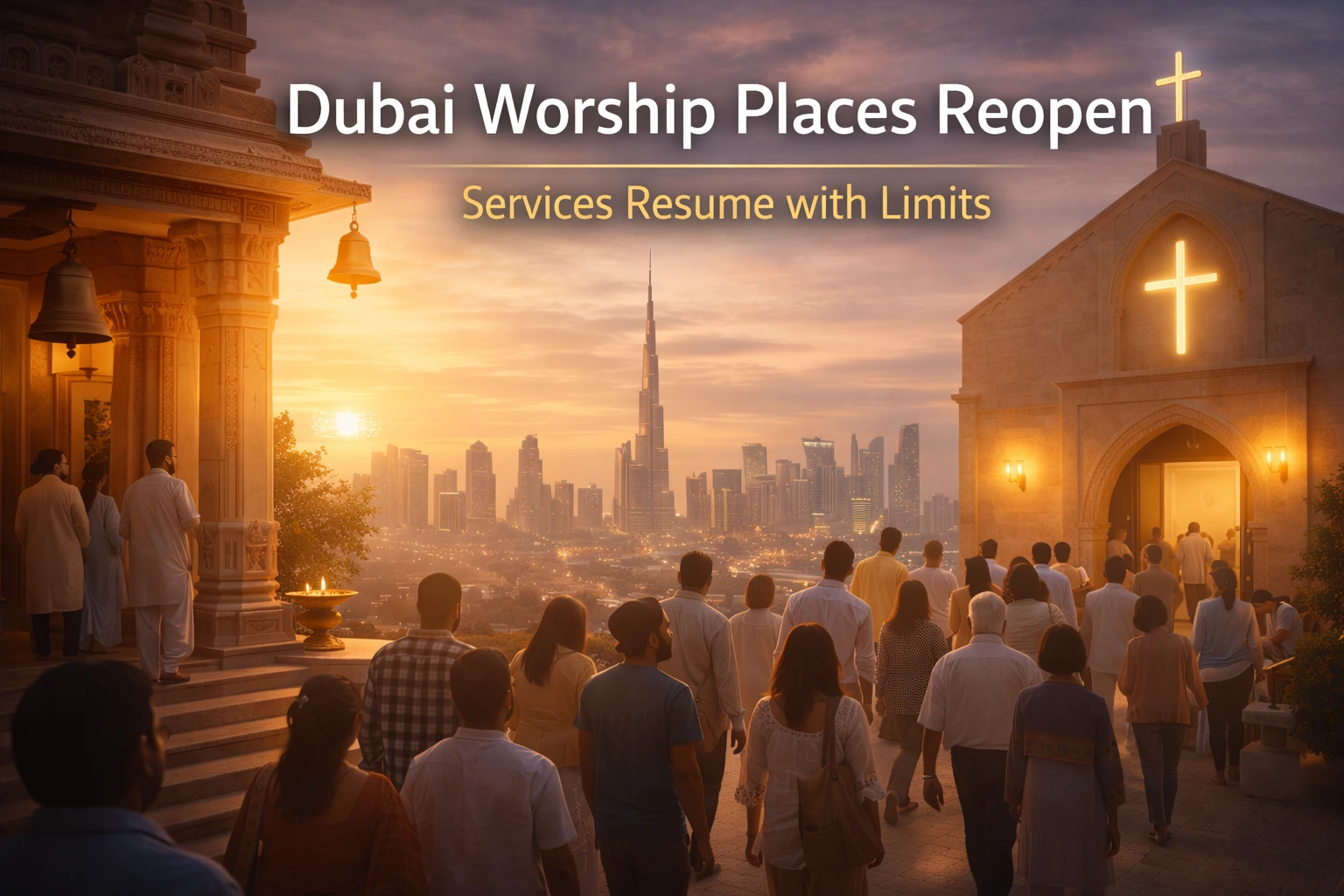
For residents in Dubai, places of worship are more than just religious spaces. They’re where communities gather, where cultural identity stays anchored, and where people find a sense of grounding in the middle of busy daily lives. Having them temporarily closed hit harder than a lot of people may have openly said.
Starting April 11, 2026, that changes. Temples, churches, and gurudwaras across Dubai are reopening — with some conditions attached, but reopening nonetheless. Here’s what’s happening and what you should know before you head out.
Table of Contents
What’s Reopening and Where
Shri Krishna Temple
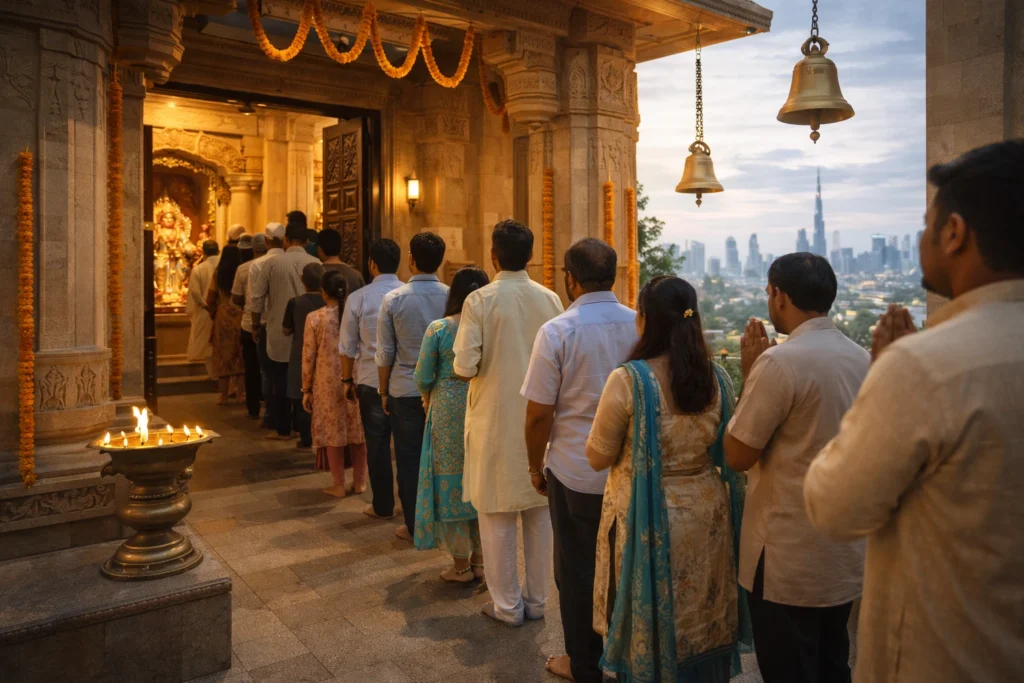
The Shri Krishna Temple in Dubai has resumed darshan services, and for a large part of the Indian community here, this is significant news. The temple isn’t just a place of prayer — it’s a cultural anchor for thousands of families who’ve built their lives in the UAE.
Entry is being managed carefully to avoid large crowds forming at any one time. Specific visiting hours are in place, and the number of people who can be inside at once is being regulated. If you’re planning to visit, check the current schedule before you go rather than showing up and hoping for the best.
Churches, including St. Mary’s
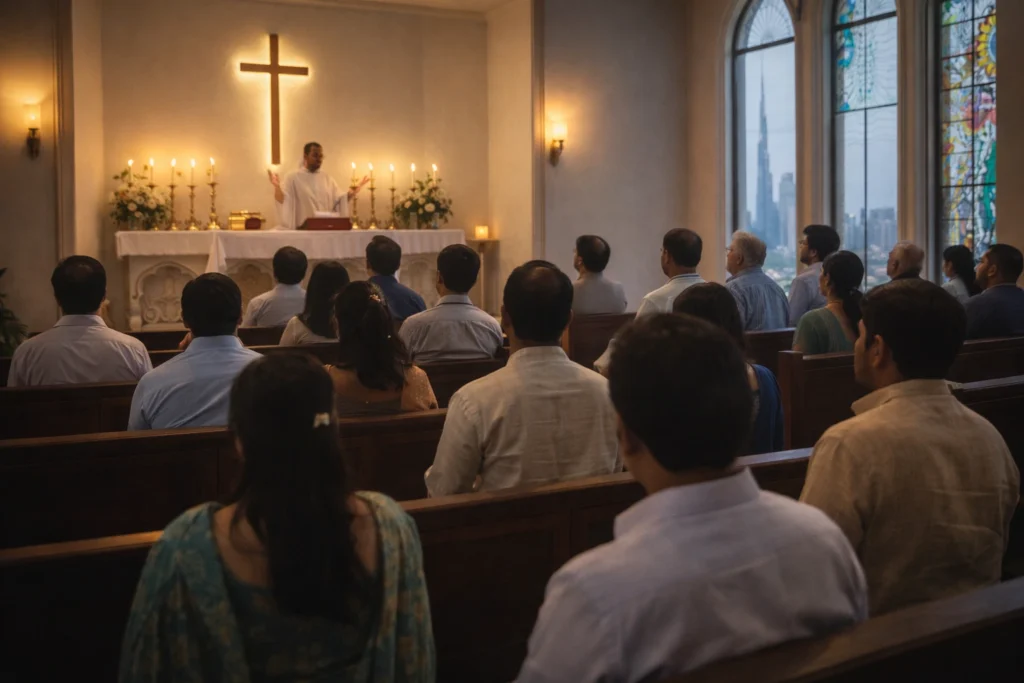
Churches across Dubai, including St. Mary’s, have resumed services with limited capacity. Mass gatherings are still being regulated, so the experience will feel somewhat different from a normal Sunday service — smaller crowds, more structured timing, and stricter adherence to scheduled sessions.
The services are running, though. For residents who’ve missed being able to attend church regularly, that’s what matters most right now.
Gurudwaras
Gurudwaras in Dubai have also opened their doors again. Prayers are being conducted, but visitor numbers are being managed with entry limits and controlled access. The atmosphere will be more structured than usual, but the fundamental experience of attending is available again.
Why Were They Closed in the First Place?
The temporary closure was linked to heightened security concerns in the region. During periods of elevated tension, Dubai’s authorities took precautionary steps that included restricting large gatherings — religious venues fell under that category.
The reopening from April 11 signals that conditions have stabilised enough to allow these spaces to operate again in a controlled way. It’s a measured step rather than a complete return to pre-closure normal, and the guidelines in place reflect that.
What the New Rules Actually Mean for Visitors
The phrase “limited services” and “controlled entry” covers a few practical realities worth knowing about:
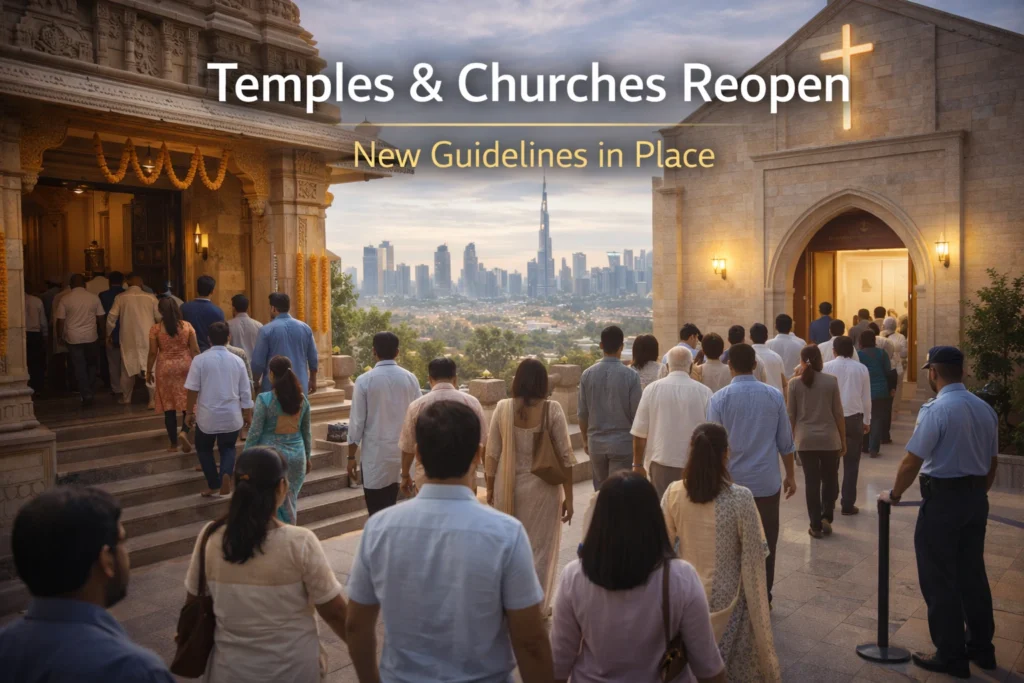
Capacity limits are being enforced. You may not be able to walk in at your usual time and find open access the way you could before. Many locations are operating on time slots or scheduled entry windows — particularly during peak visiting hours like mornings and evenings on weekdays, or throughout the day on weekends.
Some locations may require advance booking or registration before you visit. Others may manage entry through a queue system at the door. The approach varies by venue, so checking directly with the specific place of worship you’re planning to visit is the most reliable way to get accurate, current information.
Staff and volunteers are present at most locations to help manage the flow and assist visitors. If you’re unsure what the current arrangements are when you arrive, they’re your first point of contact.
Practical Tips If You’re Planning to Visit
Check timings before you leave home. This sounds obvious, but the schedules at most places of worship right now are more structured than usual. A timing that was accurate a week ago may have been updated. Most temples, churches, and gurudwaras have active social media pages or WhatsApp groups where updates are shared — those tend to be the most current source.
Go early or at off-peak times if you can. Entry during peak hours is likely to involve waiting, and capacity limits mean you may not get in immediately even if you arrive on time. Going slightly earlier than the main crowd, or choosing a less popular time slot, will make the experience smoother.
Be patient with the process. The people managing entry aren’t making things complicated for the sake of it — they’re working within the guidelines they’ve been given to keep these spaces accessible for everyone. Cooperating with queue management and entry procedures helps ensure that the reopening continues smoothly, which benefits everyone who wants continued access.
Bring your Emirates ID or relevant identification if you’re visiting for the first time or if the venue has any registration requirements in place.
What the Community Is Saying
The response from Dubai’s diverse resident communities has been genuinely warm. For expat families — particularly from India, Pakistan, the Philippines, and other communities with strong ties to their places of worship — the closure had created a quiet but real gap in weekly life.
Religious spaces in Dubai carry a particular significance because they often do double duty as community hubs. News from home gets shared there, connections get made, newcomers find their footing, and festivals get celebrated collectively. Getting that back, even in a modified form, matters to a lot of people.
Also Read: Dubai Launches Single Platform for Property and Residency Services: What It Means for Buyers
Where Things Go From Here
The current arrangement — limited capacity, controlled entry, structured timings — is likely to be reviewed regularly as conditions evolve. If things continue to stabilise, further easing of restrictions is a reasonable expectation.
For now though, the doors are open. And for the many thousands of Dubai residents who count these places among the most important in their weekly lives, that’s enough.
Check the timings, plan ahead, and go with patience. The experience will be a little different from what it was before — but it’s available again.