


Renting in Dubai can feel overwhelming, especially when your landlord suddenly mentions a rent increase, and you have no idea whether it’s legal or not. The truth is, Dubai has some very clear rules around this — and knowing them puts you in a much stronger position. Let’s go through everything in simple terms.
Table of Contents
First Things First — Can Landlords Even Raise the Rent?
Yes, they can. But there’s a right way and a wrong way to do it.
A landlord cannot increase your rent out of nowhere while your lease is still running. The only time rent can go up is when your contract is about to renew. Until then, whatever amount you agreed on at the start stays locked in.
This is honestly one of the most reassuring parts of Dubai’s rental law. You won’t wake up one day to find your rent has jumped without warning.
The 90-Day Rule — and Why It Matters
Here’s something every tenant in Dubai should know by heart.
If your landlord wants to raise the rent when your contract renews, they have to give you written notice at least 90 days before your lease ends. Not a month before. Not two weeks before your renewal date. A full 90 days.
Miss that window, and the landlord simply cannot increase the rent for that term. The law is that straightforward.
So here’s a practical tip — put your contract end date in your calendar and count back 90 days. If that date passes and you haven’t received anything in writing, you’re likely looking at the same rent for another year.

How Is the Rent Increase Actually Calculated?
This is where Dubai’s system gets interesting, and honestly, quite fair.
There’s an official tool called the RERA Rental Index, run by the Real Estate Regulatory Agency. Think of it as a government-maintained database that tracks average rents for different property types across different areas of Dubai.
Before your landlord can ask for more money, they have to check this index. Your current rent gets compared against what similar properties nearby are going for. Based on that comparison, the law tells both of you exactly how much — if anything — the rent can go up.
The Legal Limits on Rent Increases
This is the part most people are curious about. Here’s how it works in 2026:
- If your rent is already close to the market average, your landlord cannot increase it at all
- If you’re paying slightly below the market rate, the increase is capped at 5%
- A more noticeable gap can allow an increase of 10% to 15%
- In cases where rent is far below the market average, the maximum allowed is 20%
That last point is important — 20% is the ceiling, full stop. No matter how much below market your rent is, your landlord cannot go beyond that in one go.
The Smart Rental Index — What’s New This Year
Dubai quietly upgraded its rental system in 2026 with something called the Smart Rental Index, and it’s actually a meaningful improvement.
The old system looked mainly at location and property type. The new one goes deeper. It factors in things like the building’s age and condition, what amenities are available, maintenance quality, and overall standards.
What this means in practice is that two apartments on the same street could have different rent caps based on what they actually offer. It’s a more realistic way of measuring value, and it’s harder for landlords to justify large increases if the building isn’t well-maintained.
What If the Landlord Is Asking for Too Much?
Don’t panic, and don’t just agree.
If the proposed rent increase is higher than what the RERA index allows, you have every right to push back. Dubai has a dedicated body called the Rental Dispute Settlement Centre set up precisely for situations like this.
You can file a case there, and the decision will be based on the official data — not on who makes the better argument. It’s a process that genuinely protects tenants, and it’s used fairly regularly.
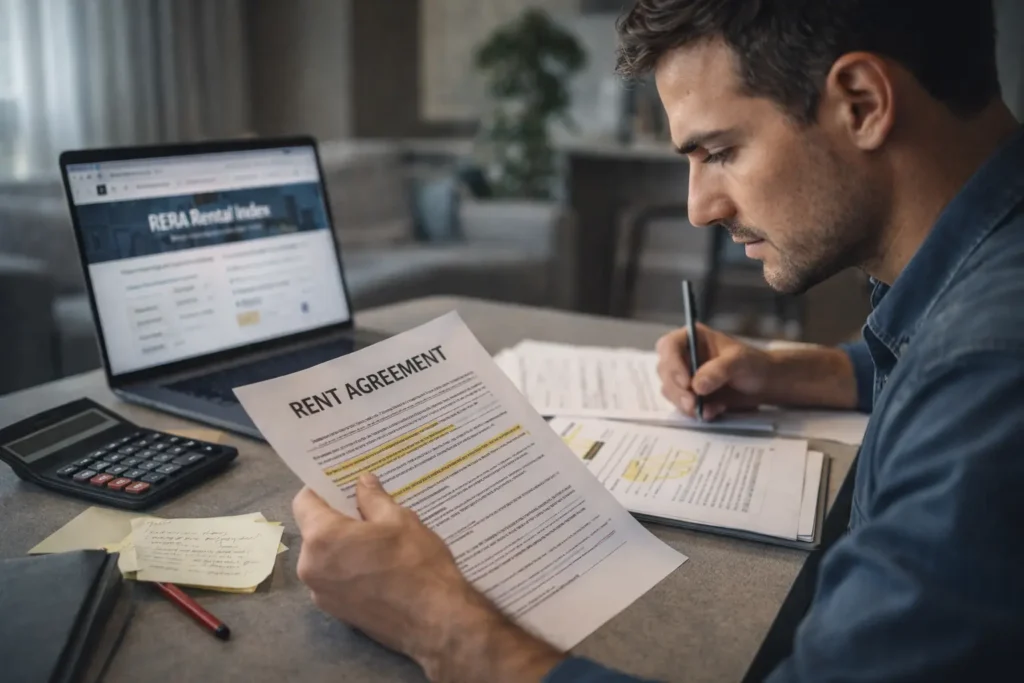
Before You Renew — A Quick Checklist for Tenants
A little bit of preparation before your lease ends can make a big difference. Here’s what’s worth doing:
- Look up the RERA Rental Index online and check where your current rent stands
- Note your contract end date and work backwards to find the 90-day notice deadline
- Keep any messages or letters from your landlord saved and dated
- If a rent increase is proposed, cross-check it against the index before signing anything
You don’t need a lawyer to do any of this. It just takes a bit of time and knowing where to look.
Also Read: Dubai Limits Foreign Flights Till May 31: Indian Airlines Face Major Disruption
For Landlords Reading This
Following the process properly isn’t just about staying legal — it actually makes your life easier.
Send your notice early. Check the RERA calculator before deciding on a number. And remember that a good tenant who renews year after year is worth more than a slightly higher rent that leads to vacancy and disputes.
Landlords who work within the rules tend to have far fewer headaches in the long run.
The Bigger Picture
Dubai’s rental market is busy and growing, but that growth is being managed carefully. By tying rent increases to real data and giving tenants clear rights and timelines, the city has created a system that works reasonably well for everyone involved.
Whether you’re renting your first apartment here or you’ve lived in Dubai for years, knowing these rules means you’ll never be caught off guard at renewal time. And that peace of mind is genuinely worth something.