

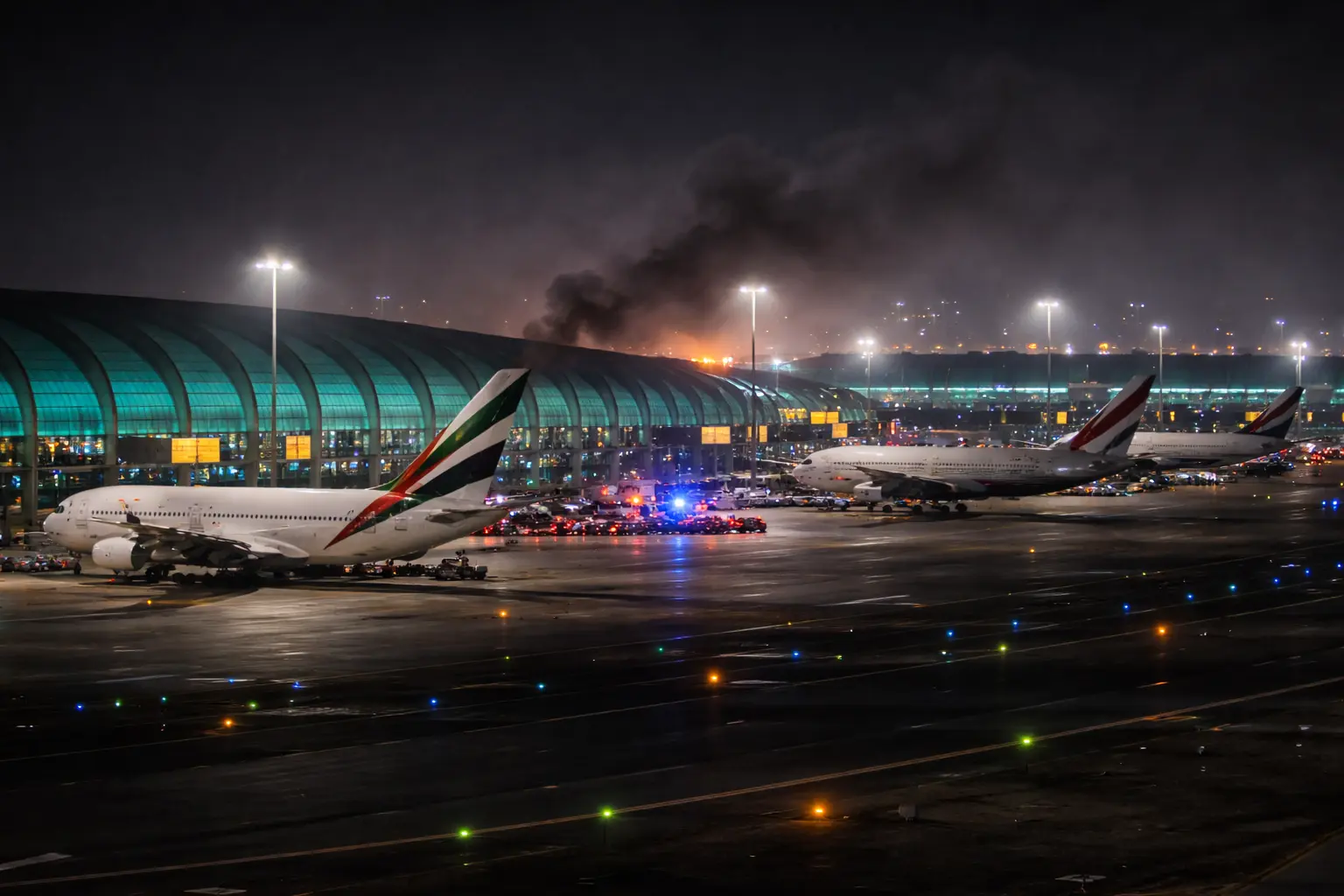
Dubai and Abu Dhabi experienced major travel disruptions on February 28, 2026, after Iranian missile and drone strikes targeted the UAE. The attacks followed rising tensions in the region linked to US and Israeli military action against Iran. Authorities acted quickly to secure the airspace and protect passengers.
Airspace across the UAE was temporarily closed as a safety measure. This led to flight cancellations, diversions, and delays at both Dubai International Airport and Zayed International Airport in Abu Dhabi. Thousands of passengers were affected within hours.
Missile Strikes and Immediate Impact
UAE air defense systems largely intercepted the missile strikes. However, falling debris and shockwaves caused limited damage in certain areas. Airports were placed on high alert while security teams assessed runways and terminals.
Explosions were reported in parts of Abu Dhabi and Dubai, creating panic among residents and travelers. Emergency services were deployed immediately to ensure public safety. Authorities confirmed that the situation was brought under control quickly.
What Happened on February 28
Explosions were reported in parts of Dubai and Abu Dhabi late in the evening. Missiles and drones targeted regional sites, with debris landing near airport zones and residential areas. Emergency services were immediately deployed to affected locations.
At Zayed International Airport in Abu Dhabi, debris impact resulted in one fatality and multiple injuries. In Dubai, four airport staff members sustained minor injuries after debris caused limited structural damage within the airport grounds.
Authorities confirmed that most projectiles were intercepted before reaching their intended targets. The swift response from air defense systems helped prevent larger destruction in densely populated areas.
Airports Temporarily Closed
Both Dubai International Airport and Abu Dhabi’s Zayed International Airport suspended flight operations for several hours. Runways were inspected, terminals were cleared, and security teams assessed structural safety.
Airlines canceled or delayed dozens of flights as airspace was restricted. International carriers operating through Dubai and Abu Dhabi issued advisories to passengers. Travelers were asked to check with airlines before heading to the airport.
Below is a summary of reported airport disruptions.
| Airport | Impact | Casualties | Operational Status |
|---|---|---|---|
| Dubai International Airport | Minor structural damage | 4 injured (minor) | Reopened after safety checks |
| Zayed International Airport | Debris impact | 1 dead, 7+ injured | Temporarily closed, later resumed |
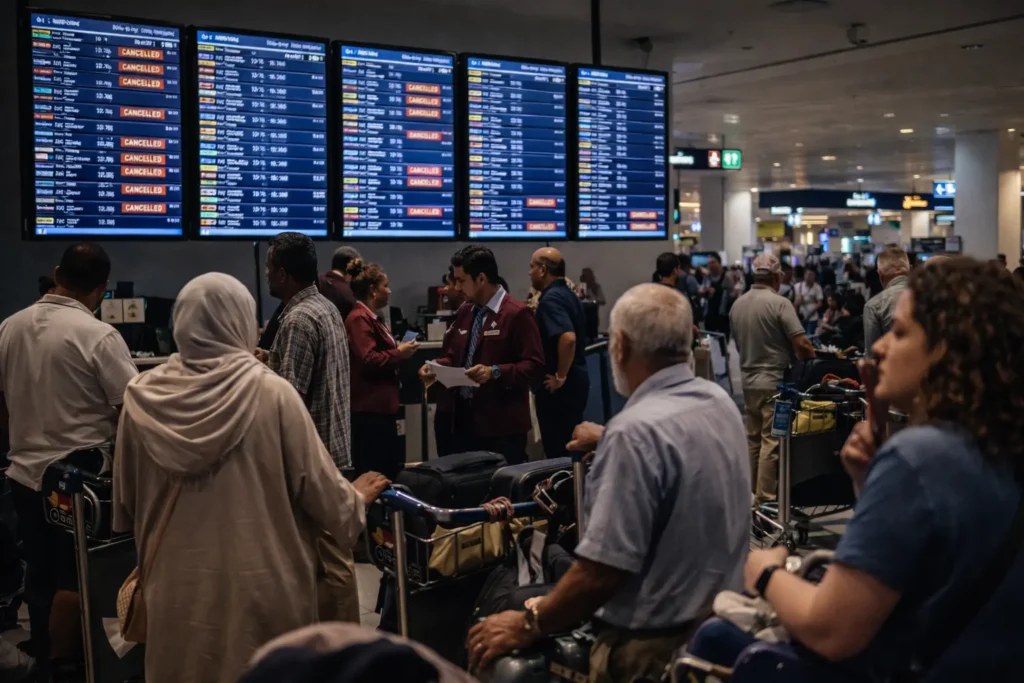
Airspace restrictions also affected transit passengers, as Dubai serves as a major global hub. Connecting flights were delayed or rerouted to alternative airports in the region.
Flight Cancellations and Passenger Impact
Airlines across the Gulf suspended or rerouted services due to safety concerns. Some flights departing from India, Europe, and Asia were delayed or canceled entirely.
Passengers in cities such as Pune and Mumbai reported sudden cancellations of flights bound for Dubai and Abu Dhabi. Many travelers were left waiting for updated schedules as airlines coordinated with aviation authorities.
International carriers, including those operating long-haul routes, temporarily paused services through the affected airspace. Aviation authorities monitored the situation closely before gradually reopening routes.
Regional Airspace Closures
The UAE was not the only country affected. Several Gulf nations, including Bahrain, Qatar, and Kuwait, reported temporary airspace restrictions. Authorities across the region coordinated responses to ensure passenger safety.
Flights were rerouted to avoid high-risk corridors. Airlines worked with air traffic control authorities to adjust flight paths and minimize further disruption.
Below is a brief overview of the regional aviation impact.
| Country | Airspace Status | Reported Impact |
|---|---|---|
| UAE | Temporarily closed | Flights were suspended, and later resumed |
| Bahrain | Restricted | Precautionary measures taken |
| Qatar | Heightened alert | Air defense systems active |
| Kuwait | Limited disruptions | Flights monitored closely |
Casualties and Emergency Response
Emergency services responded immediately to reported blasts near airport facilities. Medical teams treated injured airport staff in Dubai and transported victims in Abu Dhabi to nearby hospitals.
Authorities confirmed one civilian fatality in Abu Dhabi linked to falling debris. In Dubai, no deaths were reported, and injuries were described as minor.
Precautionary evacuations were carried out in some airports and nearby commercial zones. Fire crews contained small fires caused by debris impact.
Also Read: Iran Missile and Drone Strikes Hit Dubai and Abu Dhabi: What Happened on February 28
Government and Airline Statements
UAE authorities described the incident as a serious regional escalation. Officials emphasized that air defense systems successfully neutralized most incoming threats.
Airlines issued public statements assuring passengers that safety remained their top priority. Many carriers offered rebooking options and waived change fees for affected travelers.
Airport operators reassured passengers that infrastructure remained largely intact. After inspections, operations resumed in a phased and controlled manner.
Gradual Resumption of Flights
After several hours of suspension, Dubai and Abu Dhabi airports reopened. Air traffic control cleared runways, and airlines began rescheduling delayed departures.
Flight operations returned gradually, with priority given to stranded passengers and long-haul services. Airlines continued monitoring regional developments before restoring full schedules.
Travelers were advised to stay updated through official airline websites and airport communication channels. Authorities maintained heightened security across key transport hubs.
Impact on Global Aviation
Dubai International Airport is one of the world’s busiest international hubs. Any disruption to its operations has ripple effects across global aviation networks.
The temporary closure caused delays across multiple continents. However, rapid coordination between the UAE aviation authorities and international airlines helped reduce long-term disruption.
Airspace reopened fully after security assessments confirmed no ongoing threats. Aviation experts noted that emergency protocols functioned effectively during the crisis.