

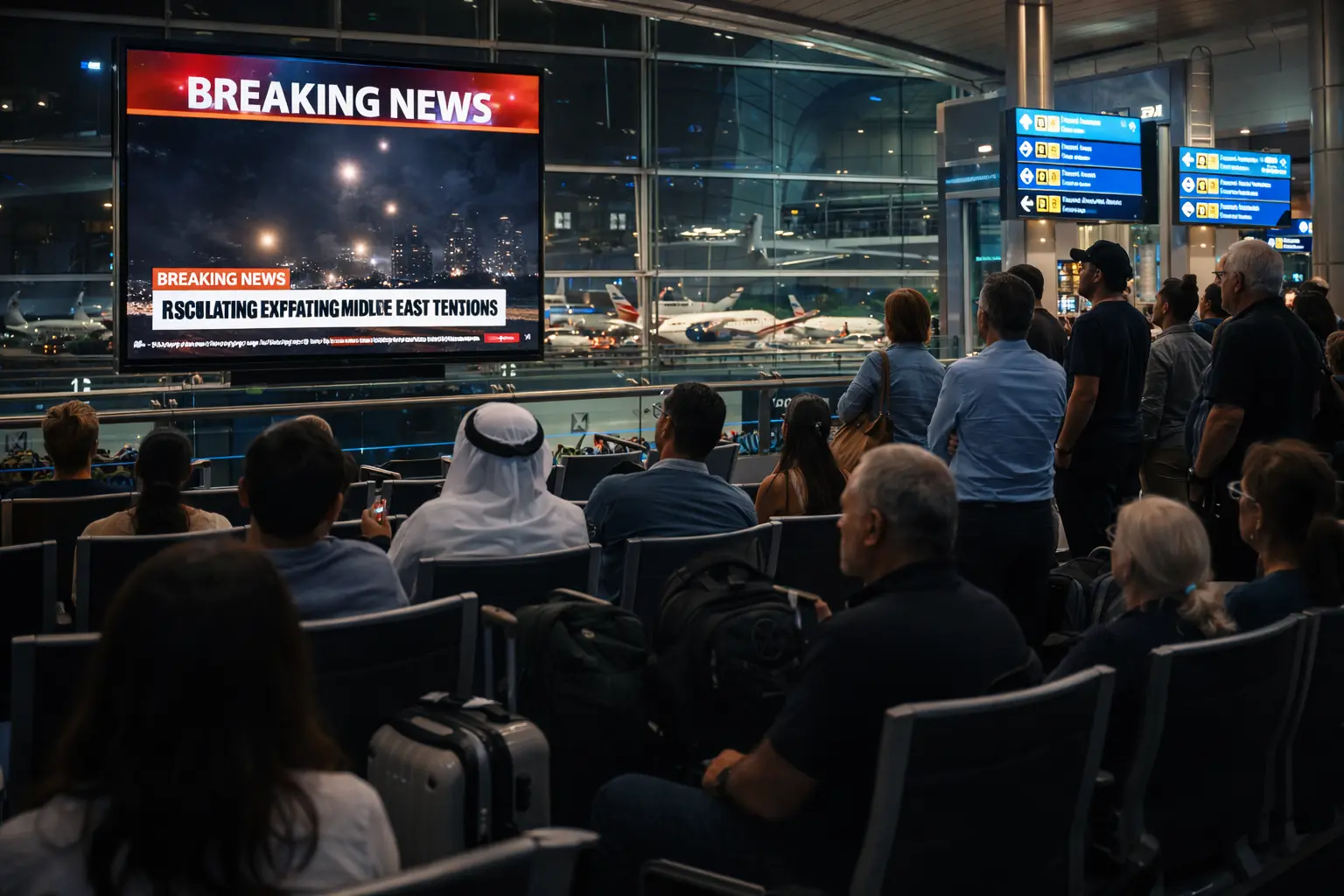
The ongoing conflict involving Iran, Israel, and the United States has created widespread concern across the Middle East. As military exchanges intensified in the region, several Gulf countries, including the United Arab Emirates, found themselves on high alert.
Dubai, one of the world’s busiest global travel hubs, became the focus of attention after reports of explosions and smoke near Dubai International Airport began circulating online. Videos shared on social media appeared to show smoke rising over the airport area, leading to speculation that a missile attack may have targeted the facility.
The situation quickly gained international attention as travelers, residents, and aviation authorities sought clarity about what had happened near the airport.
Explosion Heard Near Dubai Airport
According to eyewitness reports, an explosion was heard over Dubai International Airport, followed by a cloud of smoke in the sky. Several residents across the city also reported hearing loud blasts during the same period.
The sounds came at a time when the broader Middle East region was experiencing heightened military activity. Iran had launched multiple retaliatory strikes across the Gulf following attacks by Israel and the United States. These developments raised fears that key infrastructure sites such as airports could become potential targets.
Because Dubai International Airport is one of the busiest aviation hubs in the world, even the possibility of a missile strike immediately sparked global concern.
UAE Authorities Clarify the Situation
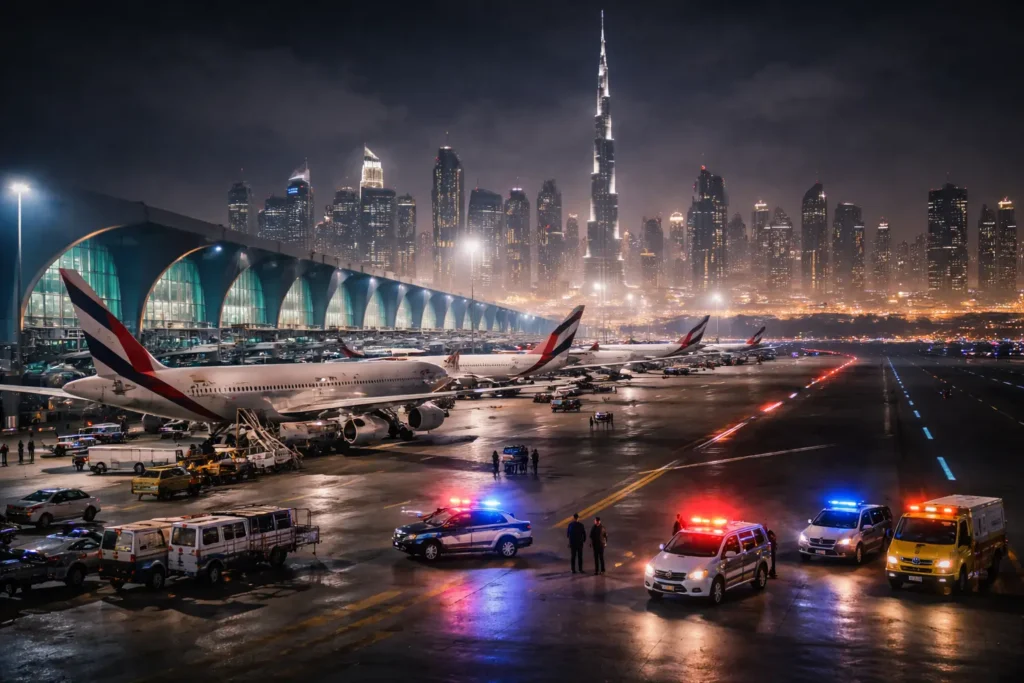
Soon after the reports spread online, the Dubai government issued a clarification to address the situation. Officials stated that there had been no direct missile strike on Dubai International Airport.
Authorities explained that the videos circulating on social media showing smoke near the airport were misleading. The government confirmed that there had been no incident affecting airport operations and that the facility remained secure.
Officials added that a minor incident elsewhere in the city had occurred due to falling debris, but there were no injuries reported and no damage to airport infrastructure.
The statement was aimed at preventing panic and assuring the public that Dubai’s critical infrastructure, including the airport, remained operational.
Air Defence Systems on High Alert
During the broader regional conflict, the UAE’s air defence systems were placed on heightened alert. Defence authorities confirmed that they had intercepted numerous aerial threats, including drones and missiles launched during the conflict.
Reports indicated that hundreds of drones and ballistic missiles had been detected and intercepted across the region. These interceptions prevented many projectiles from reaching their intended targets and minimized potential damage.
Such defensive measures demonstrate how Gulf countries have strengthened their missile defence systems in response to growing geopolitical tensions.
Impact on Aviation and Travel
Although Dubai International Airport was not directly hit, the reports of explosions and missile activity still affected air travel across the region.
Flight tracking data showed that several aircraft temporarily avoided the airspace around Dubai during the incident. Passengers also experienced delays as airlines monitored the situation and adjusted routes to maintain safety.
Dubai International Airport typically handles millions of passengers every month and acts as a major transit hub connecting Europe, Asia, Africa, and the Americas. Any security concerns in the area can therefore create ripple effects across global aviation networks.
Despite the temporary disruptions, airport authorities continued normal operations and reassured travelers that safety measures were in place.
Regional Conflict Expands Across Gulf Countries
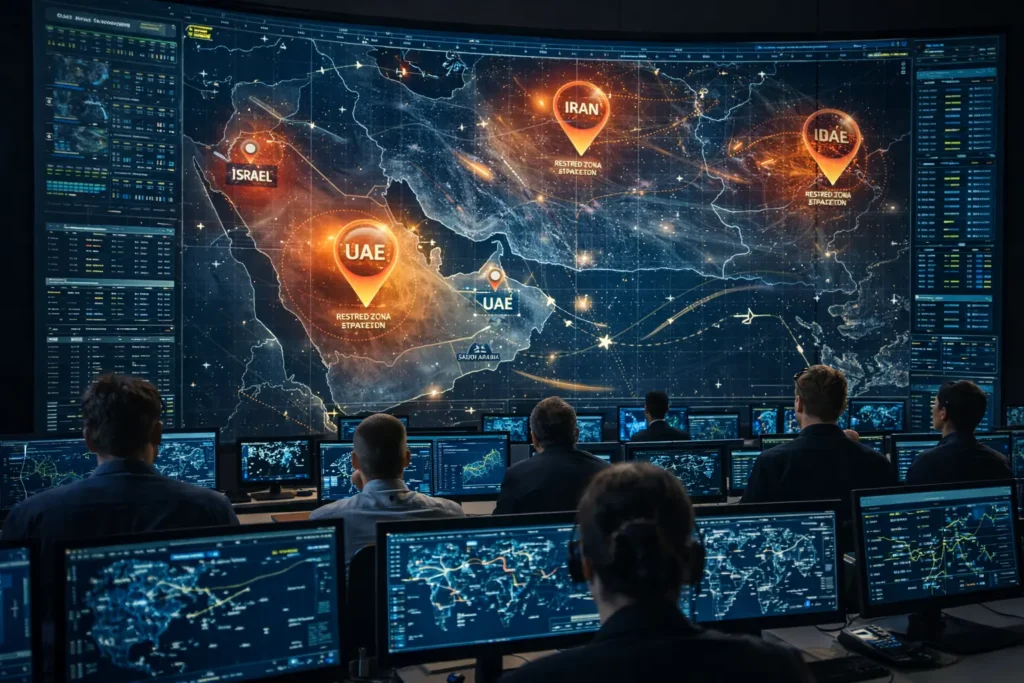
The events in Dubai are part of a wider regional crisis involving Iran and its adversaries. Military exchanges have been reported across multiple countries in the Gulf, including Bahrain, Saudi Arabia, and Qatar.
Iran’s retaliatory actions came after attacks targeting its leadership and military facilities. The conflict has triggered waves of drone and missile strikes across strategic locations in the Middle East.
These developments have increased security concerns in cities that host major military bases, energy infrastructure, and international airports.
Dubai, as a global financial and tourism hub, has therefore remained under close monitoring by both local authorities and international observers.
Also Read: Dubai Residents Receive Missile Attack Alert on Phones as Regional Tensions Escalate
Public Safety Measures in the UAE
Authorities in the UAE have repeatedly emphasized the importance of public safety and responsible information sharing during the crisis.
Government officials warned residents not to spread unverified images or videos related to missile debris or security incidents. Sharing such content can cause unnecessary panic and may misrepresent the real situation.
Instead, residents were encouraged to rely on official government channels for accurate updates about security conditions.
Emergency response teams and civil defence units have also been placed on standby to respond quickly if any incident occurs.
Life in Dubai Continues Amid Tensions
Despite the regional conflict, daily life in Dubai has continued largely as normal. Residents and businesses have remained calm while authorities maintain strong security monitoring.
The city’s government has reiterated that Dubai remains safe and that its infrastructure, including airports, roads, and public services, continues to function normally.
Dubai’s reputation as a global city means it must constantly balance international travel, tourism, and security considerations during periods of geopolitical tension.
While the situation across the Middle East remains complex, authorities continue to stress that the UAE’s defence capabilities and crisis management systems are designed to protect both residents and visitors.