

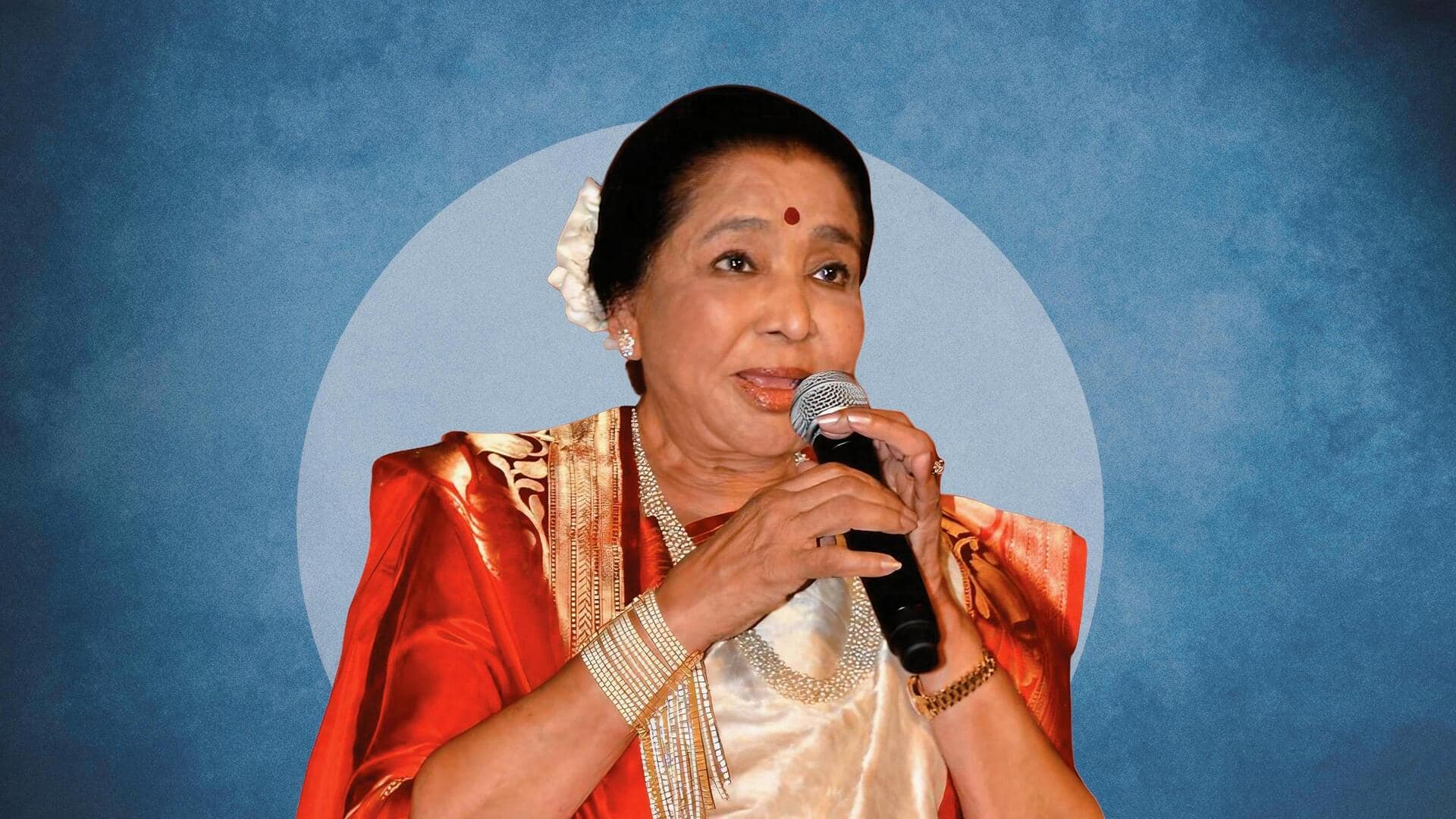
There are some voices you grow up with. Voices that play in the background of your earliest memories — at a wedding, in a taxi, from your grandmother’s kitchen radio. For hundreds of millions of people across India and far beyond, that voice belonged to Asha Bhosle.
On Sunday, April 12, 2026, India woke up to news it had always known would come but was never truly ready for. Asha Bhosle, the most recorded artist in music history and the last surviving voice of Bollywood’s golden era, passed away at the age of 92 at Breach Candy Hospital in Mumbai. She was admitted the previous evening after suffering cardiac and respiratory distress. By Sunday afternoon, Dr. Pratit Samdani confirmed what the country feared: she had passed due to multi-organ failure.
Her son Anand broke the news to reporters gathered outside the hospital. The last rites were held at Shivaji Park in Mumbai on Monday, April 13, at 4 pm, with fans invited to pay their respects at her Lower Parel residence from 11 am.
A Girl Who Sang Before She Knew What She Was Doing
Asha Bhosle was born on September 8, 1933, into the Mangeshkar family — a name that was already woven into Maharashtra’s musical fabric. She started singing professionally at the age of nine and recorded her first film song in 1943, when she was barely a teenager, and most children were still figuring out arithmetic.
But it wasn’t easy early on. Her elder sister, Lata Mangeshkar, had already begun her rise as the most revered voice in Hindi cinema. That left Asha navigating a long shadow. For much of the 1950s, she was handed the songs that others didn’t want — the cabaret numbers, the dance tracks, the bold and sometimes provocative roles that didn’t fit the image of the “respectable” Bollywood heroine.
She took every one of those songs and made them unforgettable.
Dum Maaro Dum, Piya Tu Ab To Aa Ja, Ye Mera Dil, O Haseena Zulfowali — these were not throwaway numbers. They became anthems. For over two decades, if a Bollywood film needed a dance number — particularly one picturised on the legendary Helen — it was Asha’s voice they called for. She didn’t just sing those songs. She gave them a personality, a pulse, a life of their own.
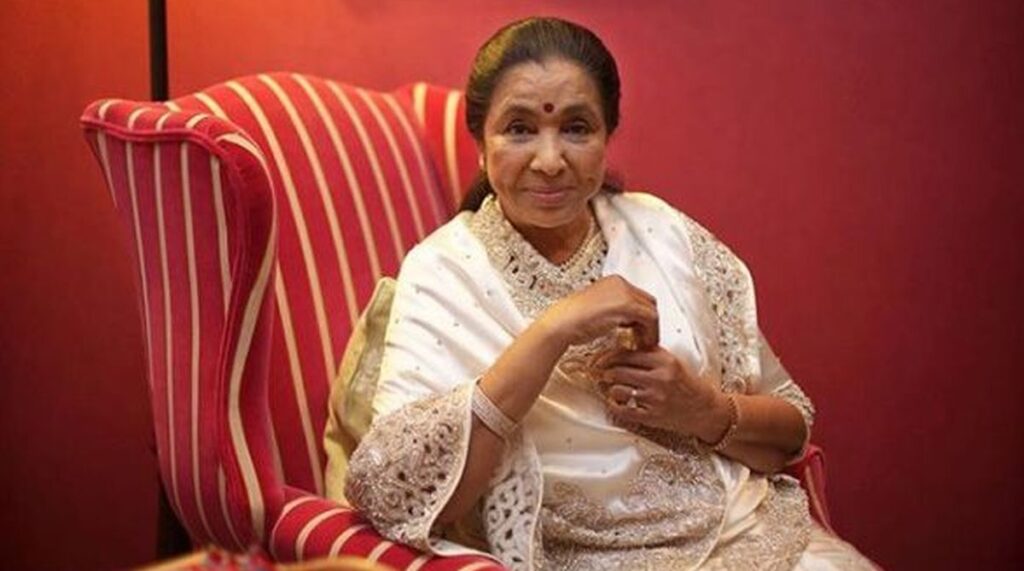
Silencing Every Doubt, One Song at a Time
By the time the 1980s rolled around, some people had begun to suggest that Asha lived in her sister’s shadow quietly. That Lata was the gold standard, and Asha was somehow the lesser version.
Then came Umrao Jaan (1981), and those conversations stopped.
Her ghazals in that film — rendered with a grace that felt both effortless and impossibly precise — earned her the first of two National Film Awards. Then came Mera Kuch Saamaan from Ijaazat (1987), one of the most quietly devastating songs ever written for Hindi cinema, composed by R.D. Burman to Gulzar’s aching poetry. It earned Asha her second National Award and introduced her artistry to an entirely new generation of listeners who had previously only known her from the dance floors of 1970s Bollywood.
After that, there was nothing left to debate. Asha Bhosle was not Lata’s younger sister. She was a legend entirely on her own terms.
The Woman Behind the Voice
What made Asha Bhosle so compelling was not just the range of her voice, but the way she lived her life. She never let anyone else write her story for her.
At just 16, she eloped with Ganpatrao Bhosle, her 31-year-old secretary, in outright defiance of her family. The marriage eventually broke down and they separated in 1960, leaving her with three children. She returned to the Mangeshkar household, but she kept the name Bhosle. She had earned it and she knew it.
In 1980, at the age of 47, she married the brilliant and mercurial R.D. Burman — “Pancham,” as those who loved him called him. Once again, she went against the grain. The marriage, by all accounts, was one of deep creative partnership and genuine love. Burman died in 1994, and she never remarried.
She once said, in her characteristic blunt manner, that she had no regrets about anything she’d ever done. Listening to her life story, it’s hard to argue with that.
A Record That May Stand Forever
In 2011, the Guinness World Records officially recognized Asha Bhosle as the most recorded artist in music history — a distinction earned by recording thousands of songs across more than a dozen Indian languages, from Hindi and Marathi to Bengali and beyond, over a career that began before India’s independence in 1947.
The honors accumulated steadily across the decades. She won the Filmfare Best Female Playback Singer Award seven times. She received the Dadasaheb Phalke Award, the highest recognition in Indian cinema. In 2008, she was awarded the Padma Vibhushan, India’s second-highest civilian honor. West Bengal honored her with the Bangabibhushan in 2018.
Maharashtra Chief Minister Devendra Fadnavis captured it well when he wrote that whether it was devotional music, ghazals, classical compositions, Rabindra Sangeet, folk songs, or pop, Asha left her mark on every single one. “There will never be another versatile singer,” he wrote, “who could embrace change so naturally.”
She Never Actually Stopped
Here is what makes Asha Bhosle’s story different from most legends: she kept going, genuinely and actively, until the very end.
In 2016, at the age of 82, she released a studio album simply called 82 — named after her own age at the time, because why not? The album reimagined six ghazals through pop, reggae, and rock arrangements. It was not the work of a nostalgic artist cashing in on old glories. It was the work of someone who was still curious, still restless, still evolving.
In 2020, she participated in Jayatu Jayatu Bharatam, a pandemic-era multi-artist anthem that brought together over 200 singers, including SP Balasubrahmanyam and Sonu Nigam.
And then, in 2026 — the very year she passed — her voice appeared on The Shadowy Light, a track from the Gorillaz album The Mountain. One of the most experimental acts in contemporary music chose Asha Bhosle. And she said yes.
Even on stage, she never stopped. In late 2024, at 91 years old, she performed a full concert in Dubai that left the audience breathless. Those in attendance have since spoken about it with the quiet reverence of people who realize, only in hindsight, that they were witnessing something final and irreplaceable.
Also Read: Atif Aslam’s Dubai Concert Rescheduled: New Date, Venue, and Everything Fans Need to Know
The Tributes That Poured In
When the news broke on Sunday morning, social media across India slowed under the weight of grief and memory. Cricket commentator Harsha Bhogle perhaps said it most simply: “First Lata Mangeshkar. Now Asha Bhosle… The last survivor of the great era of Rafi, Kishore, Mukesh, Manna Dey, Talat, Geeta Dutt, Lata and Asha is gone and while we use the expression loosely, it is really the end of an era.”
Singer Harshdeep Kaur, who had met Asha just a month before her passing, wrote that she was “an inspiration, an institution of music.” West Bengal Chief Minister Mamata Banerjee called her “an inspiring and mesmerising singer who reigned over our hearts for generations.”
Fans across the world flooded timelines with their favorite songs — Dil Cheez Kya Hai, Chura Liya Hai Tumne, Abhi Na Jao Chhod Kar, In Aankhon Ki Masti. Each song a small, personal memory. A scene from a film, a moment from someone’s life, a feeling that only that particular voice could have created.
What She Leaves Behind
Asha Bhosle sang for over 80 years. She sang in more than 20 languages. The Guinness Book of World Records recorded her as the most prolific recording artist in history. She outlived nearly every one of her peers from that golden generation — Rafi, Kishore Kumar, Mukesh, Lata, SP Balasubrahmanyam — and she kept singing right through all of it.
But the numbers, impressive as they are, don’t quite capture what’s actually been lost.
What’s been lost is a voice that could be playful on Monday and heartbreaking on Tuesday. A voice that could make a cabaret song feel joyful and a ghazal feel like a wound. A voice that belonged to every generation it passed through, not by playing it safe, but by taking risks — with songs, with composers, with her own life.
She didn’t fade. She kept burning, right until the end.
India has lost many great singers. But it has never lost anyone like Asha Bhosle.
Asha Bhosle (September 8, 1933 – April 12, 2026). The last rites were performed at Shivaji Park, Mumbai, on April 13, 2026.