

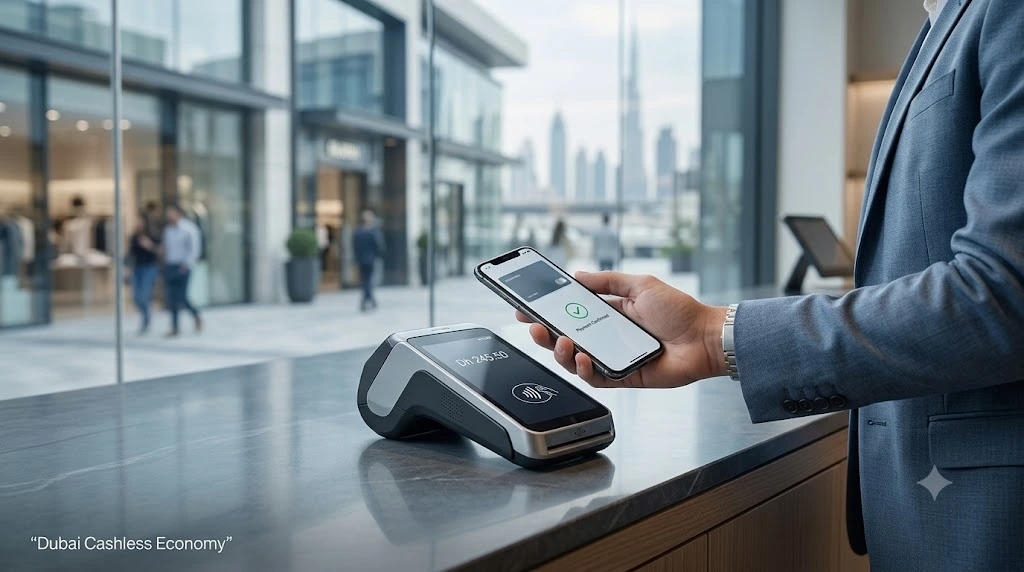
Paying with cash is fast becoming rare in Dubai. Dubai Finance has announced that the Dubai Cashless Strategy has met and passed its key targets, and the numbers are pretty impressive.
The strategy was launched in October 2024 by Sheikh Hamdan bin Mohammed bin Rashid Al Maktoum, Crown Prince of Dubai, Deputy Prime Minister and Minister of Defence of the UAE, and Chairman of The Executive Council of Dubai. Its final report has now been presented to the Dubai Strategic Affairs Council.
The Key Numbers
Dubai’s cashless transactions index reached 90.1 per cent, just above the 90 per cent target set for 2026. The Digital Enablement Index for the government sector hit 100 per cent, which means digital payment methods are available across institutions and businesses. The community happiness index also reached 90.1 per cent, against a target of 90 per cent.
The report also says cashless payment initiatives added more than Dh8 billion to the emirate’s economy.
How the Strategy Performed
The plan was built on three pillars, and each one scored high. Governance reached 97 per cent, society 95 per cent and innovation 93 per cent. Operational business continuity was also maintained so the results can last.
Behind these results is a lot of teamwork. Government bodies, banks, payment solution providers and tech and financial services companies all played a part.
Government Leads the Way
The government sector did especially well. Government cashless collections reached 99.66 per cent in the first half of 2026. Dubai Finance has also built more than 70 strategic partnerships with government entities and private businesses, and its strategic accelerators were 95 per cent complete in the first half of the year.
What Leaders Had to Say
Sheikh Hamdan praised the joint efforts of the public and private sectors. He said the strategy reflects the success of Dubai’s model, which rests on a clear vision, shared roles between government and business, and growing use of technology.
Sheikh Ahmed bin Saeed Al Maktoum, Chairman of the Dubai Free Zones Council, said the progress makes Dubai more attractive for business, investment and tourism by giving businesses and visitors a smoother payment experience. He also stressed the need for free zones, the aviation sector and other industries to work together to spread digital payments further.
Abdullah Mohammed Al Basti, Secretary General of The Executive Council of Dubai, said a cashless economy brings resilience and efficiency, makes it easier to get finance and creates an environment where transactions are reliable.
Abdulrahman Saleh Al Saleh, Director General of Dubai Finance, called it a key milestone. He said the next phase will focus on keeping these results, widening digital solutions, deepening partnerships and building a flexible, secure payment system that keeps up with global innovation.
Where the Data Comes From
The cashless transactions index draws on several sources, including data from the Central Bank of the UAE, Transguard, payment acquirers, international payment networks, Dubai Finance and relevant government entities in Dubai.
What It Means for Residents and Visitors
For everyday life, this means you can pay for most things with a card, phone or app, and you’ll find digital options almost everywhere. For visitors, it makes getting around and spending money in the city easier. For businesses, it means faster, more trackable transactions.
If you’re thinking about how to spend your digital dirham, the cooler months are a good time to get out. Dubai Miracle Garden has returned for its 15th season with something new every week, which makes for an easy family outing. And if you’re a renter, it’s worth reading where Dubai will allow and ban shared housing, and whether your area is on the list.
With the 2026 target already passed, Dubai’s focus now moves to keeping this momentum going.