

Dubai’s Al Maktoum International Airport is shaping up to be one of the most ambitious airport projects anywhere in the world. The $35 billion development is expected to become the world’s biggest airport once the full project wraps up in 2032.
The airport is being designed not just to handle more passengers, but to change how people actually move through an airport in the first place. From AI-powered security to automated transport systems, several planned features are aimed at making the journey faster and more convenient.
Queue-Free Security With AI and Biometrics
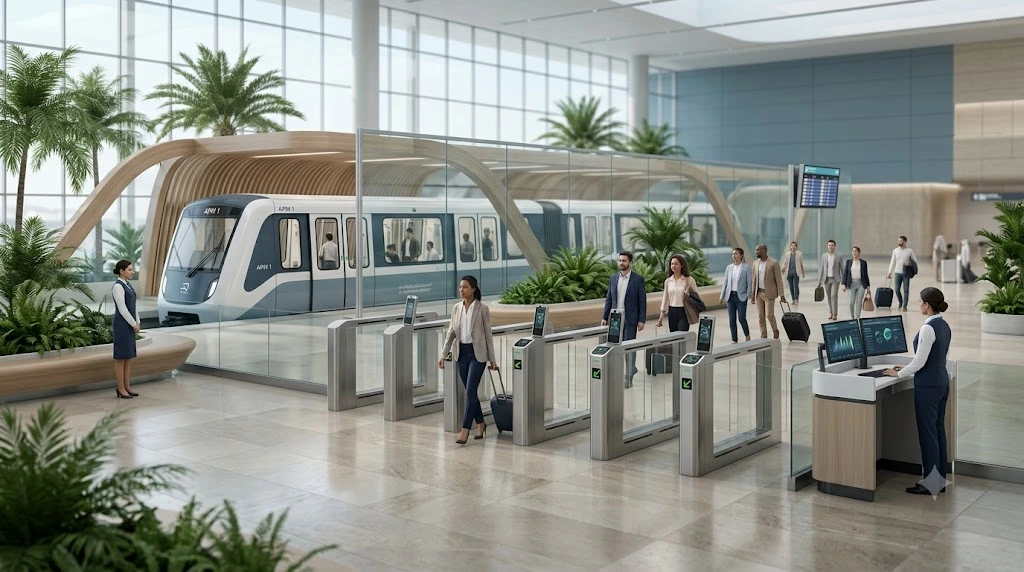
One of the standout features planned for Al Maktoum International Airport is its proposed queue-free security system. The airport will use artificial intelligence and biometric facial scanning to help passengers move through security without the long lines you typically see at major airports.
The technology should improve the passenger experience by making identity checks and security processing much faster. With millions of travellers expected to pass through the airport each year, cutting down waiting times will be key to keeping things running smoothly.
Airport Will Handle 260 Million Passengers
Al Maktoum International Airport is being built on a truly massive scale. Once fully operational, it is expected to handle up to 260 million passengers every year, along with around 12 million tonnes of cargo.
The airport will also be capable of handling up to 360 flights per hour, according to Dubai Airports CEO Paul Griffiths. That scale of operation shows why automation and smart technology sit at the heart of the airport’s design.
Five Runways and Seven Concourses
The planned airport will feature five runways, two passenger terminals and seven concourses. Together, these facilities will provide around 430 aircraft stands to support the huge number of flights expected to operate from there.
The overall airport site covers more than 70 square kilometres. That scale will let Dubai build a massive aviation hub capable of supporting passenger growth, cargo operations and future developments around Dubai South.
A Futuristic Airport Inspired by Nature
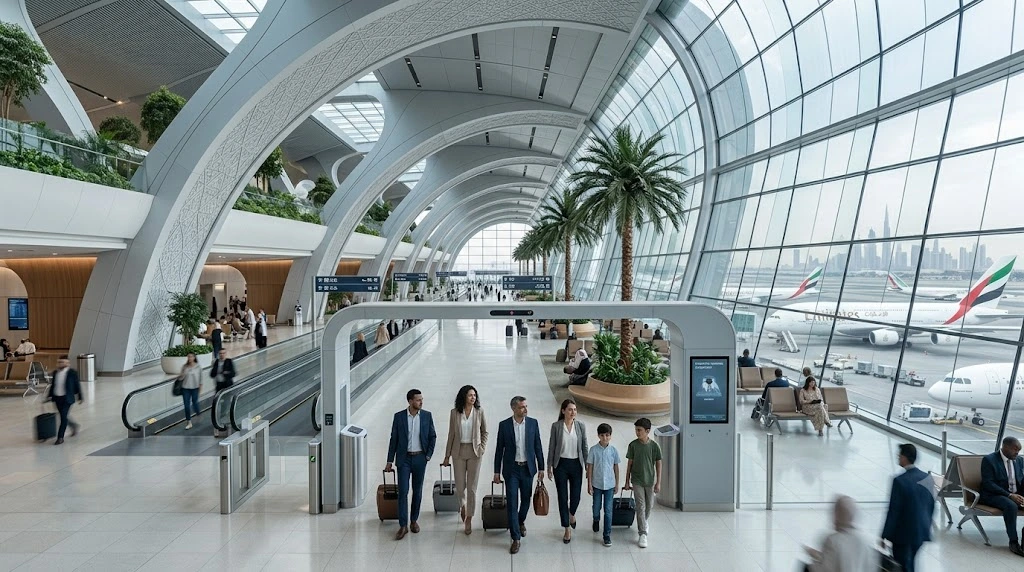
Despite its enormous scale, Al Maktoum International Airport is being designed to feel more like a modern urban environment than a traditional airport. Designs released by the Dubai Media Office show large green spaces and a strong focus on natural elements.
The terminals are expected to include internal forests, vertical gardens, planted courtyards and indoor micro-climates. Real palm trees will also feature beneath sweeping white roofs designed to bring natural light deep into the terminal buildings.
Shopping and Dining Across the Terminals
Passengers will have more than flights and security checks to occupy them at the new airport. Al Maktoum International Airport is planned to include hundreds of shopping and dining outlets across its terminals and concourses.
This fits with Dubai’s wider strategy of making airports part of the overall travel experience. The mix of retail, restaurants, greenery and large open spaces could make long airport stays a lot more comfortable for international travellers.
A 50km Automated People Mover
Getting around such a huge airport will need a serious transport network. Dubai is therefore building what is being described as the world’s largest Automated People Mover, a driverless underground rail system built specifically to connect different parts of the airport.
The system will stretch around 50 kilometres and include nine stations. A consortium led by Mitsubishi Heavy Industries is overseeing the project, giving passengers an automated way to get around the sprawling airport complex.
Faster Baggage Handling
Baggage handling is another area where Al Maktoum International Airport is expected to introduce new ideas. The plans include off-site baggage drop systems, letting travellers hand over their luggage away from the main airport environment.
Engineers have also set out a strict 15-minute rule for returning luggage to passengers after they land. If it holds up consistently, this could eliminate one of the most frustrating parts of air travel and help passengers get out of the airport faster.
Preparing for Future Aircraft
The airport is also being built with the future of aviation in mind. Officials have said the airfield will be reinforced to support next-generation commercial aircraft, including planes powered by electric and hydrogen-based technologies.
This reflects Dubai’s intention to build infrastructure that can adapt as the aviation industry evolves. Rather than focusing only on today’s aircraft, the new airport is being planned around the technologies and aircraft that could become common in the decades ahead.
Construction Activity Is Accelerating
Work on the massive airport project is now moving into a more active phase. Dubai Airports has announced that contracts worth $11.7 billion have gone out to tender, while around $2.8 billion in contracts have already been awarded to major construction companies.
That level of investment reflects just how important Al Maktoum International Airport is to Dubai’s long-term aviation plans. The project is expected to support the growth of Dubai South while building stronger links between aviation, logistics, business and transport.
Also Read: Dubai Is Quietly Becoming a Top Study Abroad Choice for Students
A Major Part of Dubai South
Al Maktoum International Airport sits right at the centre of the wider Dubai South development. The area is being transformed into a major economic and transport hub, with new infrastructure planned around the airport.
Improved road, rail and public transport connections will matter a lot as passenger numbers climb. Together with the automated airport transport system, these links are expected to help the airport manage its enormous future traffic volumes.
A New Model for the Airport Experience
Al Maktoum International Airport is being designed around a simple idea: passengers should spend less time waiting and more time actually moving through their travel journey. AI security, biometric facial recognition, automated transport and faster baggage systems all feed into that approach.
With its huge capacity, nature-inspired terminals and advanced transport infrastructure, the airport could set a new standard for large international aviation hubs. Its planned opening and full development in 2032 will be closely watched as Dubai continues to grow its position as a global travel and logistics centre.