

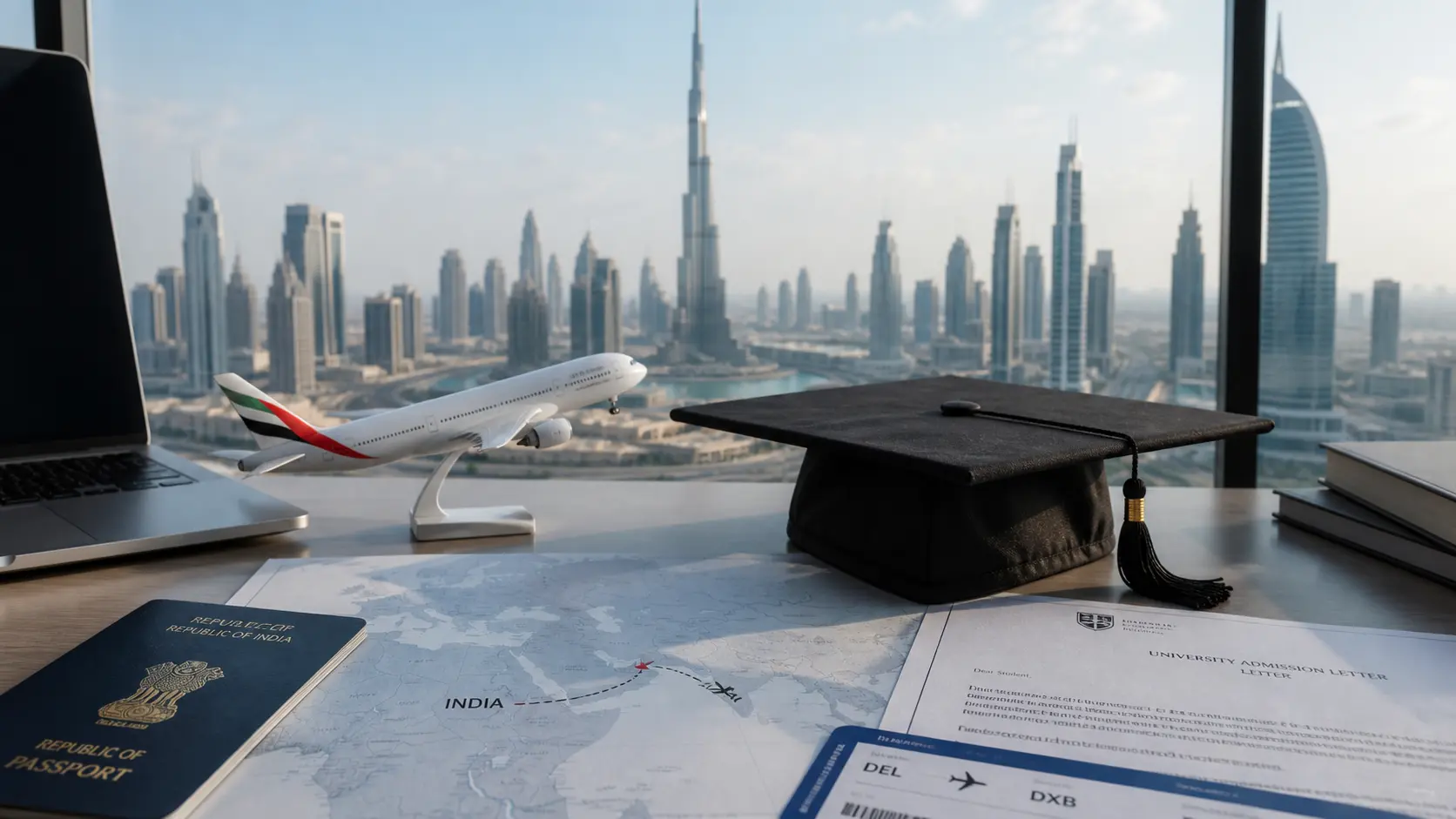
When every major English-speaking country is tightening its student visa rules, cutting post-study work rights, and making it harder to bring family along, it is worth asking a simple question. Where is the door actually opening? Increasingly, the answer seems to be Dubai.
The UAE’s Ministry of Higher Education and Scientific Research recently signed an agreement with Dubai’s Knowledge and Human Development Authority, known as KHDA, that streamlines how universities get licensed to operate in the city. A process that used to take months can now be wrapped up in a matter of weeks.
Sixteen institutions have already received fresh federal licences under this new setup, including Curtin University, Middlesex University Dubai, Murdoch University Dubai, BITS Pilani Dubai Campus, and SKEMA Business School. Mark Brown of Murdoch University Dubai summed it up well.
He said that bringing both local Emirati universities and international branch campuses under one regulator does two things at once. It shows the government’s commitment to education, and it strengthens the country’s reputation as a genuine education destination.
The Job Market Nobody Is Talking About Enough
This is where things get genuinely interesting. ManpowerGroup’s Q2 2026 Employment Outlook Survey placed the UAE at a 60 percent Net Employment Outlook, compared to a 31 percent global average. That puts the UAE second in the world on this measure, behind only India. This is not a small detail. It is one of the strongest hiring signals anywhere right now.

| Metric | Figure |
|---|---|
| UAE Net Employment Outlook (Q2 2026) | 60% |
| Global average | 31% |
| Workforce growth (2021 to 2025) | Over 100% |
| Skilled labour growth | Nearly 50% |
| Growth in number of companies | 45% |
| Dubai private higher education students (2024-25) | 42,026 across 41 institutions |
| International student enrolment growth (one year) | 29% |
| UAE GDP growth (2025) | 4% |
| UAE GDP growth projection (2026) | 4.5% to 5% |
The sectors hiring most aggressively through 2026 and into 2027 include IT, healthcare, finance, construction, and renewable energy. Dubai’s DIFC keeps expanding as a global financial hub, and the UAE’s clean energy investments are opening up entirely new career paths. E-commerce growth from players like Amazon, Noon, and other regional companies is also pushing up demand in logistics and supply chain roles. On top of all this, the UAE has no income tax on salaries, which changes the math for anyone weighing where to build a career after graduation.
What Makes Dubai Different for Students Specifically?
Dubai does not put restrictions on post-study work rights the way many other countries do. Once a graduate lands a job, their ability to stay in the UAE is tied to that employment. They simply move from a student visa to an employer-sponsored visa. There is no lottery to win and no points test to clear. You graduate, you find a job, and you stay.
This is a real difference from countries where graduates are stuck depending on a single, rigid post-study work route that applies to everyone the same way. In the UAE, graduates who find employment can move onto an employment-based residence permit, and eligible graduates can also explore the UAE’s job seeker visa or its longer-term residency options. Outstanding graduates may even qualify for a 10-year Golden Residence, depending on academic performance and institutional criteria, though this is not something every international graduate automatically gets.
Also Read: Dubai Launches New Lighting System to Reduce Glare and Light Pollution
The Honest Picture
If what you are looking for is a strong education, a job market that is actually hiring, closeness to India, no income tax, and a straightforward path from graduation to employment, then the real question is no longer why Dubai. It is why not.