

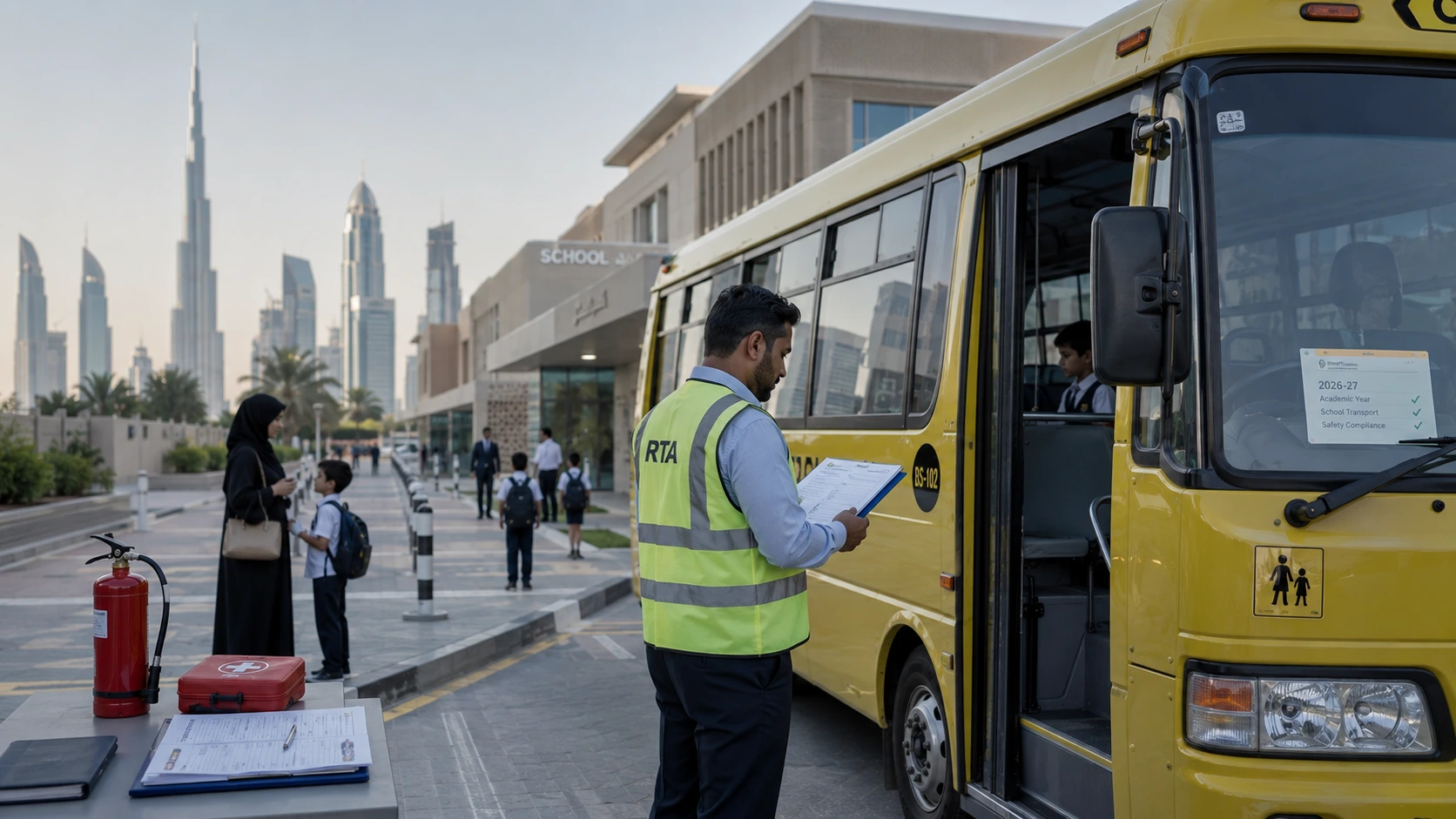
Dubai is gearing up for the 2026-27 academic year with a wider school transport network and tighter safety checks. The Roads and Transport Authority (RTA) is combining traditional school buses with taxis, public buses, ride-hailing services, and shared transport options.
These measures are meant to give families more choices while making student journeys safer and more convenient overall. At the same time, school bus operators are being asked to make sure their vehicles, drivers, and attendants meet all required standards before services get underway.
RTA Launches 30-Day School Bus Inspection Campaign
With schools gearing up to reopen, the RTA has kicked off a 30-day inspection campaign covering school buses and transport operators across Dubai. Specialist teams will check vehicles, operating procedures, and compliance with approved safety requirements.
Inspectors will also confirm that drivers and attendants hold valid permits and are actually authorised to carry students. The whole campaign is meant to catch issues early and make sure school transport services are genuinely ready before children start their daily journeys.
Safety checks are not just about the condition of the buses either. Operators are expected to maintain proper procedures and make sure drivers and attendants understand their responsibilities while transporting students.
Seat Belts Remain Mandatory for Student Journeys
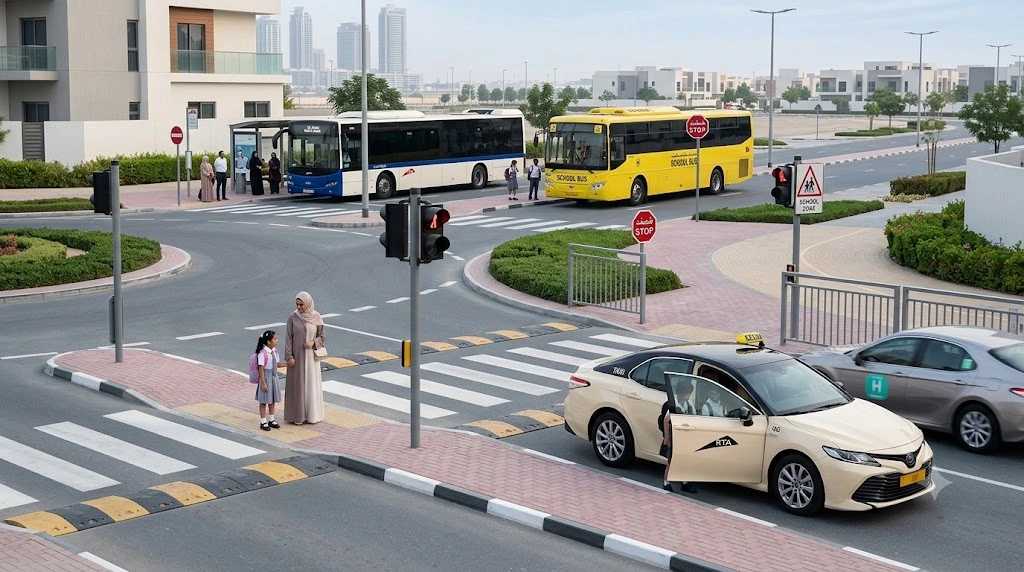
Seat belts continue to be a core part of Dubai’s school transport safety requirements. This applies to school buses as well as other transport options used for student journeys, including ride-pooling and ride-hailing services.
The RTA has also stressed how important trained, authorised personnel are here. These measures are all aimed at cutting down risks during school trips and making sure students travel under properly controlled and monitored conditions.
The authority introduced similar operational requirements ahead of the 2025-26 academic year too, with operators asked to prepare their fleets, train drivers and attendants, and follow traffic rules around schools.
School Ride Options From Careem, Uber, Bolt and Yango
Families in Dubai will have more options beyond the traditional school bus this academic year. Dedicated student transport services from Careem, Uber, Bolt, and Yango are expanding how parents can arrange school journeys.
Careem School Rides, Uber Teens, and Bolt School all offer scheduled or direct-booking options for families, using dedicated vehicles and focusing on drivers who meet specific safety and service requirements.
Yango is also running a school ride-pooling service in Al Barsha. This lets students share journeys through dedicated transport packages booked through the Yango app, giving families in areas with particularly busy school traffic another option to work with.
Yango School Ride Pooling Expands Student Transport Choices
The RTA launched a ride-pooling pilot with Yango Group and Urban Express Transport during the first quarter of 2026, designed to tackle growing private vehicle use around schools and ease traffic pressure in education zones.
Two agreements focused on areas like trip management, vehicle tracking, and operational monitoring. Shared school journeys can help cut down the number of individual cars travelling to and from schools during those busy morning and afternoon windows.
This initiative is part of a wider push to build a more flexible school transport system. Rather than relying on just one type of vehicle, Dubai is adding different services that can meet the needs of students and families across various communities.
More Taxis and Buses Planned Around School Zones
The RTA is also increasing taxi availability around selected school areas during peak hours, with additional vehicles deployed during the morning drop-off and afternoon pick-up windows when demand typically peaks.
Public bus services are getting a boost too. More than 30 routes will run at higher frequencies around major education areas, including Al Nahda, Muhaisnah, Al Barsha, Al Quoz, Dubai Silicon Oasis, and Al Garhoud.
These higher bus frequencies should provide extra capacity and cut down waiting times for passengers, part of the RTA’s ongoing effort to adjust public transport services as travel patterns and demand across Dubai keep shifting.
New and Updated Bus Routes Add More Capacity
Dubai’s public transport network has also been expanding throughout 2026. Four new public bus routes launched in July, alongside changes to 13 existing routes.
One of the new services, Route 35, connects International City with Dubai Silicon Oasis and runs at 30-minute intervals during peak periods. Changes like this give students and families more public transport choices in communities located further from schools.
The RTA is also leaning on flexible services to complement its regular bus routes. Bus On Demand carried 527,000 passengers during the first half of 2026, a 25.1 per cent increase compared to the same period a year earlier.
Student nol Cards Offer 50% Public Transport Discount
Eligible students can also get a 50 per cent discount on RTA public transport services with a student nol card. This discounted fare applies across the Dubai Metro, Dubai Tram, and public buses.
That makes public transport a genuinely more affordable option for students travelling independently, or for families who prefer to mix and match different transport services. It also gives students more flexibility moving between residential areas, schools, and other destinations.
Dubai’s school transport strategy now brings together several options, including school buses, taxis, scheduled app-based rides, shared transport, and the wider public transport network.
Also Read: Dubai Food Safety Checks Get Faster as New Technology Cuts Testing Time to 2 Minutes
Road Improvements Around Dubai Schools
Transport planning around schools also covers changes to roads and traffic infrastructure. Over the summer of 2025, the RTA completed road and traffic improvements around 27 schools.
These projects covered 10 school-zone locations in areas including Al Warqa, Al Safa, Al Barsha, and Al Garhoud, with work including road widening, additional parking capacity, new school entrances, pedestrian signals, and traffic-calming measures.
These improvements matter because school traffic tends to create real pressure during short peak windows. Better road layouts, pedestrian facilities, and added transport capacity can genuinely help manage movement around school entrances and cut down congestion.
What School Bus Operators Need to Check
Before the 2026-27 school transport services get underway, operators are expected to make sure their fleets are fully prepared. Vehicle checks, valid permits, and proper operating procedures are among the areas authorities are reviewing.
Drivers and attendants also play a big part in student safety. Their licences and permits will be checked during the RTA’s inspection campaign, while awareness activities reinforce their responsibilities during student journeys.
Between the vehicle inspections, personnel checks, and operational monitoring, authorities get a much wider view of school transport safety overall. It also puts the responsibility on operators to maintain standards throughout the entire academic year, not just in the run-up to schools reopening.