

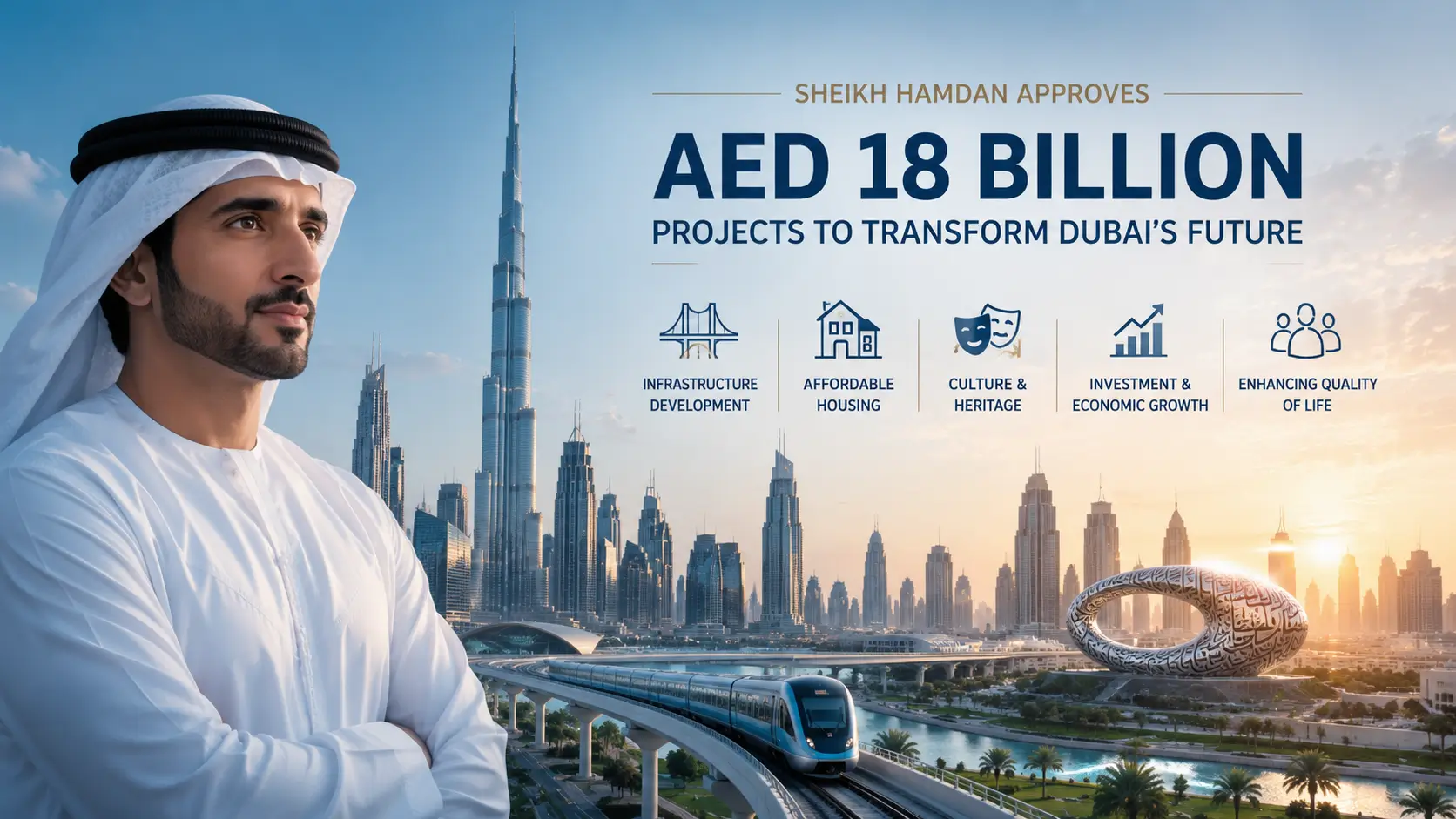
Dubai is entering another significant phase of development. His Highness Sheikh Hamdan bin Mohammed Al Maktoum has approved a strategic package of projects worth AED 18 billion — roughly $4.9 billion — spanning infrastructure, housing, culture, and investment. Together, they represent a clear statement about where Dubai is headed over the next decade and what kind of city it intends to be.
The investment covers a wide range of sectors including transport, public services, real estate, tourism and culture. Beyond the numbers, the package is designed to make Dubai more liveable for residents, more attractive for businesses and investors, and better equipped to absorb the population growth that keeps coming.
Major Investment to Support Dubai’s Growth
The approved projects sit within Dubai’s broader development strategy — a long-term plan to build a city that stays ahead of its own growth rather than constantly playing catch-up with it. Officials are clear that this isn’t just about building things. It’s about building the right things in the right order, so that rising population numbers translate into improved quality of life rather than strain on existing systems.
Private sector participation is also baked into the approach. The investment is expected to generate economic activity across multiple industries while reinforcing the confidence that local and international investors have in the emirate as a place to commit capital for the long term.
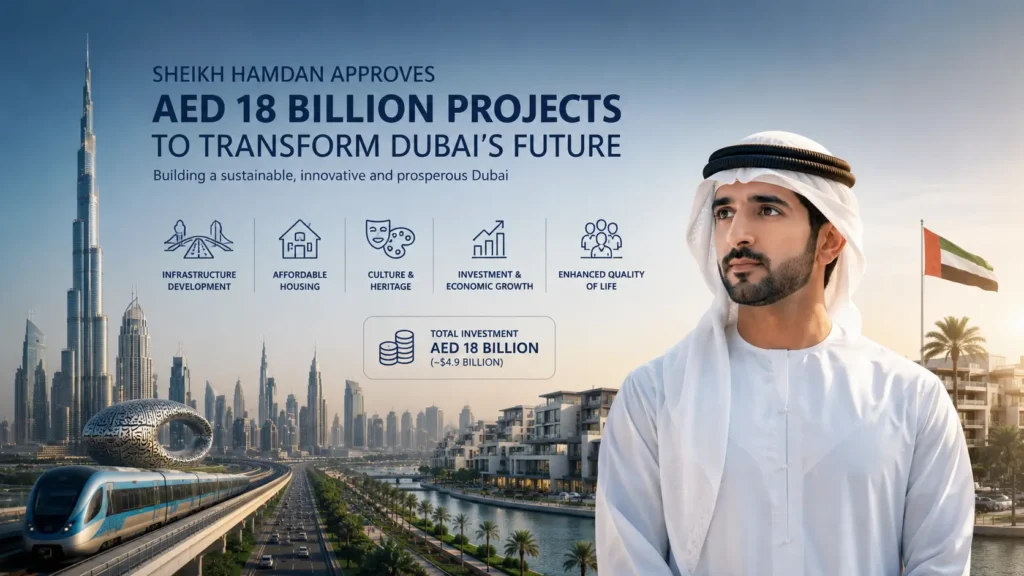
Infrastructure Projects to Improve Daily Life
A significant share of the AED 18 billion will go toward upgrading the infrastructure that underpins daily life in Dubai. Road improvements, transport network upgrades and better public facilities are all part of the picture, with a focus on reducing commuting friction as the city’s population continues to grow.
Modern urban planning principles — sustainability, efficiency, smart connectivity — run through the infrastructure proposals. The goal is to ensure that Dubai doesn’t just keep pace with demand but stays meaningfully ahead of it, maintaining its position as one of the world’s best-connected and most functional cities.
Affordable Housing and Better Communities
Housing is one of the package’s core priorities, and it’s easy to see why. As Dubai attracts more residents, the need for quality housing at accessible price points becomes more pressing. The plans include new residential communities specifically designed to support Emirati families and residents more broadly.
These won’t be purely functional developments. The proposals include green spaces, modern community facilities and services that encourage the kind of connected neighbourhood life that makes a place worth living in — not just somewhere you sleep between shifts.
Stronger Focus on Culture and Heritage
Culture gets meaningful attention in this package, which reflects a maturing understanding of what makes a great city. New initiatives will preserve historical landmarks, support arts and museums, and build out Dubai’s cultural offering in ways that serve both residents and the growing stream of international visitors.
The investment in culture isn’t separate from the economic agenda — it’s part of it. Cultural experiences drive tourism, build national identity and give a city a character that pure infrastructure can’t create. Dubai has understood this for a while, and this package continues to put money behind that understanding.
Expanding Investment Opportunities
Dubai’s pitch to global investors has always been built on a combination of factors — strategic location, business-friendly regulation, world-class infrastructure and political stability. The latest package strengthens all of those pillars simultaneously.
The measures included specifically to support business growth and economic diversification signal that Dubai isn’t resting on its current advantages. It’s actively working to create new ones, particularly in sectors aligned with innovation, digital transformation and the knowledge economy.
Supporting Dubai’s Economic Agenda D33
Many of the approved initiatives connect directly to Dubai’s Economic Agenda D33 — the emirate’s ambitious plan to double the size of its economy within a decade. D33 is built on pillars of innovation, entrepreneurship, global competitiveness and digital transformation, and the AED 18 billion package advances each of them in different ways.
Infrastructure investment today creates the conditions for economic expansion tomorrow. That’s the logic running through the D33 framework, and it’s reflected clearly in where this money is being directed.
Also Read: 7 Sports Events in Dubai This July 2026 You Don’t Want to Miss
Quality of Life Remains a Top Priority
Strip away the economics and the strategy documents, and what this package is really about is making Dubai a better place to live. Better public spaces, more efficient transport, modern housing, improved community services — these are the day-to-day improvements that residents actually feel.
Dubai’s leadership has consistently argued that sustainable development means more than building physical assets. It means creating environments where people feel safe, connected, culturally engaged and environmentally considered. That philosophy runs through every part of this package.
Projects Reflect Dubai’s Long-Term Vision
What stands out about the AED 18 billion approval is the breadth of it. This isn’t a single mega-project or a targeted sector intervention — it’s a coordinated investment across infrastructure, housing, culture and economic development that only makes sense when you see it as a long-term vision rather than a collection of individual decisions.
Dubai has a track record of delivering on exactly this kind of ambition, and this package adds another chapter to that story. For residents, businesses and investors watching the emirate’s trajectory, the message is consistent: Dubai is building for the future, and it’s doing so with a level of intent and scale that few cities in the world can match.