

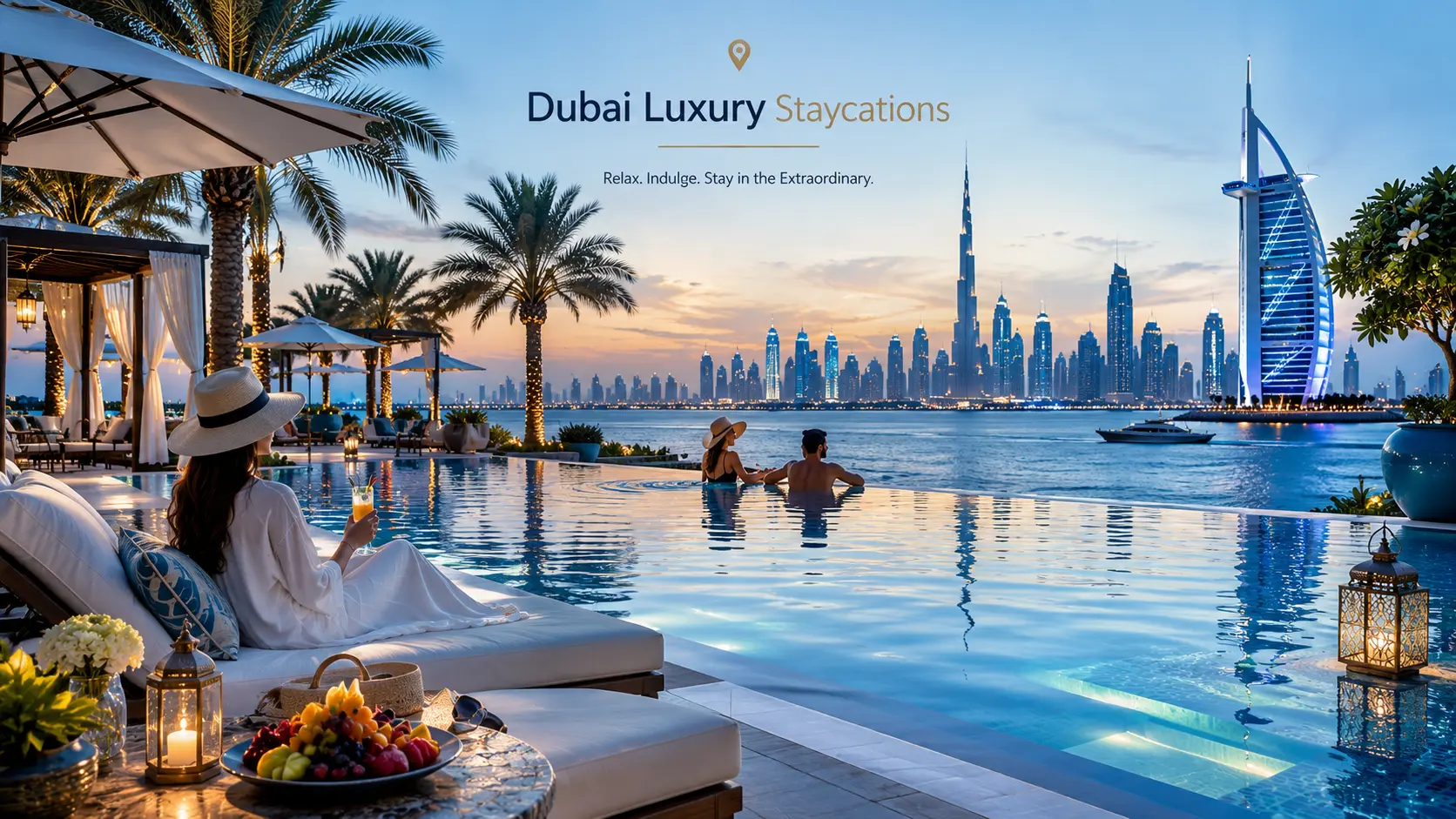
There’s a specific kind of Dubai moment happening right now that doesn’t come around often. The luxury hotels that have spent years at near-full occupancy — the ones on Palm Jumeirah with the private beaches and the restaurants you’d usually need to book weeks in advance — are actively looking for guests. And those guests are increasingly the people who live here rather than the international tourists who normally fill the rooms.
The reason isn’t complicated. Regional tensions linked to the ongoing Iran conflict have created enough uncertainty around Middle East travel that visitor numbers from several key international markets have softened. Hotels that built their business models on high occupancy from global travelers are adapting — quickly and practically — by redirecting their pitch toward Dubai’s resident population.
Dubai’s Luxury Hotels Are Offering Residents Rates They’ve Never Seen Before — Here’s Why, and Why You Should Take Advantage Right Now. Regional tensions have slowed international tourist arrivals, and five-star hotels on Palm Jumeirah are responding by courting the people already living here. It’s an unusual window, and it won’t stay open forever. The result, for anyone living in the UAE, is a genuinely unusual opportunity.
Regional Conflict Creates New Challenges for Tourism
Dubai’s appeal as a tourism destination hasn’t changed. The infrastructure is intact, the attractions are operating, the restaurants are open, and the city is functioning normally. What has changed is perception among international travelers weighing whether to book a trip to a region that’s been generating concerning headlines.
Flight disruptions earlier in the conflict period made things worse. Some airlines reduced services or rerouted flights, making Dubai harder and more expensive to reach from certain markets. Even after those disruptions resolved, the effect on booking confidence lingered in ways that take months rather than weeks to fully recover.
The hospitality industry’s response has been fast and commercially sensible. You can’t wait for international demand to return if your rooms are sitting empty. You go after the demand that’s already in the city.
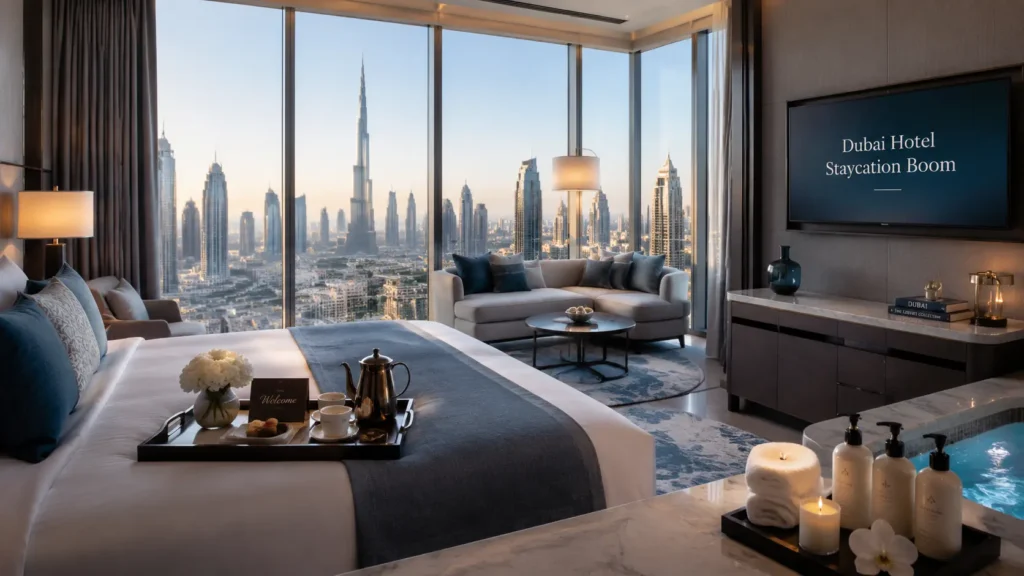
Luxury Resorts Become More Accessible
What this looks like in practice is Palm Jumeirah hotel rates that would have seemed implausible a year ago.
Properties that were charging premium rates throughout 2024 and 2025 — backed by strong international demand and the confidence that comes with it — have moved to resident-focused pricing that changes the value equation significantly. Not just discounts on rooms, but bundled packages that include dining credits, spa access, beach privileges, and family activity inclusions.
For a resident who has walked past the lobby of one of these hotels for years without seriously considering a booking, the current pricing structure is worth actually looking at. The experience hasn’t changed. The price has.
Staycations Become a Popular Lifestyle Trend
The staycation concept isn’t new in Dubai — the city has promoted it during previous slow periods, including during COVID — but the current version has a different quality to it. It’s not hotels desperately filling rooms with last-minute deals. It’s a genuine pivot toward local residents as a reliable, sustainable customer segment that the city’s hospitality industry is now taking seriously.
Families are booking weekend breaks at beachfront resorts rather than travelling internationally. Professionals are using long weekends for proper one or two-night staycations. Couples who might normally plan an overseas trip are finding that a two-night package at a Palm property costs less than flights to Europe.
That shift in behavior has helped hotels maintain occupancy levels during what would otherwise have been a very difficult few months. Local demand has become a genuine commercial lifeline rather than a backup option.
Hotels Adapt to a Changing Market
The flexibility Dubai’s hotel sector has shown during this period reflects a maturity the industry has developed through previous crises — the 2008 financial downturn, COVID, various regional instability events. Each time, the playbook involves rapid repricing, creative packaging, and a pivot to whatever demand is available.
The current adaptation looks slightly different because the staycation packages are more generous and more specifically designed around resident preferences than previous versions. Wellness programs have been expanded. Family entertainment options have been added. Flexible check-in and check-out timings are more common. The hotels are competing for residents in a way they don’t normally have to, and residents are benefiting from that competition.
Also Read: Shreyas Iyer Named India’s New T20I Captain, Replaces SKY for Ireland and England Series
Dubai’s Tourism Sector Remains Resilient
The broader picture for Dubai tourism is one of adjustment rather than crisis. International bookings are softer but not absent. Business travel and event-driven tourism continue. Major exhibitions and sporting events are proceeding as planned.
Industry analysts broadly expect international leisure tourism to recover once regional stability improves and travel confidence returns. The fundamental appeal that made Dubai one of the world’s most visited cities hasn’t been structurally damaged — it’s been temporarily overshadowed by regional news.
In the meantime, the hospitality sector is doing what it does well: adapting, staying creative, and finding revenue where it can. That means better deals for residents for as long as the current conditions persist.
The Practical Point
If you’ve been in Dubai for a while and have never seriously considered a staycation at one of the city’s top hotels — partly because the rates never made it feel worth it — this is a genuinely good time to reconsider. The properties are the same. The beaches are the same. The service is the same.
The prices are different. And they won’t stay this way once international tourism picks back up.
Check what’s available, look at the bundled packages rather than just the room rate, and make a booking before this window closes.