

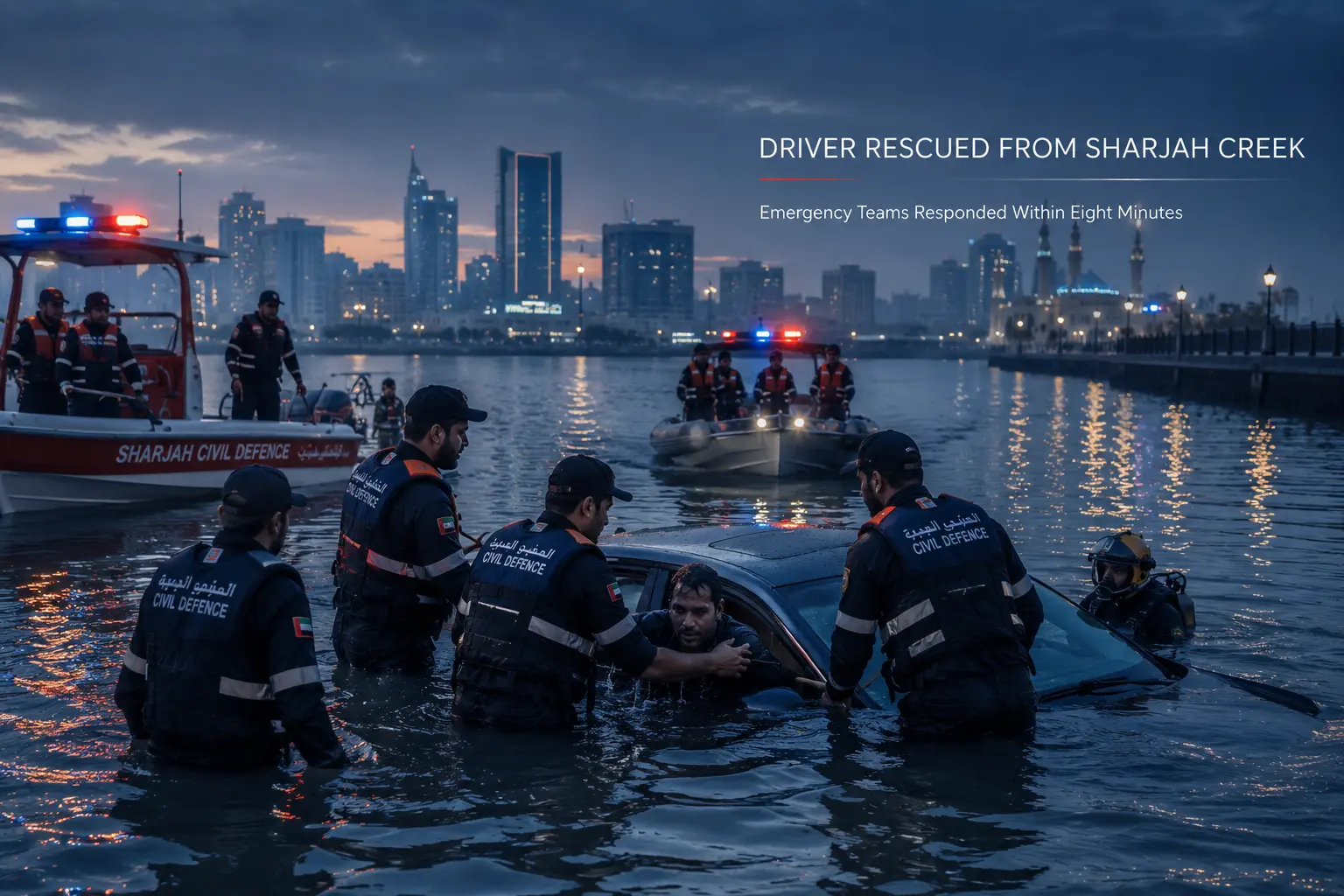
Eight minutes. That’s all it took for Sharjah Civil Defence marine rescue teams to pull a driver to safety after his car plunged into Sharjah Creek on the morning of May 14. The speed of the response almost certainly saved his life, and the operation has since drawn widespread praise from residents across the UAE.
The incident happened at around 7:04 am near Khalid Lagoon, opposite the Sharjah Courthouse. As it turned out, marine rescue personnel were already in the area conducting a routine patrol when the vehicle entered the water. They saw it happen and moved immediately.
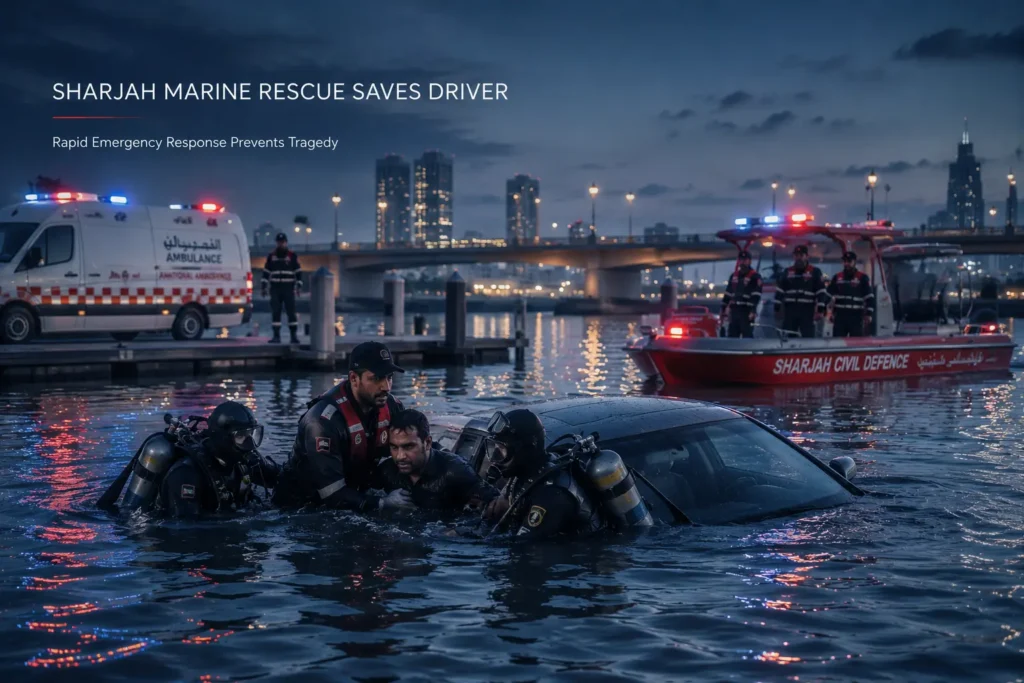
The driver was rescued, handed over to National Ambulance teams at the scene, and confirmed to be in stable condition following treatment.
Sharjah Rescue Teams Acted Within Minutes
Once the vehicle hit the water, the clock was ticking. Specialized marine rescue divers entered the creek quickly and reached the submerged car within minutes. With the vehicle sinking, they smashed one of the windows to access the driver and pulled him free before the situation could deteriorate further.
Emergency responders brought him back to shore, where ambulance crews were already waiting. The coordination between the marine unit and the medical team on the ground meant the driver received care almost immediately after being pulled from the water.
Authorities were clear in their praise for the rescue unit, pointing to continuous field training and regular emergency drills as the reason teams were able to act so quickly and effectively under pressure.
Sharjah Strengthens Emergency Response Capabilities
This rescue isn’t just a good news story — it’s also a demonstration of what consistent investment in emergency preparedness looks like in practice. Sharjah Civil Defence regularly runs marine patrols near waterways, conducts rescue exercises, and keeps its teams ready for exactly these kinds of situations.
Brigadier General Yousef Obaid Harmoul Al Shamsi, Director General of Sharjah Civil Defence Authority, emphasized that rapid response is one of the most important factors in saving lives during water-related accidents. When seconds matter, having trained personnel already in the area — as was the case here — makes all the difference.
The smooth coordination between the marine rescue team and National Ambulance also demonstrated how well different emergency services can work together when preparation is taken seriously.
Waterway Safety Remains a Key Focus in the UAE
The UAE has been steadily building up its marine safety and emergency response infrastructure, particularly in coastal cities and areas near busy waterways. Sharjah and Dubai both regularly upgrade rescue equipment, train specialist units, and maintain patrol presence near waterfront zones where accidents are more likely to occur.
In situations involving vehicles and water, the window for a successful rescue can be extremely narrow. Fast, coordinated intervention is often what separates a tragic outcome from a full recovery — and this incident showed that Sharjah’s systems are built to deliver that.
Also Read: UAE’s Younger Generation Redefines Financial Stability Through Investing and Asset Building
Incident Draws Attention Across UAE Social Media
News of the rescue spread quickly online, and the response from UAE residents was largely one of relief and admiration. Many people praised the professionalism of the Civil Defence teams and pointed to the incident as an example of the country’s emergency services working at their best.
The story also sparked broader conversations about driver awareness near waterfront roads and lagoons, particularly during early morning hours when visibility can be lower, and fewer people are around. Authorities have consistently reminded motorists to exercise caution in these areas, and incidents like this are a stark reminder of why that advice matters.
Sharjah Continues Investing in Public Safety Infrastructure
Sharjah has been expanding its civil defence capabilities steadily, with investment going into updated rescue equipment, better training facilities, and improved coordination systems across emergency services. Marine rescue units are a particularly important part of that picture, given the emirate’s significant waterfront areas, beaches, and coastal roads.
Regular drills, consistent patrol schedules, and strong inter-agency communication are what make operations like this one possible. The driver rescued on May 14 is alive today because those systems worked exactly as intended — and that’s the whole point of building them in the first place.